
What Is a Locking Plate
A locking plate is a bone fixation plate in which compatible screw heads lock into the plate holes, creating an angular-stable plate–screw construct. Unlike conventional screws, locking screws do not need to pull the plate tightly against bone to establish that connection. “Locked plates,” “locking bone plates” and “locking screw plate systems” commonly describe this implant category. [1]
For orthopedic distributors and hospital purchasing teams, the practical question is not simply whether a plate is locking. It is whether the plate, screws, instruments and documentation form a compatible system for the intended anatomy and market. This guide explains the mechanism, key fixation concepts and information to request before ordering.
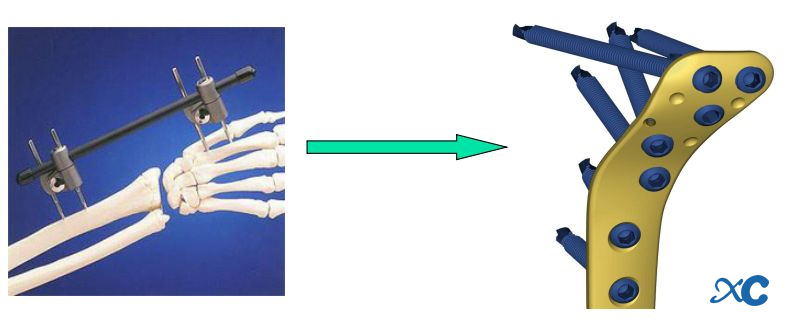
Locking Plates vs Non-Locking Plates
| Feature | Locking plate system | Conventional non-locking plate system |
|---|---|---|
| Screw–plate connection | Compatible screw head engages the locking hole. | Screw head seats against the plate without a locking interface. |
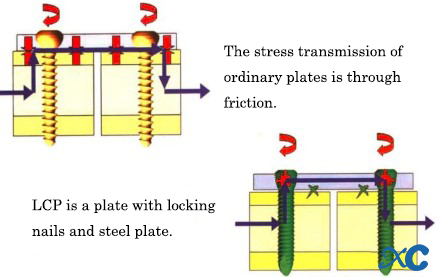
| Fixation mechanism | Angular-stable plate–screw construct. | Screw tightening draws the plate toward bone; interface friction contributes to stability. |
| Plate contour | Exact contact is less central to locking, but anatomical fit still matters. | Close contour is important because tightening can draw bone toward the plate. |
| Compression | A locking screw alone does not create interfragmentary compression. | Appropriate compression holes and conventional screws can support compression techniques. |
| Purchasing implication | Verify locking interface and the matched guide and driver. | Verify hole design and intended screw function. |
Mechanism comparison based on AO technical references. [1] [2] Neither design is universally better. Selection depends on the fracture, bone quality, required stability and the applicable implant instructions.
For a more detailed comparison, see locking versus non-locking plate differences.
What Is a Locking Compression Plate
A locking compression plate (LCP) combines locking fixation with a plate design that also permits conventional compression techniques. In a combination-hole design, different parts of the hole accommodate locking or conventional screws. The chosen screws and technique determine the function; the word “compression” does not mean every locking screw compresses a fracture. [3]
A quotation for “locking compression plates” should therefore identify the exact plate model, hole design and permitted screw families. Treat the name as a starting point for specification review, not proof that products from different suppliers are interchangeable.
Locking Compression Plate Principles
The required mechanical function comes before the implant label. A plate may support compression, protect a lag-screw fixation or bridge a multifragmentary region. Locking describes the screw–plate connection, not one universal method of fracture treatment. [2] [3]
| Concept | Purpose | What it means for a system review |
|---|---|---|
| Compression | Bring suitable fracture surfaces into contact. | Check the intended compression mechanism rather than assuming locking screws supply it. |
| Neutralization | Protect an existing interfragmentary fixation against additional loads. | Confirm the plate and permitted screw configuration for the intended technique. |
| Bridge fixation | Span a multifragmentary region while maintaining the main segments in alignment. | Review the available plate lengths and fixation options; do not prescribe one empty-hole count for every case. |
AO describes these as distinct plating functions. [2] Simple fractures are not a blanket contraindication to a locking-capable plate: AO also describes compression plating with a locking plate for selected simple femoral fracture patterns. The fixation strategy must match the fracture. [4]
This is a product and principles overview for professional readers. Patient-specific planning, reduction, screw placement and postoperative loading require the treating surgeon and the exact system’s instructions for use.
Fixed-Angle and Variable-Angle Locking Plates
Fixed-angle and variable-angle locking systems should be listed separately in a supplier catalogue. A variable-angle label is not permission to insert a screw at any angle. Ask for the permitted angulation range, compatible screw code and dedicated guide specified for that model. Avoid transferring an angle limit or tightening torque from another manufacturer’s system.
Also separate anatomical plates from straight or other general designs. “Distal radius plate” is not an adequate purchase specification on its own: side, geometry, hole configuration and instrument requirements still need to be confirmed.
Locking Plate Specification and Compatibility Checklist
Use the following as a purchasing template. These are fields to confirm, not claimed XC Medico dimensions or a universal sizing chart. Request a model-level catalogue before selecting stock.
| Specification | Information to request | Why it matters |
|---|---|---|
| Anatomy and side | Intended anatomical site; left, right or universal; exact catalogue number. | Prevents ordering a visually similar but different model. |
| Plate dimensions | Length, width, thickness, hole count and available variants. | Makes inventory and quotation comparisons meaningful. |
| Material | Exact material grade and material documentation. | “Titanium” alone does not fully specify the supplied implant. |
| Screw family | Permitted diameters, lengths, head interface and locking/non-locking options. | A matching diameter alone does not demonstrate compatibility. |
| Locking design | Fixed or variable angle; permitted guide and angle range where applicable. | Distinguishes systems with different instrumentation. |
| Instrument set | Drill guides, bits, depth gauges, drivers and specified torque-limiting equipment. | Ensures the quote includes the required matched tools. |
| Packaging and processing | Sterile or non-sterile status; applicable processing instructions and shelf life. | Clarifies hospital preparation and stock requirements. |
| Market documentation | Product scope, manufacturer identity, labeling and local registration evidence. | Connects the ordered model to the documents being offered. |
Ask the supplier to return one matched list of plate codes, screw codes and instrument codes. Record any substitution explicitly. This is more useful than comparing a plate-only price when the instrument tray, replacement tools or essential screws are excluded.
Common System Errors to Avoid
Assuming all holes must be filled. AO notes that every plate hole need not contain a screw. [2] A stock plan should provide the necessary options without presenting a maximum screw count as the ideal clinical configuration.
Applying one torque to every system. Use the manufacturer’s specified equipment and instructions. Do not treat a generic clicking sound, a shared driver shape or a torque value from an unrelated guide as evidence of correct locking.
Equating locking with guaranteed healing. A locking interface does not eliminate fixation failure, nonunion or later removal problems. Avoid unsupported claims such as “no bone graft is needed” or “higher healing rates” without an appropriately defined clinical comparison.
Mixing similar-looking parts. Obtain written compatibility information rather than relying on color, nominal screw diameter or appearance. Keep the applicable instrument and removal-tool information with the implant system records.
What Testing Documents Should Buyers Request
A test report is useful only when its tested configuration can be connected to the product being purchased. Ask for the report identifier, laboratory, test method and edition, sample description, configuration, results and acceptance rationale. A broad statement such as “tested plates and screws” is insufficient for comparing two quotations.
| Evidence | Relevant scope | Check before relying on it |
|---|---|---|
| ASTM F382 | Mechanical characterization of metallic bone plates, including single-cycle bending and bending fatigue. [5] | Plate model, test setup and applicability to the design. |
| ASTM F543 | Mechanical test methods for metallic medical bone screws, including torsional and other screw-specific properties. [6] | Screw identity, dimensions and the particular test methods performed. |
| System-specific evidence | Evidence addressing the proposed plate–screw interface and intended configuration. | Whether component reports adequately address the assembled system’s relevant risks. |
ASTM F382 does not translate a laboratory result directly into a patient outcome. Neither a test-method reference nor possession of a report is, by itself, market authorization or proof that every catalogue variant is covered. [5] Ask the supplier to explain the relevance of the selected samples to the models in your order.
Source a Matched Locking Plate System from XC Medico
Start with the XC Medico locking plate range, then send the anatomical site, target market, plate variants, expected quantities and instrument-set requirements. Request a model-specific quotation and confirm the available supporting documentation before placing an order.
For supplier evaluation, review the quality-control overview alongside the documents for the actual products you intend to purchase.
Request Plate and Instrument DetailsFrequently Asked Questions About Locking Plates
What is the difference between a locking plate and a locked plate?
Both terms commonly refer to a plate system with a locking screw–plate interface. Neither term specifies the anatomy, size or compatible screw model.
Does a locking screw compress the fracture?
A locking screw establishes the screw–plate connection; it does not by itself create interfragmentary compression. A compatible compression-capable system requires the appropriate compression mechanism and technique.
Are locking plates always better than conventional plates?
No. Selection depends on the intended mechanical function, fracture characteristics, bone quality and system instructions. Locking is a design feature, not a guarantee of a superior outcome.
Can screws from another manufacturer be used?
Do not assume interchangeability from diameter or appearance. Obtain explicit compatibility documentation for the exact plate, screws and instruments.
What should a locking plate quotation include?
Ask for plate catalogue numbers and dimensions, compatible screw codes, materials, instrument contents, packaging status and product-specific documentation for the target market.
Technical Sources
[2] AO Surgery Reference — Plating. Adult trauma principles.
[5] ASTM F382-24 — Standard Specification and Test Method for Metallic Bone Plates.
[6] ASTM F543-23 — Standard Specification and Test Methods for Metallic Medical Bone Screws.
Editorial update October 15, 2026. This revision clarifies terminology, removes universal angle and screw-spacing rules, and adds purchasing and evidence-review criteria. Product availability and documentation should be confirmed for the exact model and destination market.

