
Distributor procurement guide · Last reviewed: October 22, 2026
An ACL reconstruction fixation system is a coordinated combination of graft fixation implants, sutures, preparation instruments and delivery tools. For a distributor, the purchasing decision extends from the femoral cortical button to the tibial fixation device, the compatible instrument set and the documents needed to supply each model in the destination market.
This guide compares seven brands with publicly documented ligament reconstruction portfolios. It explains how to build a practical product assortment, evaluate adjustable-loop performance and request a complete quotation. It also separates XC Medico's own sourcing options into an independent section, so readers can distinguish the international brand review from the publisher's commercial offering.
Quick Answer
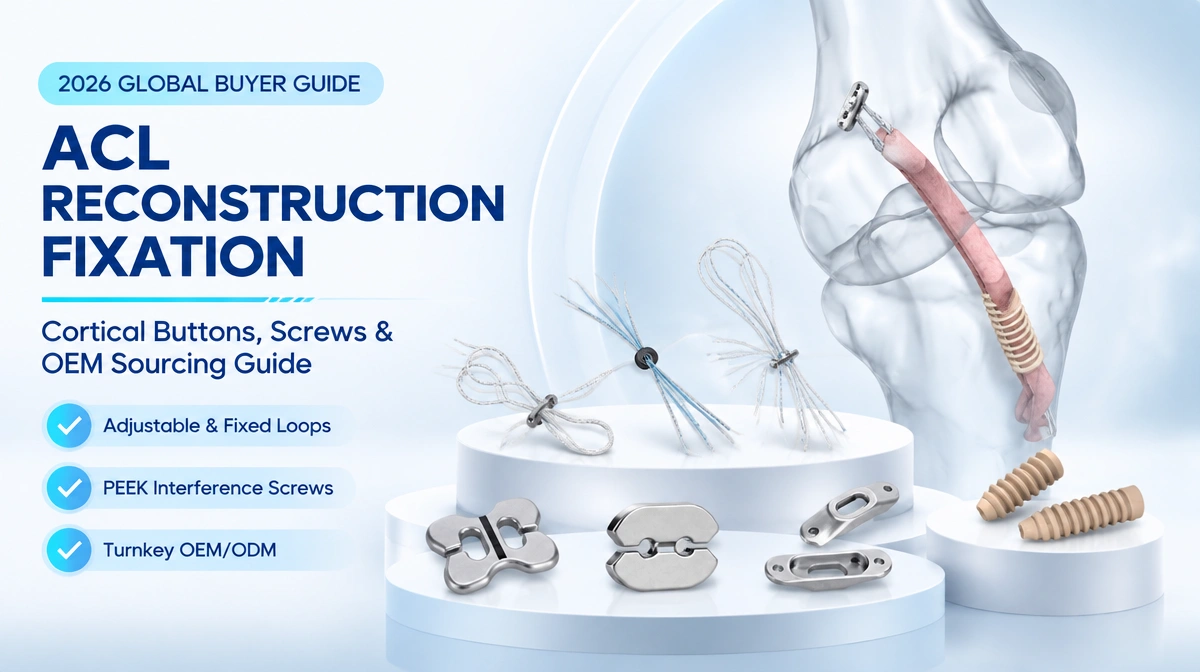
Seven ACL reconstruction fixation system brands worth comparing in 2026 are Smith+Nephew, Arthrex, DePuy Synthes/Mitek, Stryker, CONMED, Zimmer Biomet and Medacta. Their documented portfolios include fixed or adjustable cortical suspension, interference fixation and procedure-specific instrumentation. Compare the exact implant generation, graft compatibility, loop adjustment mechanism, screw diameter and length, instrument interfaces and local regulatory documentation. ENDOBUTTON is a Smith+Nephew product name; cortical fixation button is the broader purchasing category. No brand is universally preferable for every graft, technique or market. A useful distributor shortlist begins with the surgeon's approved procedure requirements and ends with a traceable implant-and-instrument order list. XC Medico's separate OEM section explains what buyers should request when evaluating an additional supply option.
In This Guide
- 1. Understand the ACL and PCL fixation ecosystem
- 2. Evaluate mechanics, materials and instruments
- 3. Review seven ACL fixation brands
- 4. Compare documented platforms and sizes
- 5. Map the procedure workflow to procurement
- 6. Explore XC Medico sourcing and OEM options
- 7. Build a commercial procurement checklist
- 8. Read the sourcing FAQ
- Sources and update notes
Editorial Disclosure and Selection Method
XC Medico publishes this guide and supplies orthopedic implants and instruments. It is not included in the seven-brand comparison. Brand order follows editorial relevance to the requested product categories; it is not a ranking by market share, revenue, clinical outcomes or distributor profitability.
We reviewed manufacturer product pages, public catalogs, technique documents, selected FDA records and official corporate announcements. Inclusion required identifiable ACL fixation products and supporting public documentation. A current webpage can confirm portfolio presence, but it does not establish local availability, current stock, a distribution agreement or authorization for every size. Older catalogs are identified as references rather than treated as current price lists.
Product specifications are kept at the family or SKU level. Where the reviewed sources did not establish a detail, the comparison says so. Procurement recommendations in this guide are an editorial framework, not results of an independent product test. Clinical selection and operative use require qualified professional judgment and the applicable instructions for use, or IFU.
1. Overview: The ACL and PCL Reconstruction Fixation Ecosystem
1.1 Start With the Graft and the Procedure Mix
ACL reconstruction replaces a deficient ligament with a graft. Graft choices include bone–patellar tendon–bone, hamstring tendon, quadriceps tendon and donor tissue. These terms describe different properties: an autograft comes from the patient, while an allograft comes from a donor; either sourcing discussion must still specify the tissue and its preparation. A bone-block construct and a soft-tissue-only construct can require different fixation interfaces. The AAOS overview of ACL reconstruction provides clinical background on graft options and associated considerations.
For a distributor, the practical starting point is a case-mix interview with the surgeon and operating-room team. Record which grafts they use, whether their preferred system uses sockets or full tunnels, and which fixation devices are required on each side. Also identify whether the account performs primary ACL reconstruction only or needs separate PCL and revision configurations. A broad label such as “ACL/PCL set” does not establish that every implant in the tray is indicated for both ligaments.
Concomitant procedures create another purchasing layer. Meniscal treatment may be planned alongside ligament reconstruction, but a meniscal repair device is not a substitute for graft fixation. Maintain separate product records, instruments and indications for these categories. XC Medico's meniscus repair instrument portfolio is a related sourcing route when a buyer needs a wider knee arthroscopy offering.
A useful opening inventory therefore follows actual procedures rather than a universal list of popular sizes. Ask the customer to identify its approved base construct, occasional alternatives and necessary contingency devices. Then calculate reorder quantities from local consumption, replenishment lead time and expiry exposure. This produces a more defensible launch assortment than assuming that sports injury prevalence translates directly into demand for every screw or loop length.
1.2 Compare Cortical Suspension With Aperture Fixation
Cortical suspension transfers load through a button positioned against cortical bone and a loop connected to the graft. Interference fixation acts within the tunnel by securing the graft against the tunnel wall. These are different fixation architectures, with different dimensions, loading paths and instrument requirements. Femoral suspension with tibial interference fixation is one documented configuration; other systems use suspension on both sides or alternative fixation methods.
The procurement consequence is that the button and screw should be evaluated as parts of a construct. An apparently compatible screw diameter does not prove that a mixed-brand combination has been validated. Similarly, a button with a higher isolated failure load does not automatically create a stronger graft–bone construct. Tunnel geometry, graft preparation, bone characteristics, deployment and tensioning can affect the behavior of the assembled system.
Create a separate record for the femoral and tibial sides. For each, record the device family, approved graft type, implant dimensions, associated preparation tools and any required additional components. In an all-inside system, specify whether the tibial button or attachable button is supplied with the loop assembly or ordered separately. A missing small component can prevent use of a much more expensive instrument tray.
Readers who need a general explanation of the mechanisms can consult the existing guide to knee ligament fixation devices. This article concentrates on how those mechanisms change procurement requirements and supplier comparison.
1.3 Separate Buttons, Interference Screws and Adjunct Fixation
Fixed-loop buttons require a defined loop length. Adjustable-loop buttons allow a change in loop length within the product's specified operating range. Neither category is sufficiently described by the word “endobutton.” ENDOBUTTON identifies a Smith+Nephew product family; use generic cortical fixation terminology when requesting products from other manufacturers.
Interference screws should be specified by material, diameter, length, thread geometry, drive interface and approved application. Backup fixation is a separate line item, included only when required by the selected system and clinical plan. An anchor used for an adjunct repair is not automatically suitable for primary ACL graft fixation.
| Component | Purchasing role | Information required before ordering |
|---|---|---|
| Fixed-loop cortical button | Suspensory fixation with a predetermined loop | Loop length, button dimensions, graft connection, passing and deployment accessories |
| Adjustable-loop cortical button | Suspensory fixation with intraoperative length adjustment | Adjustment direction, usable range, locking mechanism, graft-specific variant, retensioning instructions |
| Interference screw | Graft fixation within the bone tunnel | Diameter × length, material, driver, guidewire, preparation instruments and IFU |
| Tibial attachable button or washer | An additional element in a specified suspension construct | Exact loop compatibility, footprint, pack contents and individual ordering code |
| Backup device | Supplementary fixation where indicated | Approved purpose, matching suture and dedicated insertion tools |
| Meniscal or other soft-tissue repair device | Treatment of a separate associated condition | Separate indications, consumables and instrument compatibility |
1.4 Build a Procedure Portfolio Beyond Suture Anchors
A distributor serving shoulder arthroscopy may already stock anchors, suture tape and passing instruments. Moving into ligament reconstruction introduces new planning demands: graft preparation, tunnel creation, cortical deployment and larger interference fixation devices. Existing shoulder stock can support a broader commercial relationship, but it does not constitute a complete knee reconstruction system.
Organize the expansion around three layers. The first is the approved implant construct. The second is the procedure-specific reusable tray and disposable accessories. The third is operational support: training, instrument maintenance, case coverage, replenishment and traceability. Evaluate all three before negotiating an implant-only discount.
Use the sports medicine arthroscopic portfolio to identify related categories, and the broader sports medicine supplier comparison for a wider sourcing overview. This ACL hub addresses the narrower question of how to assemble and compare ligament reconstruction fixation systems.
2. Technical Evaluation Criteria for ACL Fixation Implants
2.1 Evaluate Failure Load, Cyclic Displacement and Retensioning Together
Ultimate tensile strength is a material stress measurement, normally expressed relative to area. Device brochures often report an ultimate failure load in newtons instead. These terms should not be used interchangeably. A finished button-and-loop assembly can fail through suture rupture, slippage, button deformation or another mechanism, so a single headline load conceals important differences.
Request the full test configuration. Determine whether testing used the isolated device, a metal fixture, a synthetic bone model or a graft–bone construct. Ask for loop length, preload, conditioning, cyclic load limits, number of cycles, loading rate, sample size and the definition of failure. Displacement measured under load is not necessarily the same as permanent elongation after unloading.
Retensioning also needs a precise definition. Record whether it is allowed after initial fixation, which strands are used, whether an additional locking step is required and how the tested protocol reflects the IFU. Compare devices under equivalent conditions before drawing conclusions from a millimeter or newton value. An experimental study of fixed and adjustable femoral suspension devices illustrates why the loading protocol and construct design matter to interpretation; it should not be extrapolated to every subsequent product generation.
| Test field | What the distributor should request |
|---|---|
| Device identity | Model, generation, size, production status and tested lot |
| Test assembly | Isolated loop/button or full graft–bone construct; fixture and substrate details |
| Loop setting | Starting length, adjustment method and pretensioning procedure |
| Cyclic protocol | Load range, cycle count, frequency, conditioning and unloading conditions |
| Displacement | Measurement location and distinction between loaded movement and residual elongation |
| Failure test | Loading rate, maximum force, displacement criterion and observed failure mode |
| Sampling | Sample count, variation, exclusions and individual results where available |
| Report controls | Report number, laboratory, revision, date and availability for regulatory review |
2.2 Check the Finished Suture Loop, Not Only the Fiber Name
UHMWPE is used in several documented high-strength suture constructions. However, a loop can contain multiple materials, a specific braid architecture, colored tracer fibers and a proprietary locking arrangement. “UHMWPE loop” is therefore a starting description rather than a complete technical specification.
Ask separately about the load-bearing loop, the tensioning strands and the passing or flipping sutures. Their functions can differ even when they share a color. Obtain the fiber specification, braid structure, nominal size, color identification and finished-device test evidence. Where the supplier identifies a blend, preserve that description instead of rewriting it as pure UHMWPE.
Abrasion resistance should be evaluated at the interfaces the device actually encounters, including the button eyelets and the locking region. A raw suture tensile test cannot by itself demonstrate that the assembled implant resists loop slippage. For a private-label project, any change in dye, coating, fiber source or braid should enter formal change control and be assessed for mechanical, biological and sterilization implications.
The sample review should include identification and handling: can the intended users distinguish the adjustment strands, understand the carrier card and follow the product's specific sequence? Packaging and color coding are functional parts of a system when they help prevent confusion. They should be documented along with the implant drawing.
2.3 Distinguish PEEK, Titanium Alloy and Biocomposite Screws
PEEK, titanium and resorbable composites represent different material strategies. PEEK-OPTIMA is a branded material designation, not a synonym for all medical PEEK. Ti6Al4V is an alloy designation, not commercially pure titanium. Biocomposite is a category covering different polymer–ceramic formulations; it does not identify a universal absorption timetable.
Arthrex's interference screw portfolio documents PEEK-OPTIMA, titanium and a biocomposite formulation, while Medacta's MectaScrew IFU distinguishes PEEK, polymer and composite versions. These examples demonstrate why material claims must stay attached to an exact product family.
For sourcing, ask for a material specification, traceability to the purchased grade and the biological evaluation of the finished device. PEEK's radiolucency can be useful in imaging, but radiolucency is not equivalent to an unconditional MR safety claim. Metallic components elsewhere in the construct must also be considered, and the exact device labeling controls.
Material choice does not settle the revision strategy. A surgeon may need to consider existing tunnels, retained implants, bone condition and the intended reconstruction. The distributor's role is to provide the specified options and evidence, not to promise that a particular polymer removes all revision difficulties.
2.4 Read Thread Geometry as a System Specification
Blunt or rounded thread features may be intended to reduce damage to soft tissue, while a tapered or sharper leading section can assist insertion. These characteristics can coexist in one design. Treating “blunt” and “sharp” as mutually exclusive screw categories oversimplifies the product.
Ask the manufacturer which graft type and tunnel preparation the design supports. Include the required driver engagement, guidewire dimensions and any recommended tap or preparation accessory. A screw that is difficult to drive may reflect a preparation or interface issue rather than a material defect; investigation requires the complete system information.
For sample acceptance, compare the supplied device with its controlled drawing and inspect the threads, cannulation, drive recess, surface condition and identification. Functional assessment should use the intended driver and a defined test setup. Avoid declaring a device clinically equivalent because two screws have the same nominal diameter and visual appearance.
2.5 Audit the Instruments Before Approving the Implant Quote
ACL instruments can include femoral and tibial guides, guide pins, cannulated or retrograde reamers, depth measurement tools, graft sizing blocks, preparation stations and fixation drivers. The exact combination depends on the platform and the surgeon's approach. “Universal ACL set” is not a sufficient compatibility statement.
Build a component-level matrix linking each implant to its required accessories. For cutting tools, record nominal diameter, compatible guide pin, working length and power-tool coupling. For screwdrivers, identify the drive geometry and shaft specification. For reusable guides and measuring devices, request inspection criteria and the manufacturer's processing instructions.
Clarify what is reusable, what is supplied sterile for single use and what must be processed before use. Include replacement parts and maintenance responsibility in the commercial agreement. A complete tray at launch can become incomplete after several cases if small components, damaged wires or worn drivers have no defined replacement route.
3. Top 7 ACL Reconstruction Fixation System Brands in 2026
The profiles below identify documented platforms and the questions each raises for buyers. Product-family names help locate evidence; they do not establish compatibility between different generations or manufacturers. Regional catalog and IFU checks remain necessary before ordering.
3.1 Smith+Nephew — ENDOBUTTON, ULTRABUTTON and BIOSURE
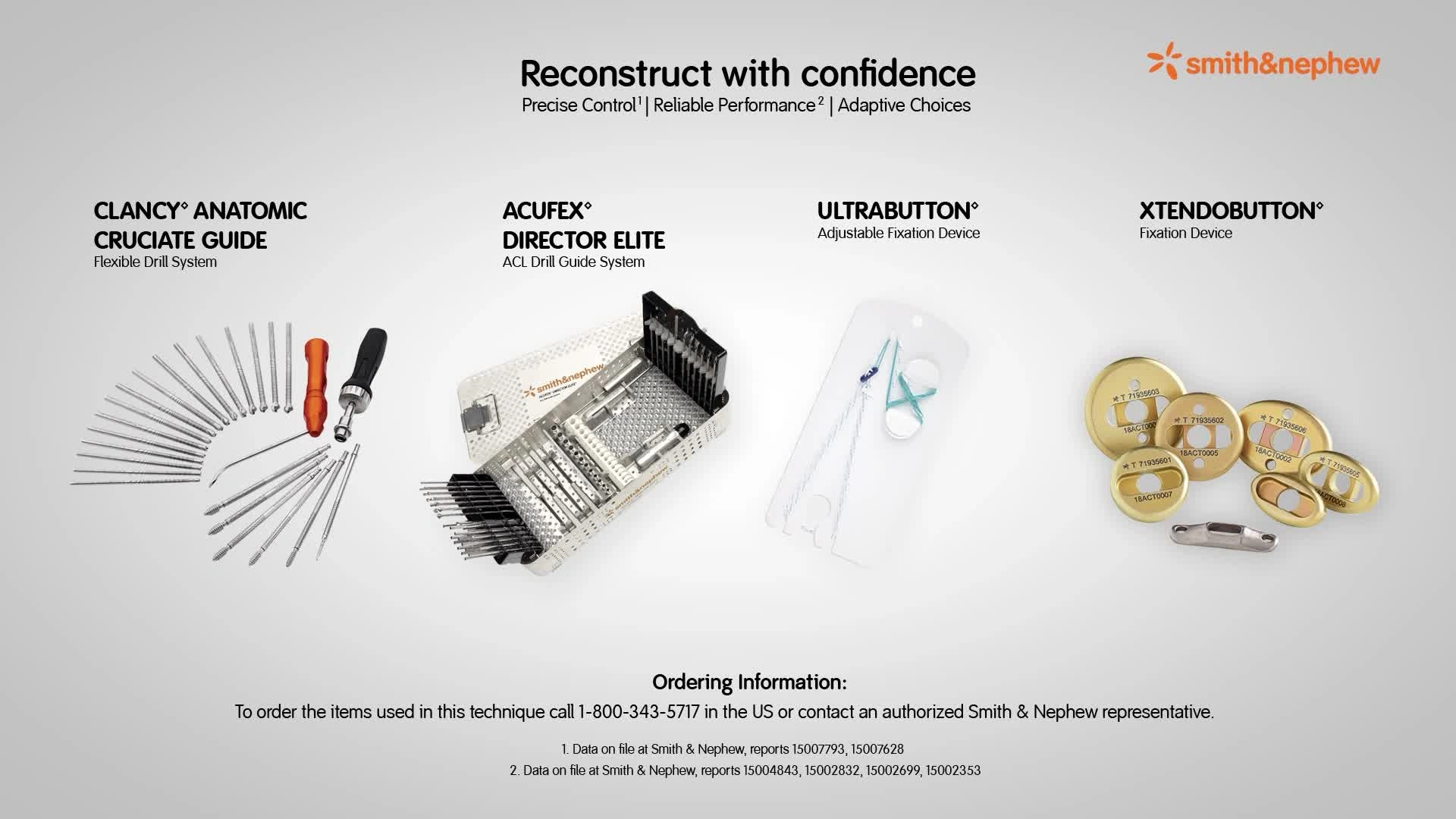
Verified portfolio. Smith+Nephew documents fixed-loop ENDOBUTTON CL products and the ULTRABUTTON adjustable fixation family. The latter includes graft- and site-specific variants. BIOSURE PK and BIOSURE REGENESORB are distinct interference screw offerings. UltraTRAC should be identified as a technique name rather than used as the name of the adjustable button.
System relevance. This portfolio is useful for comparing a fixed-loop approach with a broader adjustable family under one commercial brand. A buyer should distinguish a standard soft-tissue configuration from a quadriceps, bone-block or tibial variant. The presence of several related products does not mean that one ordering code covers every graft preparation or fixation side.
Materials and size review. Obtain the current local BIOSURE matrix by material, diameter and length. A reviewed FDA device listing identifies REGENESORB screw entries spanning 5–12 mm, with different length combinations. A device listing is an identity reference, not proof of clearance or current sale of every listed code. Do not apply that span automatically to BIOSURE PK.
Distributor relevance. Ask for the implant configuration, required preparation instruments, disposable accessories and local training route in a single quotation. For a fixed-loop assortment, the loop-length distribution affects stock depth. For adjustable devices, the relevant distinction may instead be graft type, button design or fixation side.
What buyers should verify. Match the exact device to its labeling, implant card and local authorization. FDA record K222971 names specified ULTRABUTTON QUAD, BB and TIB devices; it should not be presented as clearance for every Smith+Nephew ACL product.
Official sources reviewed: ULTRABUTTON family, BIOSURE REGENESORB, BIOSURE PK regional page, FDA K222971 and REGENESORB device listing.
3.2 Arthrex — TightRope II and Interference Fixation
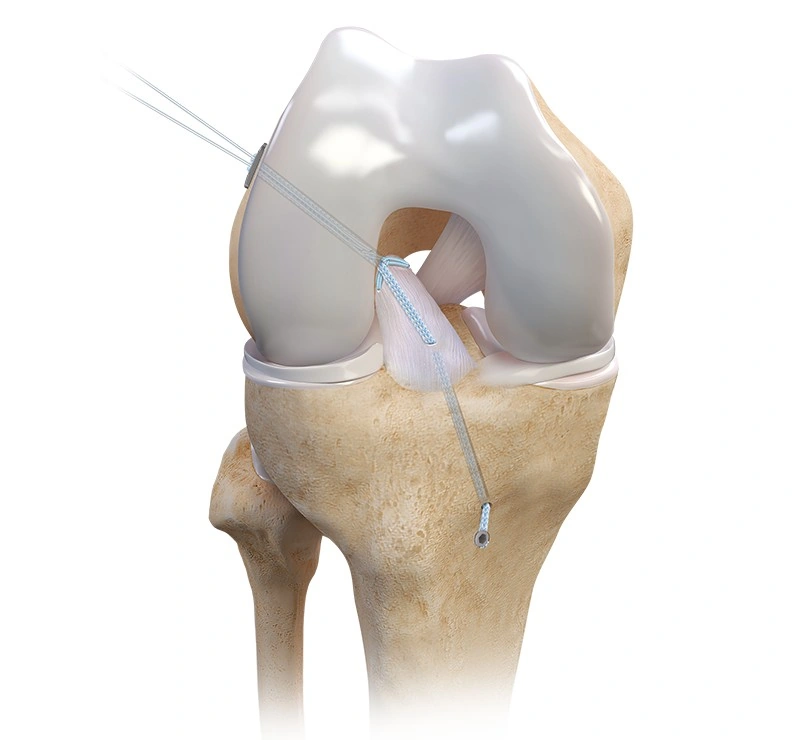
Verified portfolio. Arthrex's current ACL TightRope II page identifies RT, BTB and ABS variants, alongside system kits and accessories. Its interference screw portfolio includes PEEK, titanium and BioComposite options. The reviewed FastThread BioComposite listings include 6–12 mm diameters across selected 20 mm and 30 mm configurations, rather than every possible diameter–length combination.
System relevance. A buyer evaluating a TightRope-based construct should distinguish the loop implant from an attachable button, button extender and other separately ordered accessories. The RT, BTB and ABS names describe different configurations, so substituting one for another because the product name begins with TightRope is inappropriate.
Instrument compatibility. Request a configuration-specific order list identifying the required drilling, passing and preparation tools. A kit code may include accessories that are absent from an implant-only code. This distinction matters when comparing quotations across suppliers or across regional catalogs.
Distributor relevance. The practical purchasing unit is the complete construct selected by the customer. Compare the cost and availability of its individual components, required reusable instrumentation and single-use items. Establish who supplies missing accessories and how a replacement component is identified without relying on a photograph.
What buyers should verify. FDA K202581 identifies Arthrex TightRope II and its specified intended use. It is device-specific evidence, not blanket clearance for all Arthrex screws, augmentation techniques or mixed systems. Confirm the material and current regional SKU of every interference screw separately.
Official sources reviewed: ACL TightRope II, TightRope II components and accessories, interference screw portfolio and FDA K202581.
3.3 DePuy Synthes / Mitek — RIGIDLOOP, INTRAFIX and MILAGRO
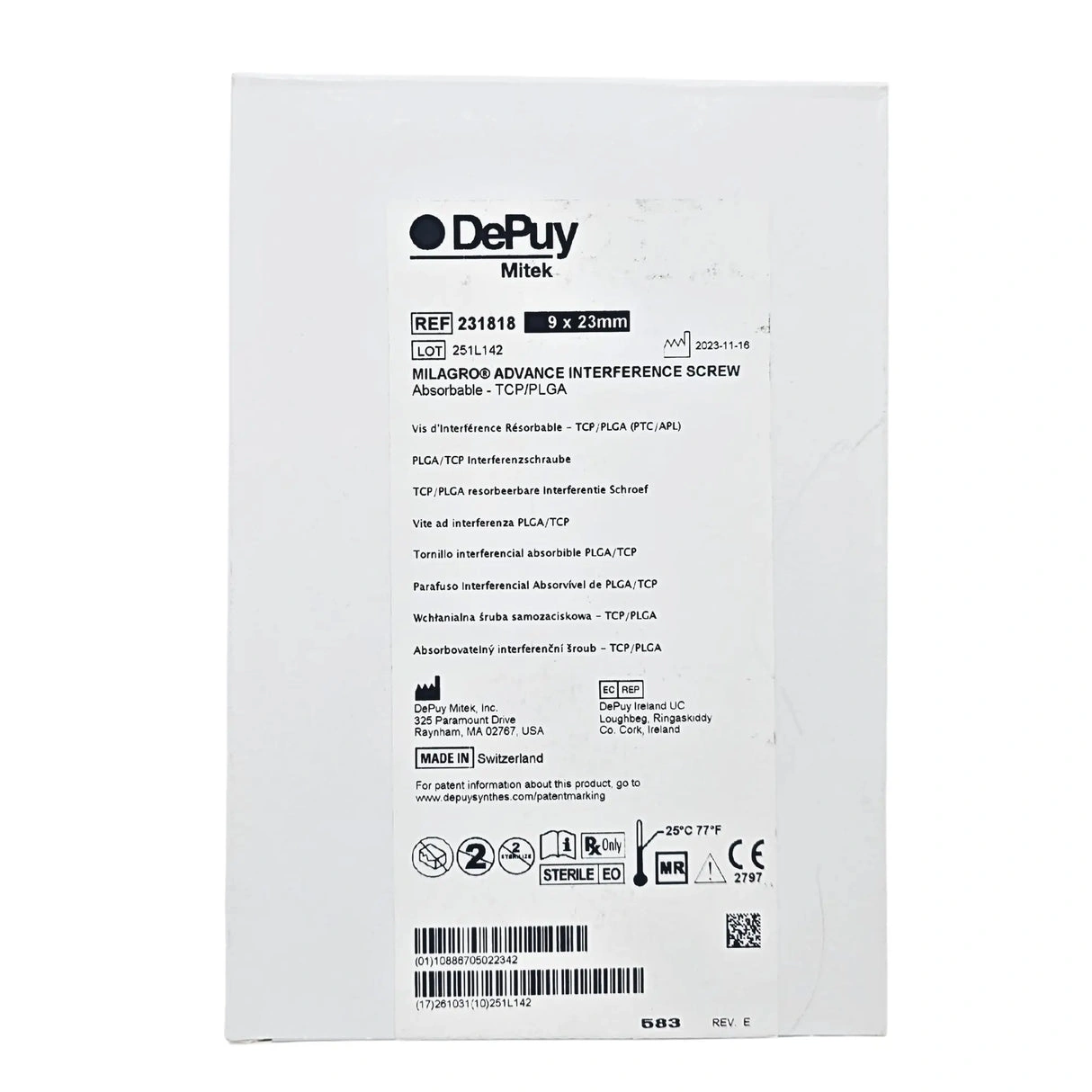
Verified portfolio. The reviewed DePuy Synthes/Mitek resources document RIGIDLOOP cortical fixation, INTRAFIX ADVANCE tibial fixation and MILAGRO ADVANCE interference screws. RIGIDFIX cross-pin fixation is a separate architecture. GRYPHON is not used here as a substitute name for the core ACL suspension or tibial fixation platform.
System relevance. The RIGIDLOOP family reference distinguishes fixed loops from adjustable devices. INTRAFIX ADVANCE uses a sheath-and-screw approach to tibial fixation, so the order needs to identify the matched components. A sheath-based system should not be reduced to a generic interference screw in a comparison spreadsheet.
Materials and size review. A regional MILAGRO ADVANCE page documents BIOCRYL RAPIDE biocomposite and PEEK versions. The reviewed fixed-loop RIGIDLOOP reference lists lengths from 15 to 60 mm. Those are loop lengths, not button dimensions or screw diameters. Obtain the current regional screw table before assigning a full size range to the platform.
Distributor relevance. This brand is particularly useful for examining how different fixation mechanisms sit within one portfolio. Ask the account which mechanism it intends to use before purchasing multiple trays. Cross-pin, suspension and sheath-based fixation can have different disposable and reusable requirements.
What buyers should verify. Separate contemporary orderable models from historical product literature. Match the current legal manufacturer, product code and IFU on the supplied label. For older RIGIDFIX references, confirm availability and support directly rather than assuming that every historical configuration remains in distribution.
Official sources reviewed: RIGIDLOOP adjustable system, RIGIDLOOP family reference, INTRAFIX ADVANCE, MILAGRO ADVANCE regional page and RIGIDFIX patient leaflet.
3.4 Stryker — ProCinch and Biosteon
Verified portfolio. Stryker documents the ProCinch adjustable suspension platform and Biosteon HA/PLLA interference screws. The ProCinch portfolio reference distinguishes reverse-tension, standard-tension and open-loop options. These differences should remain visible in a distributor's product master rather than being combined under one generic cortical button entry.
System relevance. The direction of tensioning and the graft connection affect product selection and training. Ask whether the planned configuration needs an open-loop assembly or another variant, and confirm the specified fixation side. A product's broader ligament portfolio should not be interpreted as identical indications for every component.
Materials and size review. The reviewed Biosteon regional page lists HA/PLLA screws spanning 6–12 mm in selected lengths of 23, 28 and 35 mm. The listed combinations are uneven: the span does not establish that all diameters exist in each length. Request the destination-market ordering table and material documentation for the exact devices quoted.
Distributor relevance. A quotation should distinguish ProCinch variants, screws and the applicable drilling and preparation tools. Ask which items are stocked locally, which require special ordering and what the supplier provides for product training and replacement instruments. These terms influence practical coverage more than a comparison of isolated implant prices.
What buyers should verify. Confirm regional product availability, the current IFU and the exact compatibility list. Public technique references describe combinations involving ProCinch, VersiTomic and Biosteon, but do not validate arbitrary substitution with another manufacturer's reamer, loop or screw.
Official sources reviewed: ProCinch regional product page, ProCinch portfolio reference and Biosteon size and material listing.
3.5 CONMED — Infinity and GENESYS Matryx
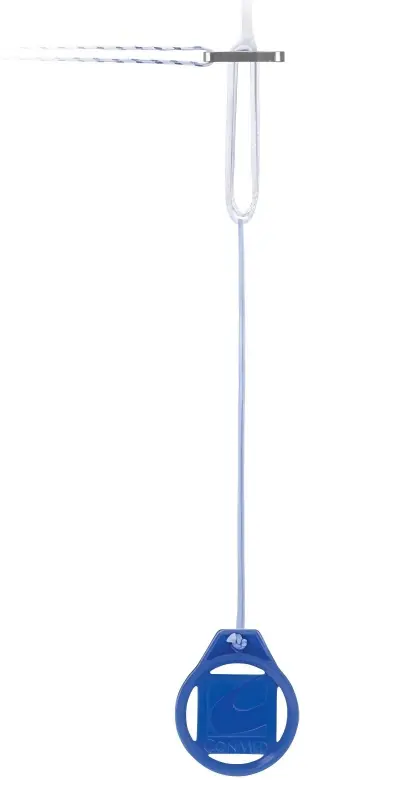
Verified portfolio. CONMED's ACL reconstruction resources document the Infinity knee system, including an adjustable femoral loop button, modular guides and retrograde reaming options. Its screw portfolio includes GENESYS Matryx biocomposite interference screws, alongside other interference fixation families. Linvatec is not counted as an additional independent brand in this seven-company list.
System relevance. The Infinity literature describes an adjustable, reversible loop mechanism. The ability to lengthen as well as shorten the loop is a specific device feature; it should not be assumed for all adjustable buttons. The buyer should request the current technique and training materials for the exact version supplied.
Materials and size review. A reviewed soft-tissue ACL guide lists GENESYS Matryx examples at 7, 8, 9 and 10 mm, with selected lengths from 20 to 35 mm, and states that additional sizes exist. This is a documented subset rather than a complete current catalog. It also identifies dedicated drivers and preparation accessories.
Distributor relevance. Separate the inventory for suspension, interference fixation and tunnel preparation. Ask whether the quotation includes the required disposable cutting tools and whether reusable guides can support the account's selected approach. When forecasting cost per case, include the recurring components required by the system rather than only the button and screw.
What buyers should verify. Confirm the full current screw matrix, regional registration and the loop material from model-specific documentation. The reviewed public materials do not justify assigning a numerical margin profile or a universal performance advantage to the brand.
Official sources reviewed: CONMED ACL reconstruction, interference screw families, Infinity product brochure and soft-tissue ACL ordering reference.
3.6 Zimmer Biomet — ToggleLoc With ZipLoop and ComposiTCP
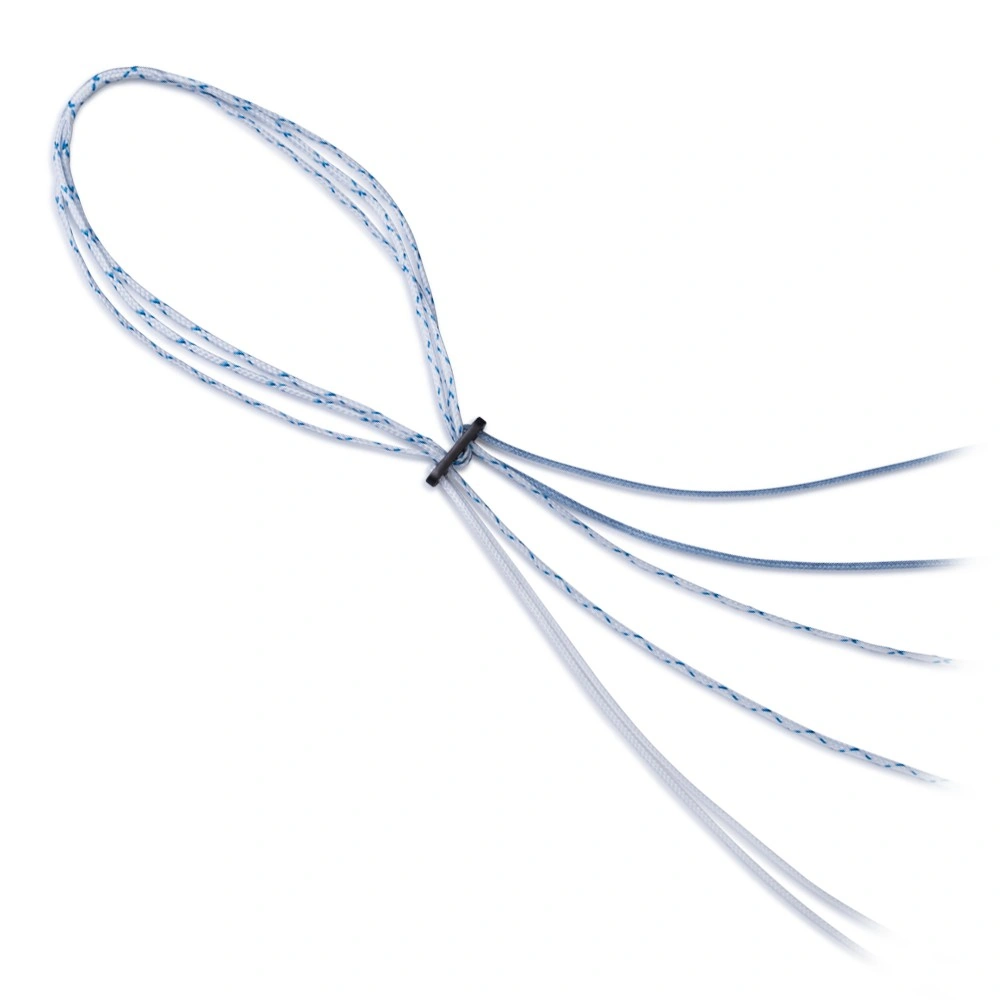
Verified portfolio. Zimmer Biomet documents ToggleLoc with ZipLoop technology and ComposiTCP interference screws. Its current ToggleLoc Flip Inline page identifies a titanium button, an adjustable loop and coreless UHMWPE MaxBraid sutures. It also names Riverpoint Medical as the legal manufacturer of that specific Flip Inline product.
System relevance. This is a useful example of why brand, distributor and legal manufacturer need separate fields. An established commercial brand may offer a device manufactured by another entity. Regulatory documents, complaints and traceability must follow the manufacturer identified for the purchased model, not an assumption based on the website logo.
Materials and size review. ComposiTCP is a separate biocomposite screw family. The reviewed ACL ordering reference includes 9 mm round-head and 10–11 mm fully threaded examples in selected lengths. These examples do not define the full current assortment. Request a complete regional matrix and preserve distinctions between screw designs.
Distributor relevance. Identify the exact ToggleLoc generation and tensioning configuration in the account's preference card. A quotation for Flip Inline should be checked against its own component and labeling requirements rather than treated as identical to an older ToggleLoc kit. Include the relevant reaming and measuring instruments in the review.
What buyers should verify. Match the legal manufacturer to the device label, obtain current local availability and confirm compatible extenders or washers if they are part of the specified construct. Do not compare advertised tensile values with another brand without the full test protocols.
Official sources reviewed: ToggleLoc Flip Inline, ToggleLoc regional resources and ComposiTCP interference screw.
3.7 Medacta — FairFix, MectaFix CL and MectaScrew
Verified portfolio. Medacta documents the FairFix adjustable button, MectaFix CL continuous-loop button and MectaScrew interference screw family. FairFix combines a titanium cortical button with a UHMWPE loop. MectaFix CL lists fixed-loop lengths of 15–60 mm in 5 mm increments and identifies a Ti6Al4V ELI button with UHMWPE loop material.
Current corporate context. Medacta acquired Parcus Medical from Anika in March 2025. For this ACL comparison, Medacta's directly documented reconstruction systems provide a clearer current reference than describing Parcus Draw Tight as a femoral fixation button. The FDA record reviewed for Draw Tight identifies a suture anchor, a different product category.
Materials and size review. The MectaScrew IFU distinguishes PEEK, polymer and composite versions. The MectaScrew C page lists 19 configurations spanning 6–12 mm diameter and 15–35 mm length. The matrix is selective; those endpoints do not imply that every combination is available or that the same matrix applies to all material versions.
Distributor relevance. The portfolio supports a structured comparison of fixed and adjustable suspension alongside interference fixation. Request the specific platform's implant codes, screwdrivers, graft preparation tools and regional documentation. A corporate acquisition does not by itself establish interchangeability between legacy Parcus devices and Medacta implants.
What buyers should verify. Confirm the contracting entity, the legal manufacturer on each label and the status of any legacy product requested by the customer. Obtain the correct regional IFU and a current ordering matrix for each chosen device.
Official sources reviewed: FairFix, MectaFix CL, MectaScrew C, MectaScrew IFU, Medacta acquisition announcement and FDA Draw Tight record.
4. ACL Fixation Brand Comparison Matrix
The table summarizes the products reviewed above. Diameter means interference screw diameter, not loop length or cortical button size. “Verify by market” means that a model-specific destination-market review is still required; it is not a statement that a device lacks authorization. A partial catalog example is explicitly labeled as such.
| Brand | Documented platform | Cortical button type | Loop material evidence | Interference screw materials reviewed | Screw diameter evidence | Regulatory evidence and limits | Commercial assessment |
|---|---|---|---|---|---|---|---|
| Smith+Nephew | ENDOBUTTON CL; ULTRABUTTON; BIOSURE | Fixed and adjustable families | Verify exact variant and IFU | PK: PEEK; REGENESORB: biocomposite | REGENESORB listing includes 5–12 mm; verify orderable combinations | K222971 names selected ULTRABUTTON variants; verify other SKUs and markets | Quote required; no public distributor margin verified |
| Arthrex | TightRope II RT/BTB/ABS; FastThread and other screws | Adjustable; graft-specific configurations | Verify exact implant construction | PEEK, titanium, BioComposite | FastThread BioComposite examples span 6–12 mm; selected lengths | K202581 for TightRope II; screw records require separate matching | Include attachable buttons, accessories and disposables in quote |
| DePuy Synthes / Mitek | RIGIDLOOP; INTRAFIX ADVANCE; MILAGRO ADVANCE | Fixed and adjustable RIGIDLOOP; separate cross-pin options | Braided loop documented for fixed family; verify composition | MILAGRO regional page: PEEK and BIOCRYL RAPIDE | Full current regional screw range not established in this review | Verify by model and market; historical resources do not prove current availability | Separate suspension, sheath-based and cross-pin configurations |
| Stryker | ProCinch; Biosteon | Adjustable with tensioning and connection variants | Verify model-specific composition | Biosteon: HA/PLLA | Regional list spans 6–12 mm; selected 23/28/35 mm lengths | Verify by model and market | Compare complete construct and instrument support terms |
| CONMED | Infinity; GENESYS Matryx | Adjustable and reversible mechanism in reviewed Infinity reference | Not established from reviewed summary sources | GENESYS Matryx: biocomposite | Reviewed ordering subset: 7–10 mm; additional sizes noted | Verify by model and market | Include recurring reaming tools and other procedure consumables |
| Zimmer Biomet | ToggleLoc/ZipLoop; ComposiTCP | Adjustable; generation-specific configurations | Flip Inline: coreless UHMWPE MaxBraid | ComposiTCP: biocomposite | Reviewed examples: 9–11 mm; not a complete range | Verify by market; Flip Inline page names Riverpoint Medical as legal manufacturer | Identify exact generation and legal supply chain |
| Medacta | FairFix; MectaFix CL; MectaScrew | Adjustable and fixed families | UHMWPE documented for FairFix and MectaFix CL | PEEK, polymer and composite versions | MectaScrew C: 6–12 mm, selected lengths; 19 configurations | Verify each product and regional IFU | Obtain distinct documentation for Medacta and legacy Parcus devices |
No verified public dataset establishes the distributor profit margin for these seven platforms. A useful financial comparison instead starts with the same defined case configuration and measures total acquisition and support cost. Include implants, disposable accessories, tray purchase or loan terms, reprocessing, replenishment, freight, training, expiry and the cost of holding contingency stock.
Use quotations with the same currency, tax basis, delivery terms and validity period. A lower implant price may not produce a lower cost per supported case if mandatory disposables or instrument commitments differ. Likewise, a broad assortment may have little commercial value if the local customer uses only a narrow subset. Local consumption and contract terms should drive the margin model.
5. Map the ACL Workflow to Instruments and Order Lists
This section follows the sequence of a case to help procurement and operating-room teams verify coverage. It is not an operative technique. Tunnel placement, drilling approach, graft preparation, fixation and final assessment follow the treating surgeon's plan and the specific system instructions.
5.1 Tunnel Preparation: Confirm the Planned Instrument Route
Anteromedial portal, transtibial and outside-in approaches can require different guides, reamers and passing instruments. A product described for one approach should not be assumed to support another without manufacturer documentation. Ask the surgeon to specify the intended route and have the supplier produce a matching instrument list.
Record whether each cutting tool is reusable or single use, whether it needs a dedicated guide pin and which power coupling it uses. Confirm the size range and whether a retrograde cutter, flexible reamer or straight reamer is required. Review spare components and alternatives allowed by the system before placing a case on the schedule.
The readiness check should also cover measurement tools and their markings. A depth probe, graft sizing block and implant length reference perform different functions. Treating them as interchangeable “measuring tools” can create an incomplete tray even when the implant stock is correct.
5.2 Graft Preparation and Button Deployment Readiness
Graft preparation may require clamps, a sizing block, a preparation board, sutures and dedicated implant carriers. These accessories should appear in the quotation or be explicitly identified as customer-owned compatible equipment. A sample button supplied without its intended carrier or passing components may not represent the actual clinical product configuration.
Button deployment verification is an important training topic for the qualified clinical team. For procurement, the requirement is to supply the specified passing and flipping components, maintain clear strand identification and provide the correct manufacturer's training resources. The article does not prescribe a deployment maneuver or a universal tension value.
Retain separate references for fixed-loop sizing and adjustable-loop handling. A purchasing label such as “one size” does not eliminate graft-specific variants, required extenders or system-specific accessories. The final order list should show exactly what arrives in each sterile pack.
5.3 Tibial Fixation: Match the Device and Its Preparation Tools
A tibial interference screw order needs a diameter, length, material and product code. It also needs a matching driver and the preparation accessories specified by the manufacturer. A sheath-based fixation system or a suspensory tibial construct has a different component list and should have its own preference card.
Keep the required nearby sizes available according to the clinical team's approved plan and consumption history. Do not derive a universal screw-to-graft sizing rule from this procurement guide. The appropriate selection depends on the device, graft, bone and procedure, and belongs to the clinical team.
For sterile implants, check packaging integrity and expiry before a case. For reusable drivers and preparation tools, confirm that the processing cycle and inspection have been completed under the applicable instructions. Inventory availability and instrument readiness are separate checks; both must be satisfied.
5.4 Final Assessment and Contingency Coverage
Graft tension, range of motion and fixation assessment are clinical tasks. Procurement supports them by ensuring that any planned secondary fixation or contingency components are present, identifiable and within their approved use. An emergency substitute should not be improvised solely from a similar-looking product on the shelf.
After the case, reconcile opened items, implanted devices and unused stock separately. Capture the implant lot or UDI as required, record instrument damage and trigger replacement orders promptly. This closed-loop process makes the next case more predictable and provides the information needed for complaint investigation or a field action.
6. XC Medico Sports Medicine Sourcing and OEM/ODM Options
XC Medico is discussed separately as a potential sourcing partner. Its public pages establish product categories and selected specifications; they do not replace model-level registration, validated compatibility or a signed commercial quotation. The request should begin with a destination market and a defined implant-and-instrument configuration.
6.1 Adjustable and Fixed-Loop Cortical Fixation Products
The ligament fixation system portfolio presents an ACL/PCL adjustable titanium plate with a listed body size of 13 × 3.4 × 1.5 mm and a fixed-loop product table from 15 to 60 mm in 5 mm increments. These are different dimensions: button body size and loop length must occupy separate fields in a purchase specification.
The dedicated fixed titanium plate page provides another product reference. Before ordering, reconcile the catalog family name, current product code and finished-pack label. A reference number used for a family is not necessarily a unique SKU for each loop length and suture configuration.
Ask for the adjustable mechanism's usable range, tensioning direction and finished-device cyclic loading report. Include the metal grade, suture construction, surface finish and passing accessories in the technical request. Do not assume that an adjustable titanium plate from one source is interchangeable with a branded platform because their external dimensions appear similar.
6.2 PEEK Interference Screws and Material-Specific Requests
The public ligament-system table lists PEEK interference screw examples at 6 × 23 mm and 7, 8, 9 and 10 × 28 mm under family reference HP11Z01. This supports a documented starting assortment. It does not substantiate a universal 7–11 mm offering in both PEEK and titanium.
For PEEK, request the exact grade, finished-device material specification, current size matrix and compatible driver. For a titanium interference screw requirement, ask XC Medico to confirm whether the specific design, size and destination-market documentation are available. A titanium cortical button elsewhere in the portfolio is not evidence for a titanium screw model.
| Sourcing requirement | Publicly documented starting point | Information needed for a quotation |
|---|---|---|
| Adjustable cortical fixation | ACL/PCL adjustable titanium plate listed in ligament portfolio | Unique SKU, loop range, finished-loop material, test evidence and packaging |
| Fixed-loop fixation | Listed lengths 15–60 mm in 5 mm increments | Code mapping, button dimensions, suture configuration and IFU |
| PEEK interference screws | Listed examples: 6 × 23; 7/8/9/10 × 28 mm | Complete current matrix, material grade, individual SKU and driver compatibility |
| Titanium interference screw request | Specific offering not established in this review | Written availability, alloy specification, size matrix and regulatory scope |
| Combined procedure supply | Implant and instrument categories are published | Matched bill of materials, validated interfaces and pack contents |
6.3 Sutures, Anchors and Meniscal Products as Separate Modules
XC Medico publishes a non-absorbable sports medicine suture collection and a suture anchor category. These can be evaluated as adjacent product modules when a distributor expands its arthroscopy offering.
Keep the intended applications separate. A labral anchor, meniscal repair implant and primary ACL fixation device solve different problems. A general suture-anchor listing does not establish that an all-suture or knotless configuration is appropriate for a particular meniscal, labral or ligament application. Request the exact product name and IFU before including it in a procedure pack.
For a custom suture request, specify size, length, construction, needle configuration if applicable, color identification and required packaging. Color customization is a feasibility question, not an assumed catalog entitlement. Any proposed change must be evaluated against material sourcing, biological safety, mechanical performance, sterilization and the registered device configuration.
6.4 ACL/PCL Instruments and Tray Organization
The published ACL/PCL Reconstruction Instrument Set II provides a starting point for an instrument discussion. Request the current detailed bill of materials and identify which parts support the selected implant system. Confirm guides, reamers, measuring tools, preparation components and fixation drivers individually.
For the tray, identify the required layout, instrument retention, identification and processing instructions. The sterilization container category can support a packaging and organization inquiry, but a perforated instrument tray is not automatically a validated sterile barrier system. Confirm the exact container design and its intended processing role.
Include a replacement-parts schedule with the initial order. Small guides, sleeves and driver shafts should have identifiable references. Agree on inspection, maintenance and damage reporting so that the distributor can keep the set complete after repeated use rather than purchasing a new tray whenever a component is lost.
6.5 OEM Responsibilities, Packaging and Private Labeling
The OEM/ODM manufacturing service page is the appropriate starting point for a contract manufacturing inquiry. Provide a product specification and target market before requesting a private-label price. The legal manufacturer, brand owner, registration holder and importer roles must be agreed for the proposed arrangement.
Request current quality-system documentation and the product-specific evidence needed for the intended market. A statement about cleanroom assembly does not establish sterilization validation, and an ISO 13485 certificate is not product marketing authorization. For a sterile device, confirm the validated process, package configuration, release controls and shelf-life evidence.
MOQ, lead time, custom colors, label languages and catalog support should appear as written quotation terms. No universal low-MOQ, delivery-time or certification promise is made here. A controlled first order should include approved samples, finalized specifications, artwork review, traceability requirements and a process for authorizing subsequent changes.
7. Commercial Procurement Checklist for Sports Medicine Distributors
7.1 Verify the Device's Regulatory Identity
Start with the legal manufacturer, product name, model and intended use. Then match those identifiers to the applicable registration, clearance or conformity documentation. A certificate for another implant category, a different manufacturing site or a previous legal entity cannot be assumed to cover the device being quoted.
For the United States, a 510(k) decision is a device clearance, not an “FDA certified manufacturer” designation. FDA explicitly explains that establishment registration and device listing do not mean approval or clearance. For European supply, request the applicable declaration of conformity, certificate scope where required, current regulatory route and labeling. ISO 13485 addresses the quality management system; it does not substitute for product authorization. See the FDA explanation of registration and certification claims.
| Document | What should match the proposed order |
|---|---|
| 1. Legal manufacturer details | Name and address on label, IFU and regulatory documents |
| 2. Quality-system certificate | Current validity, relevant site and scope; issuer verification |
| 3. Product authorization evidence | Exact family/model, intended market and applicable regulatory route |
| 4. Controlled product catalog | Current revision, orderable codes and regional availability |
| 5. Implant size matrix | Button dimensions, loop range and screw diameter × length |
| 6. Material specifications | Metal/polymer grades, suture construction and traceability |
| 7. Mechanical test evidence | Finished-device configuration, cyclic protocol and failure criteria |
| 8. Biological evaluation | Relevance to the final materials, processing and patient contact |
| 9. Sterilization and packaging evidence | Validated method, package configuration and release controls |
| 10. Shelf-life support | Expiry claim, aging evidence, packaging integrity and storage conditions |
| 11. Labels, IFU and compatibility list | Language, implant identity, accessories and reusable processing instructions |
| 12. Supply and OEM quality agreement | Change control, complaints, field actions, registration and traceability duties |
7.2 Plan Consignment Around Supported Cases
A consignment arrangement should define ownership, stock location, replenishment triggers, expiry responsibility and reconciliation. Model the account's actual implant configurations and nearby sizes required by its clinical preference cards. Avoid an assumed universal percentage split between adjustable buttons, fixed loops and screws.
Separate implanted stock from opened but unused units. Both can affect replenishment, but they should not be confused in usage analysis. Include loaner-tray return, processing responsibilities, missing instruments and urgent delivery terms in the agreement. A clear record protects both service continuity and the financial model.
Use contribution per supported case rather than a brand-based margin claim. Subtract the full variable supply and service costs from the agreed revenue, then account separately for tray investment, training and working capital. This reveals whether a new account is sustainable without pretending that every distributor receives the same commercial conditions.
7.3 Require Product-Specific Training and Dry-Lab Evaluation
Training should address the exact device and instrument generation being supplied. A dry-lab demonstration can assess identification, assembly, strand management, instrument fit and the clarity of the instructions. It is also an opportunity to identify missing components before clinical introduction.
Define the evaluation plan in advance. Record the sample code, intended compatible tools, participating qualified reviewers, observations and acceptance criteria. Distinguish non-clinical demonstration samples from products released for patient use. A successful dry-lab exercise is not clinical outcome evidence or a substitute for registration.
Ask the supplier who provides ongoing technical education, updated IFUs and notification of product changes. The customer should have a clear escalation route when a label, component or training instruction does not match the order. Documenting that route is part of evaluating a dependable supply relationship.
7.4 Request a Defined Sample Pack and OEM Catalog
To request ACL fixation samples and an OEM catalog, send the destination country, intended application, preferred fixation architecture and expected case mix. Include the required screw sizes, material preference, cortical button configuration and whether instruments are needed.
Specify whether the request is for non-clinical evaluation or a documented sterile product configuration. Ask for the catalog, size matrix, compatibility list and regulatory package alongside the quotation. This allows the supplier to respond with a reviewable offer rather than an incomplete unit-price sheet.
| Question to ask the supplier | What a useful answer contains |
|---|---|
| What exactly is included in one case configuration? | Itemized implants, accessories, single-use tools and reusable instruments |
| Which button fits our selected graft and fixation side? | Named model, IFU and compatible components |
| Which sizes are currently orderable? | Diameter–length or loop-length matrix with unique codes |
| What supports the cyclic displacement claim? | Complete protocol, device identity, sample size and results |
| Which documents cover our market? | Matching legal manufacturer, models and authorization evidence |
| Can we request private-label packaging or suture colors? | Feasibility, change assessment, validation responsibilities and written terms |
| How are expiry, damaged instruments and replenishment handled? | Defined service responsibilities, lead times and replacement references |
8. Frequently Asked Questions About Sourcing ACL Fixation Systems
What is the main advantage of an adjustable-loop button over a fixed-loop button?
An adjustable-loop button allows intraoperative loop-length adjustment within its specified range and may simplify some sizing requirements. A fixed-loop button uses a predetermined loop length. Neither design is universally clinically superior. Compare the exact device, graft compatibility, cyclic displacement evidence, locking method and instructions for retensioning.
Why might a surgeon choose PEEK rather than titanium for imaging in revision ACL planning?
PEEK is radiolucent and generally produces less metal-related imaging artifact than titanium. This can assist assessment of surrounding structures, but it does not make PEEK universally preferable or establish MR safety for the entire construct. Revision planning and imaging conditions depend on the specific devices, retained components and clinical situation.
Can XC Medico provide customized UHMWPE suture colors for private-label products?
Custom colors should be submitted as a feasibility request. Availability, MOQ, material sourcing, biological evaluation, mechanical validation, sterilization compatibility and registration implications need written confirmation for the proposed device. The public pages reviewed do not establish every color option as an already validated configuration.
What tests help evaluate cortical button loop slippage under cyclic loading?
Request finished-device cyclic loading and failure testing with the loop length, preload, load range, cycle count, frequency, displacement definition, sample size and failure modes reported. Check whether the protocol includes the product's required tensioning or locking steps. No single test number guarantees that slippage cannot occur clinically, and results from different protocols are not directly interchangeable.
What shelf life and sterilization evidence should a buyer request for sterile ACL implants?
There is no universal shelf life or sterilization method for all ACL implants. Use the exact product label and request evidence supporting the specified process, sterile barrier, aging claim, package integrity and storage conditions. Confirm expiry and minimum remaining shelf life at delivery in the purchase agreement.
Is an endobutton the same as any cortical fixation button?
ENDOBUTTON is a Smith+Nephew product-family name. Cortical fixation button is the generic category, which includes fixed-loop and adjustable-loop devices from different manufacturers. Use the exact product and model name in quotations; similar appearance or dimensions do not establish interchangeability.
Are suture anchors a replacement for the primary ACL fixation system?
Not automatically. Some specifically indicated devices may be used for adjunct or backup fixation, while other anchors serve separate soft-tissue procedures. Primary graft fixation, supplementary fixation and meniscal or labral repair should have separate device specifications. Follow the applicable IFU and the qualified clinical team's selected construct.
Sources and Update Notes
Last reviewed: October 22, 2026. Product sources are linked within each brand profile so that readers can trace a company to a named platform and its evidence. This review used official manufacturer materials and selected regulatory records; it did not use marketplace listings or unrelated “Top 10” websites to establish product specifications.
Key cross-checks included FDA K202581 for TightRope II, FDA K222971 for specified ULTRABUTTON variants, Medacta's March 2025 Parcus acquisition announcement and the FDA record identifying Parcus Draw Tight as a suture anchor. These records answer specific identity questions; they do not constitute an exhaustive regulatory assessment of all products in the comparison.
Older technique guides and ordering tables remain useful for identifying product architecture and documented examples. They should be replaced by the latest local ordering information before purchase. Material, size, pack contents, ownership and legal manufacturer details should be rechecked whenever the article is updated or a new procurement project begins.
Editorial Accuracy Note
This is a commercial procurement guide, not a surgical manual, patient treatment recommendation or independent comparative clinical trial. It makes no claim that one brand produces better patient outcomes or offers a guaranteed distributor margin. Product indications, compatibility, regulatory status, sterile supply and availability are specific to the model and market. Trademarked product names identify their respective owners' products and do not imply endorsement of XC Medico.
Build a Documented ACL Fixation Sourcing Plan
Send XC Medico your destination market, fixation preferences, size requirements and instrument needs. Request a matched product list, current specifications and available regulatory documents before finalizing samples or a commercial order.

