
Last reviewed: October 20, 2026 · Published by XC Medico
A cannulated screw supplier should be evaluated as the source of a complete fixation system: implants, matched guide wires, measurement tools, drills, drivers, implant organization and the documents needed for the destination market. A quotation for screws alone can leave a distributor with an incomplete tray or an unsupported instrument combination.
This guide compares seven established brands with identifiable cannulated or headless compression screw portfolios in official sources. It explains the differences that matter to distributors, including diameter conventions, material specifications, compression design, instrument compatibility and replenishment. XC Medico is discussed in a separate manufacturing and OEM section, outside the seven-brand list.
Quick Answer
Seven orthopedic cannulated and compression screw brands to evaluate in 2026 are DePuy Synthes, Stryker, Smith+Nephew, Zimmer Biomet, Acumed, Arthrex and Medartis. Their verified portfolios include headed cannulated screws, headless compression screws and matched instrumentation, but their dimensions and component interfaces differ. Compare the exact product family rather than assuming that the same nominal diameter means the same implant, guide wire or driver. Request current catalogs, material specifications, instrument compatibility lists and destination-market documents before comparing complete-set quotations. XC Medico appears separately as a potential source of cannulated screws, Herbert-style products, instruments and OEM services. This is an editorial procurement shortlist, not a ranking by market share or clinical outcomes.
In This Guide
- 1. Understand the system and its place in trauma procurement
- 2. Compare material, thread and instrument specifications
- 3. Review seven brands and verified product families
- 4. Use the manufacturer comparison matrix
- 5. Check instruments by procedure stage
- 6. Evaluate XC Medico screw and OEM configurations
- 7. Prepare a commercial procurement checklist
- 8. Find answers to common sourcing questions
- Sources and update notes
Editorial Disclosure and Selection Method
XC Medico publishes this article and supplies products in the category. The numbered entries are an editorial shortlist for commercial investigation. No revenue, market-share, clinical-superiority or distributor-margin ranking is implied. Inclusion does not establish that every listed product is available in every market or through an unrestricted distribution agreement.
We selected the seven brands because current official product pages or publicly accessible manufacturer documents identify relevant screw families and enough detail to support a meaningful purchasing comparison. Sources include product pages, technical guides, inventory forms, material standards and selected FDA records. Older documents are identified by context and do not become new 2026 authorizations because they are cited in a 2026 article.
Brand names, legal manufacturers and commercial suppliers can differ. For example, Smith+Nephew’s LEOS product page identifies Tyber Medical as the manufacturer. Buyers should establish the responsible entities for the exact product being offered rather than assigning manufacturing responsibility from the brand name alone.
1. Overview: How Cannulated and Compression Screw Systems Fit Trauma Procurement
1.1 Distinguish Cannulation, Lag Fixation and Headless Compression
Cannulated describes a screw with a central passage that permits placement over its specified guide wire. Headless describes the implant’s head profile. Compression describes a function achieved by a particular design and its application. These terms overlap, but they are not interchangeable purchasing specifications.
A conventional headed screw may be used to produce interfragmentary compression through a lag principle. Thread engagement and the relationship between the screw and the fragments matter; cannulation alone does not generate compression. A fully threaded screw is therefore not automatically a compression screw, and a partially threaded screw does not create the intended effect regardless of placement.
Headless compression designs differ. Some use leading and trailing threads with different pitches, while others use a continuously variable pitch or a system that applies compression through dedicated instrumentation. AO’s reference describes several headless designs and identifies the Herbert screw as one type. It also notes that most headless compression screws are cannulated. AO Surgery Reference: headless compression screws.
For distributors, the practical question is which mechanism the manufacturer actually supplies. Request a drawing or design description showing the leading thread, trailing thread, shaft, head profile and relevant dimensions. Ask whether compression requires a dedicated sleeve or other instrument. A generic “Herbert screw” description is insufficient to specify every modern headless system.
The same distinction helps organize related bone screws. A cortical screw and a cancellous screw describe design categories associated with different bone engagement requirements. They may be solid or cannulated and may appear within a larger fixation portfolio. A buyer should not treat these words as competing brands or place every bone screw under the same instrument compatibility rule.
1.2 Map Clinical Applications to Separate Purchasing Configurations
Femoral neck fixation, small-bone fracture fixation, joint fusion and periarticular reconstruction can require different screw families. An application listed for one product does not establish that every diameter in the manufacturer’s portfolio has the same indication. Use each model’s current IFU and the clinical team’s specification to define the purchasing scope.
Femoral neck cannulated screws. Large-diameter headed screws and their associated wires, measuring tools and drivers are relevant to selected fixation constructs. AO describes cannulated screw fixation for specified femoral neck fracture patterns. That reference does not establish one screw construct as appropriate for all hip fractures. It also describes selective washer use rather than a universal washer requirement. AO Surgery Reference: femoral neck cannulated screw fixation.
Scaphoid and other small-bone applications. These purchasing configurations emphasize appropriate headless dimensions, short length increments, matched small-diameter wires and the correct measurement system. “For scaphoid use” should refer to the relevant product labeling and intended clinical application, not a generic claim attached to every 3.0 mm screw.
Foot and ankle fixation or arthrodesis. A portfolio may include several diameters and compression designs for different procedures. Ask the hospital which systems and labeled applications it needs to support. Do not assume that a large screw intended for one fusion application substitutes for a smaller screw in another anatomical location.
Periarticular fixation. Head profile, available lengths and the intended relationship with other fixation devices may be important. Where the customer also purchases plates, evaluate orthopedic locking plate manufacturers in China as a separate portfolio exercise. A screw used independently is not automatically compatible with a plate’s locking hole or conventional hole.
Purchasing maps should therefore follow the named clinical service and product configuration. Hip-fracture screw trays, small-bone headless trays and foot-and-ankle compression trays may share a distributor but require separate component lists and replenishment rules.
1.3 Treat the Implant and Instruments as One Architecture
A usable system includes more than the screw. Its guide wire must match the relevant cannulation, the measuring instrument must match the wire and length convention, and the drill and driver must match the implant family. Washers and countersinks must also be identified where the system includes them.
| System component | What the distributor should record | Why it matters |
|---|---|---|
| Cannulated screw | Product code, diameter definition, length, thread length, material and head design | Prevents substitution based on diameter alone |
| Washer | Compatible screw family, bore, outside dimensions and material | Avoids assuming every washer fits every headed implant |
| Guide wire | Product code, diameter, length, material, tip and threaded segment | Connects the wire to the exact measurement and instrument system |
| Measuring device | Compatible wire length and reference convention | Helps avoid an instrument mix that reads lengths differently |
| Cannulated drill | Cutting diameter, lumen specification, working length and connection | Distinguishes cutting size from guide-wire passage size |
| Tap or countersink | Compatible screw and indication in the manufacturer’s system | Identifies required or optional components |
| Driver and shaft | Recess type, nominal size, cannulation and handle connection | Prevents look-alike interfaces from being treated as identical |
| Tray or caddy | Implant positions, size labels, cleaning and sterilization instructions | Supports identification, replenishment and processing |
Require an implant-to-instrument compatibility list in addition to a tray photograph. A photograph can show whether the kit appears complete, but it cannot establish lumen tolerances, driver engagement or the validation of a mixed assembly.
For an opening order, specify the number of screws per size and the number of reusable instruments separately. Include replacement wires, drills and driver shafts according to an agreed stocking plan. These items should not disappear from a quotation simply because the commercial offer is labeled a “complete set.”
1.4 Build a Cannulated Screw Lineup Around Customer Demand
A comprehensive commercial lineup covers the hospital’s required procedures with documented configurations and a practical refill system. It does not necessarily mean stocking every diameter and length in the supplier’s catalog on the first order.
Use the Orthopedic Trauma System Portfolio to place cannulated screws alongside other trauma categories. Keep separate inventory logic for plates, nails and independent screws. Their customer relationships may overlap, but their dimensions, instrument interfaces and case-based consumption differ.
Before launch, ask each intended account which screw families, lengths, materials and sterile formats it purchases. Obtain a proposed tray map and compare it with the customer’s current practice. Where exact historical demand is unavailable, label the opening assortment as a planning assumption and review it after actual orders accumulate.
Consider the complete service burden. A smaller catalog with reliable refills, clear labels and supported instruments can be easier to manage than a larger assortment with uncertain lead times. The commercial decision should account for the cost of tying up stock, maintaining trays and replacing instruments, as well as the implant purchase price.
2. Technical Evaluation Criteria for Cannulated and Headless Screws
2.1 Verify Titanium Alloy and Commercially Pure Titanium Separately
Ti6Al4V ELI is a titanium alloy, commonly associated with Grade 23 terminology. It is not commercially pure titanium. Commercially pure Grade 4 titanium is a different material category. A supplier’s use of the single word “titanium” does not establish either one.
ASTM F136 addresses wrought titanium-6aluminum-4vanadium ELI for surgical implant applications. ASTM F67 addresses unalloyed titanium, including Grade 4. These standards define material requirements; they do not establish the clinical performance of every finished screw made from those materials. ASTM F136; ASTM F67.
Tensile-strength comparisons need the applicable material standard, product form, condition and test evidence. Avoid transferring a value from a raw-material brochure into a finished-device performance claim. A larger cannulation, different core diameter or altered thread root can affect screw behavior even when the alloy name is unchanged.
Request the material specification named in the device documentation, the raw-material certificate, heat or lot traceability and relevant finished-device verification. If a tender specifies Ti6Al4V ELI, confirm that requirement explicitly. A generic TC4 or titanium-alloy statement should not be silently rewritten as ELI compliance.
| Material description | What it establishes | What still needs verification |
|---|---|---|
| Ti6Al4V ELI with applicable specification | An identified titanium alloy specification | Certificate, material condition, traceability and device validation |
| Commercially pure titanium Grade 4 | A distinct unalloyed titanium grade | Correct standard, condition and suitability for the named device |
| Titanium alloy, grade not stated | A broad material category | Exact composition, specification and conformity evidence |
| Implant-grade stainless steel | A broad steel category unless specified further | Alloy designation, applicable standard and product-specific evidence |
2.2 Compare Thread Geometry Without Overstating Compression
For each implant, record whether threading is partial or full, the available thread lengths and the relationship between leading and trailing threads where applicable. For a variable-pitch screw, ask how the manufacturer defines its diameter and length. Two catalog entries with the same nominal size may have different tip, tail and core dimensions.
Short-thread and long-thread options create separate SKUs, even when overall length is the same. They also create separate inventory positions and potentially different clinical applications. An order form should identify both overall length and thread option rather than leaving the supplier to choose.
Self-tapping and self-drilling are distinct features. Neither term establishes that a clinician may omit all preparation steps in every bone condition. The product’s instructions define how the system is used. From a purchasing perspective, determine whether the tray still includes a drill, tap or countersink and how these relate to the quoted screw.
For claims about compression or insertion performance, request the test configuration: screw model, substrate, preparation method, measurement method and sample size. Peak compression measured in one setup should not be compared directly with a different design tested under different conditions. A thread-design illustration is useful for understanding the mechanism but is not comparative clinical evidence.
2.3 Evaluate Cannulation, Guide-Wire Fit and Instrument Runout
Nominal screw diameter is not cannulation diameter. The guide wire also has its own dimensions and tolerance. A “1.6 mm guide wire” entry does not tell the buyer the screw’s lumen size or the allowable clearance through every component.
Ask for the controlled dimensions of the screw, drill, driver shaft and any sleeve that passes over the wire. Define the functional length over which fit is evaluated. Request the manufacturer’s approach to lumen straightness, concentricity, surface finish, burr control and wire straightness, with the relevant inspection or verification records.
These factors can contribute to reliable component passage, but no dimensional check guarantees that wire binding or breakage can never occur. Clinical loading, instrument condition, handling and debris can also matter. A meaningful supplier review therefore combines dimensional evidence, a supported component configuration and the applicable cleaning or replacement instructions.
| Verification topic | Evidence to request |
|---|---|
| Wire identity | Diameter tolerance, material, length and tip drawing |
| Cannulation dimensions | Controlled lumen specification and inspection approach |
| Alignment | Straightness, concentricity or runout criteria relevant to the component |
| Internal finish | Burr and contamination controls; inspection or validation summary |
| Functional passage | Verification using the permitted component combination |
| Reusable instruments | Cleaning, inspection, wear and replacement instructions |
| Changes | Review process for a new wire source, lumen size or instrument revision |
A sample-fit check is useful for detecting an obvious mismatch. It is not a substitute for the technical evidence supporting production consistency across lots.
2.4 Assess the Drive Interface as a Matched Connection
Star-shaped, hexagonal and manufacturer-specific recesses all appear in orthopedic screw systems. StarDrive, HexaDrive and a generic hexagonal recess should be documented by their actual names and dimensions. Do not assume that a visually similar driver is interchangeable.
A six-lobed design may be intended to support engagement or torque transmission, but the shape alone does not establish universal superiority over hex. Driver fit, recess dimensions, engagement depth, material, wear and the complete assembly affect performance. Compare supported test results for the named system rather than making a blanket “Torx is better” claim.
ASTM F543 includes tests and specifications relevant to metallic bone screws, including drive connections and mechanical properties. The FDA’s recognized-standards record is a useful starting point for identifying the applicable test framework, subject to the current recognition and device scope. FDA recognition of ASTM F543.
Request the driver size, cannulation, connection to the handle, inspection criteria and replacement policy. For loan or consignment trays, agree on how worn tips are identified and removed from service. Replacing a shaft with an unverified look-alike part should not become the default response to a missing instrument.
2.5 Organize Diameters Without Inventing Universal Size Classes
“Micro,” “mini” and “large” are useful catalog labels, but manufacturers use them differently. Arthrex, for example, labels a 2.5 mm Compression FT screw Micro, while Acumed uses Micro as a family name with separately specified tip and tail dimensions. These labels should not be treated as standardized diameter classes.
Use the actual dimensional table for procurement. A buying plan may group small headless screws around 2.4–3.0 mm, intermediate systems around 3.5–4.5 mm and large headed systems around 6.5–7.3 mm. Those are planning examples, not a statement that all brands manufacture every size or define the dimensions identically.
| Specification | What a distributor should check |
|---|---|
| Diameter | Nominal value plus leading, trailing and core dimensions where relevant |
| Length | Measurement reference, available increments and actual ordered lengths |
| Thread option | Short, long, fully threaded or design-specific variation |
| Cannulation | Specified inner diameter and permitted guide wire |
| Head profile | Headed, headless, countersunk configuration and washer compatibility |
| Drive | Recess type, size and matched driver code |
| Material | Alloy or grade supported by the device documentation |
| Packaging | Sterile or nonsterile format, unit quantity and processing instructions |
| Instruments | Required drill, measuring device, tap, countersink, sleeve and driver |
| Traceability | SKU, lot identifiers, labeling and revision control |
3. Top 7 Orthopedic Cannulated and Compression Screw System Manufacturers in 2026
These profiles compare verified product families and the questions buyers should resolve before ordering. They complement the broader guide to top global trauma implant manufacturers, while focusing on independent cannulated and compression screw systems.
3.1 DePuy Synthes — CCHS, CSS+ and Headless Compression Portfolios
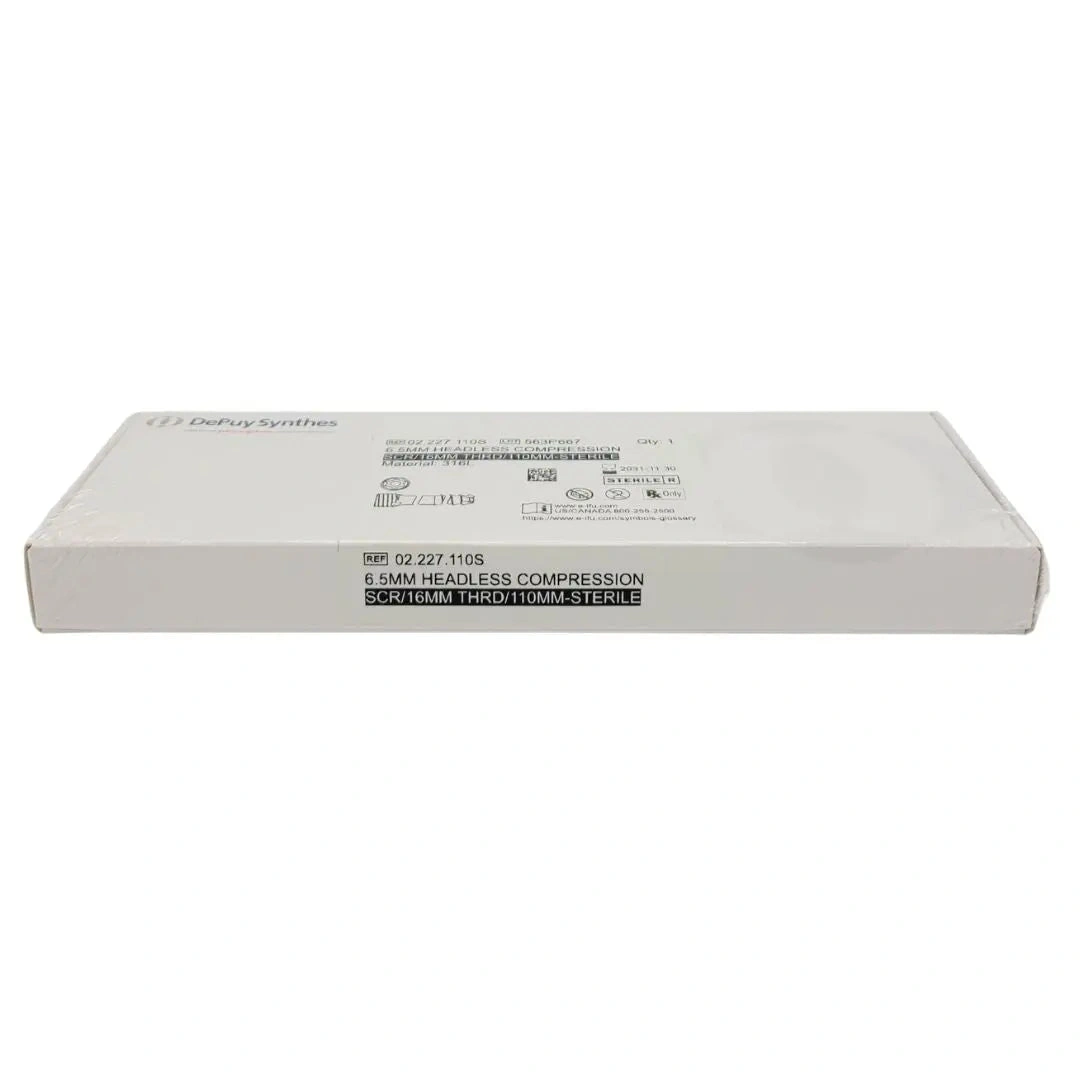
Verified portfolio. DePuy Synthes’ titanium cannulated portfolio page identifies Cannulated Compression Headless Screws (CCHS) and Cannulated Screw System Plus (CSS+). It lists portfolio diameters from 2.0 to 7.5 mm, StarDrive recesses and guide-wire options. A separate page provides resources for other headless compression screw families, so buyers should keep the platform names distinct.
System relevance. The headed and headless offerings make this a useful comparison for distributors evaluating more than one compression architecture. The combined diameter list is a portfolio summary, not proof that every diameter, length and thread option exists in both families.
Instrument compatibility. A CSS+ inventory form for 4.5/5.5 mm screws identifies a 1.6 mm guide wire, a 3.0 mm cannulated drill and a T15 StarDrive shaft. These values illustrate the difference between wire size, drill cutting size and drive size. They do not specify the cannulation ID of every component or apply to every CSS+ diameter.
Distributor relevance. Use the supplier’s inventory forms to build separate implant and instrument lists. Compare the customer’s current platform with the proposed one, including guide-wire options, countersinks, driver shafts and packaging. A nominal screw-diameter match should not be the basis for combining old and new instruments.
What buyers should verify. Obtain the current local catalog, exact implant material specification, instrument compatibility list and sterile/nonsterile availability. Confirm the legal manufacturer and market-access documentation for each family. FDA record K161616 names several Synthes screw families, but it should not be used as blanket clearance evidence for later CCHS or CSS+ configurations.
Official sources reviewed: Titanium cannulated screw portfolio; headless compression screw resources; CSS+ 4.5/5.5 mm inventory form; FDA K161616.
3.2 Stryker — Asnis III, Asnis Micro and Fixos
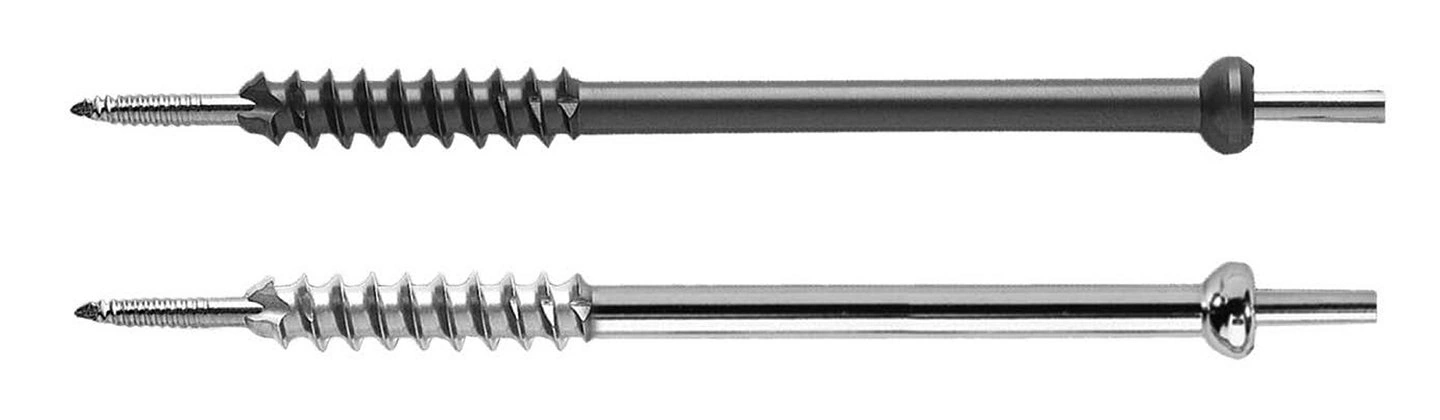
Verified portfolio. Stryker lists Asnis III headed cannulated screws in 4.0, 5.0, 6.5 and 8.0 mm sizes. The official page states that the 6.5 and 8.0 mm ranges use the same instrument set. Asnis Micro adds a separate small-diameter family, while Fixos is listed as a headless compression screw offering.
Material and head design. The reviewed Asnis III technical document identifies titanium-alloy and 316LVM stainless-steel options, a low-profile head and a hexagonal recess. It also distinguishes thread and packaging variants. This evidence should remain attached to Asnis III rather than being copied across the entire Stryker screw portfolio.
Instrument compatibility. A shared 6.5/8.0 mm Asnis III instrument set does not establish that the same instruments serve Asnis Micro or Fixos. Request the component map for the actual tray being quoted. Identify guide wires, measuring instruments, drills, drivers and any washers separately.
Distributor relevance. A buyer can investigate conventional headed fixation and headless compression within one supplier’s portfolio, while maintaining separate purchasing configurations. Compare the costs of implant inventory, dedicated instruments and refills instead of assuming one tray covers all three families.
What buyers should verify. Confirm material availability for each ordered code, the specific thread option, sterile format and supported instrument revision. The existence of an older inventory form is useful evidence of a catalog configuration, but current orderability and local regulatory status still need confirmation.
Official sources reviewed: Asnis III; Asnis III technical document; Asnis Micro; Fixos.
3.3 Smith+Nephew — LEOS Cannulated Screw System
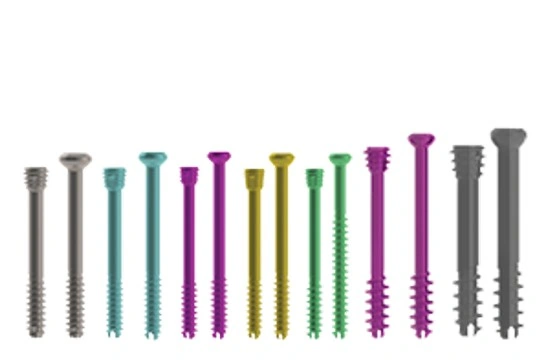
Verified portfolio. Smith+Nephew’s current LEOS page identifies small and large cannulated screw variants spanning 2.0–7.0 mm, with headed and headless options. It describes small variants in the 2.0–4.0 mm range and large variants in the 5.5–7.0 mm range. The page also identifies Tyber Medical, LLC as the manufacturer.
System relevance. LEOS provides a more specific purchasing reference than a generic request for “Smith+Nephew cannulated screws.” Its named variants and linked technique documents let buyers define a current configuration and distinguish it from other or older products carrying the same commercial brand.
Material and instrument verification. The company’s annual report describes LEOS as titanium fixation technology. The public product page does not establish every model’s material grade, cannulation ID or drive dimensions. Request those details from the applicable product documentation instead of transferring specifications from another Smith+Nephew screw family.
Distributor relevance. The headed/headless structure can support a focused discussion about the customer’s required assortment. Map the exact thread options and lengths needed for the intended service. Do not interpret a range statement as a promise that every diameter has every head and thread combination.
What buyers should verify. Confirm the legal manufacturer on the current label, the commercial supply route and destination-market documentation. FDA K111994 concerns named Smith & Nephew cannulated screws and washers; it is a historical product-specific record and does not establish clearance of the current Tyber-manufactured LEOS family.
Official sources reviewed: LEOS product page and linked guides; Smith+Nephew annual report filed with the SEC; historical FDA K111994.
3.4 Zimmer Biomet — Zimmer Cannulated Screw Systems
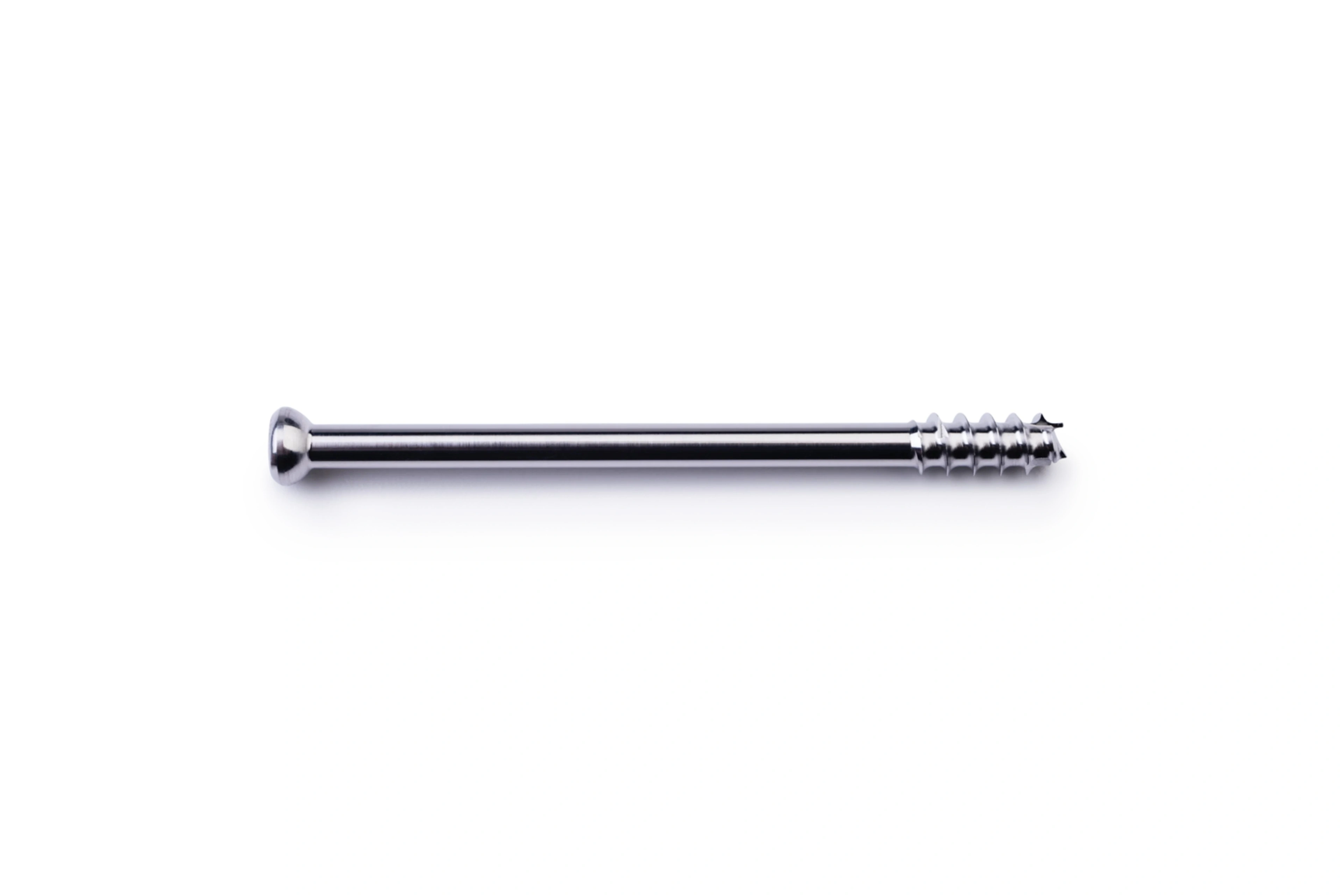
Verified portfolio. Zimmer Biomet’s official page uses the name Zimmer Cannulated Screw Systems and lists sizes spanning 3.0–7.5 mm, with lengths up to 180 mm across the portfolio. It identifies Biodur 108 implant-grade stainless steel for the system described on that page. Other Zimmer Biomet product families should not be assigned that material automatically.
Dimensional transparency. The page publishes several wire/cannula combinations. Its 3.0 mm screw listing gives a 1.35 mm cannula and a 1.25 mm guide wire; its 6.5 mm listing gives a 3.4 mm cannula and a 3.2 mm guide wire. These are examples of named catalog combinations, not universal clearances or dimensions for other brands.
Instrument compatibility. Record the guide-wire length, measuring system, drill and driver for each chosen diameter. A distributor should not replace the specified wire using only an approximate metric or inch conversion. The actual component code and supported dimensions are more useful than a rounded number.
Distributor relevance. This portfolio offers a documented headed cannulated comparison for buyers whose requirement is not limited to titanium. Evaluate material requirements from the hospital specification before comparing prices with a titanium-alloy system. A stainless-steel configuration is not a failed titanium specification; it is a different purchasing option where appropriately indicated and accepted.
What buyers should verify. Confirm local availability, exact alloy documentation, thread lengths, drive connection, packaging and current labeling. Avoid describing the product as a universally compatible system because a draft tender or third-party description uses the word “universal.”
Official source reviewed: Zimmer Cannulated Screw Systems.
3.5 Acumed — Acutrak 2 Headless Compression Screw System
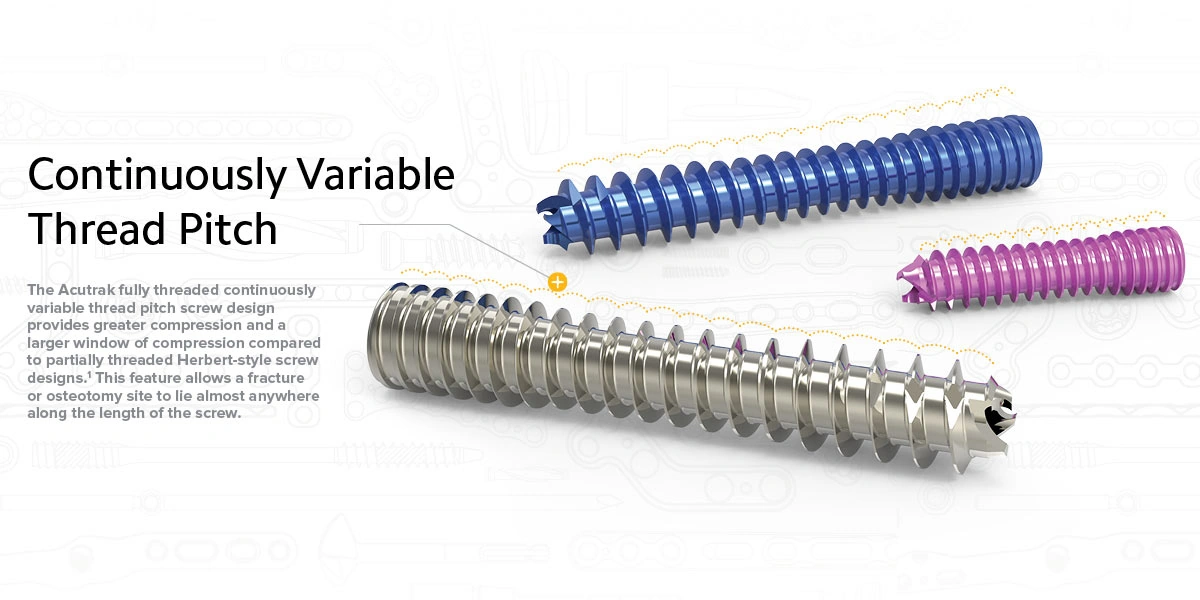
Verified portfolio. Acumed lists Acutrak 2 Micro, Mini, Standard, 4.7, 5.5 and 7.5 families. Its technical guide describes a fully threaded headless design with continuously variable thread pitch. The published dimensions distinguish tip and tail: for example, the Micro table lists 2.5 mm at the tip and 2.8 mm at the tail, while the 7.5 family lists 7.0 and 7.5 mm respectively.
Material and drive. The reviewed Acutrak/Acutrak 2 IFU identifies titanium alloy to ASTM F136. The product page identifies a 3.0 mm hex driver and a .062-inch guide wire for the Acutrak 2 4.7 example. These values are model-specific; the driver size is not the implant’s nominal diameter.
System relevance. Acutrak 2 is useful for buyers comparing variable-pitch, fully threaded headless fixation with other compression architectures. It should not be relabeled simply as a standard 2.4–7.5 mm headed-screw range. The product names and tip/tail dimensions need to remain visible in the comparison.
Distributor relevance. Build the launch assortment around the selected family’s actual lengths and instruments. A hospital replacing another headless system may need new measuring tools, drill components and drivers as well as implants. Include that transition in the commercial assessment.
What buyers should verify. Obtain current labeling and availability for the intended country. FDA K221333 describes an Acutrak/Acutrak 2 submission adding MR-conditional labeling information and supporting performance data. It does not establish identical labeling or conditions for every screw from the company.
Official sources reviewed: Acutrak 2 product page; technical guide; reviewed IFU, revision Y; FDA K221333.
3.6 Arthrex — Compression FT Screws
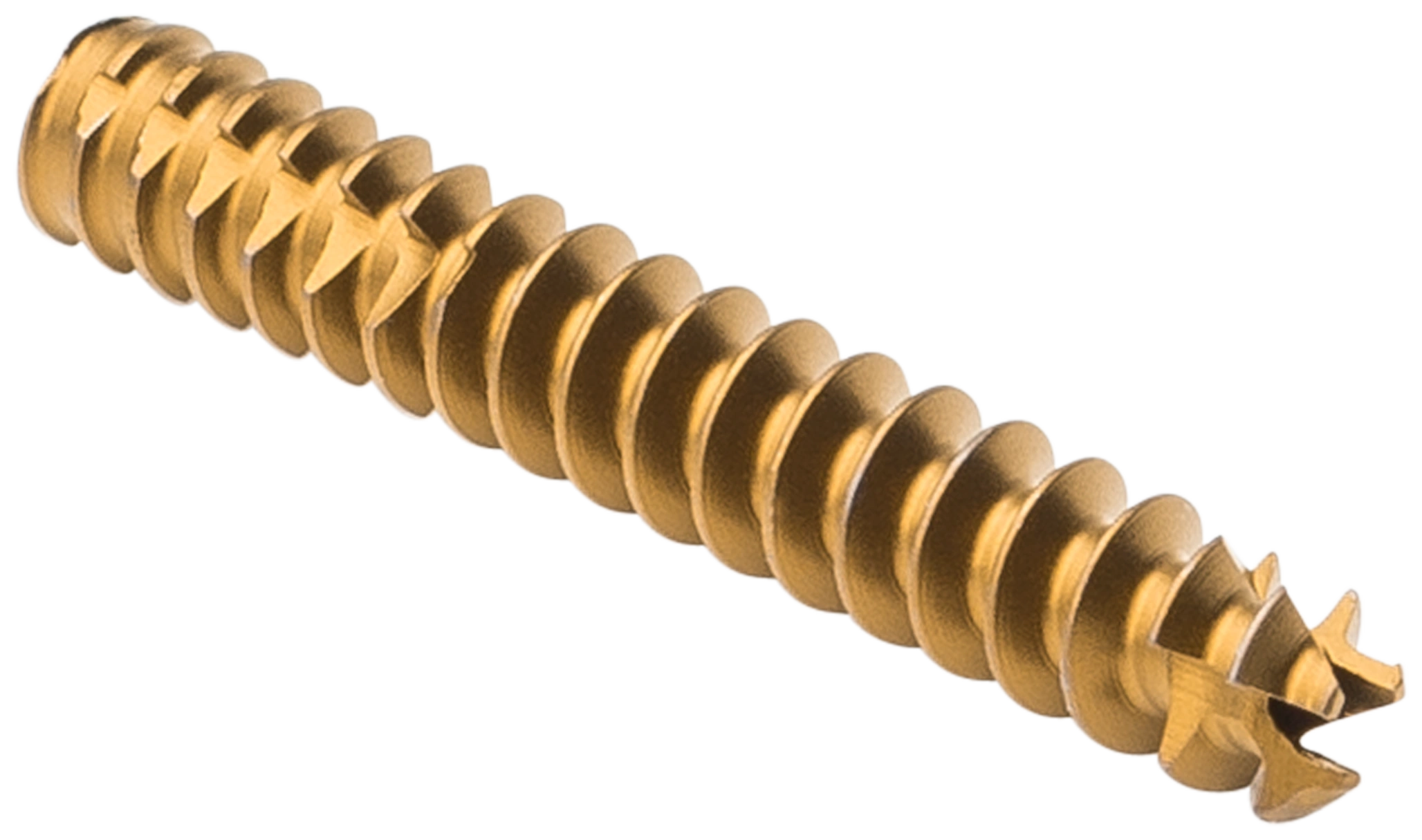
Verified portfolio. Arthrex lists titanium Compression FT screws in 2.5 mm Micro, 3.5 mm Mini, 4.0 mm Standard, 5.0 mm Large and 7.0 mm XL sizes. The product page describes fully threaded headless screws with a variable-stepped thread pitch and links to dedicated inventory and instrumentation resources.
System relevance. Compression FT provides a clearly identified headless portfolio for an extremity-focused comparison. Its size names are the manufacturer’s labels. They should not be used to assume interchangeability with another brand’s Micro, Mini or Standard family.
Instrument compatibility. The page lists guide wires and instrument sets, but a complete order still needs a model-specific compatibility map. Identify the exact wire, drill, driver and measuring component for each selected family. A list of accessories on the same website does not establish that every accessory is intended for every screw shown.
Distributor relevance. Compare a small-diameter configuration separately from a 5.0/7.0 mm configuration where they use different instruments. Ask whether the customer needs a standalone tray, an additional instrument module or an upgrade to an existing supported set. Keep the implant and instrument costs visible in the quotation.
What buyers should verify. Confirm exact material grade, permitted applications, sterile status and drive dimensions in the current controlled documents. Arthrex’s broader sports medicine portfolio does not justify labeling these titanium bone screws as bioabsorbable or treating an interference screw as an equivalent compression screw.
Official sources reviewed: Compression FT product page; Compression FT system resources.
3.7 Medartis — APTUS CCS and headedCCS
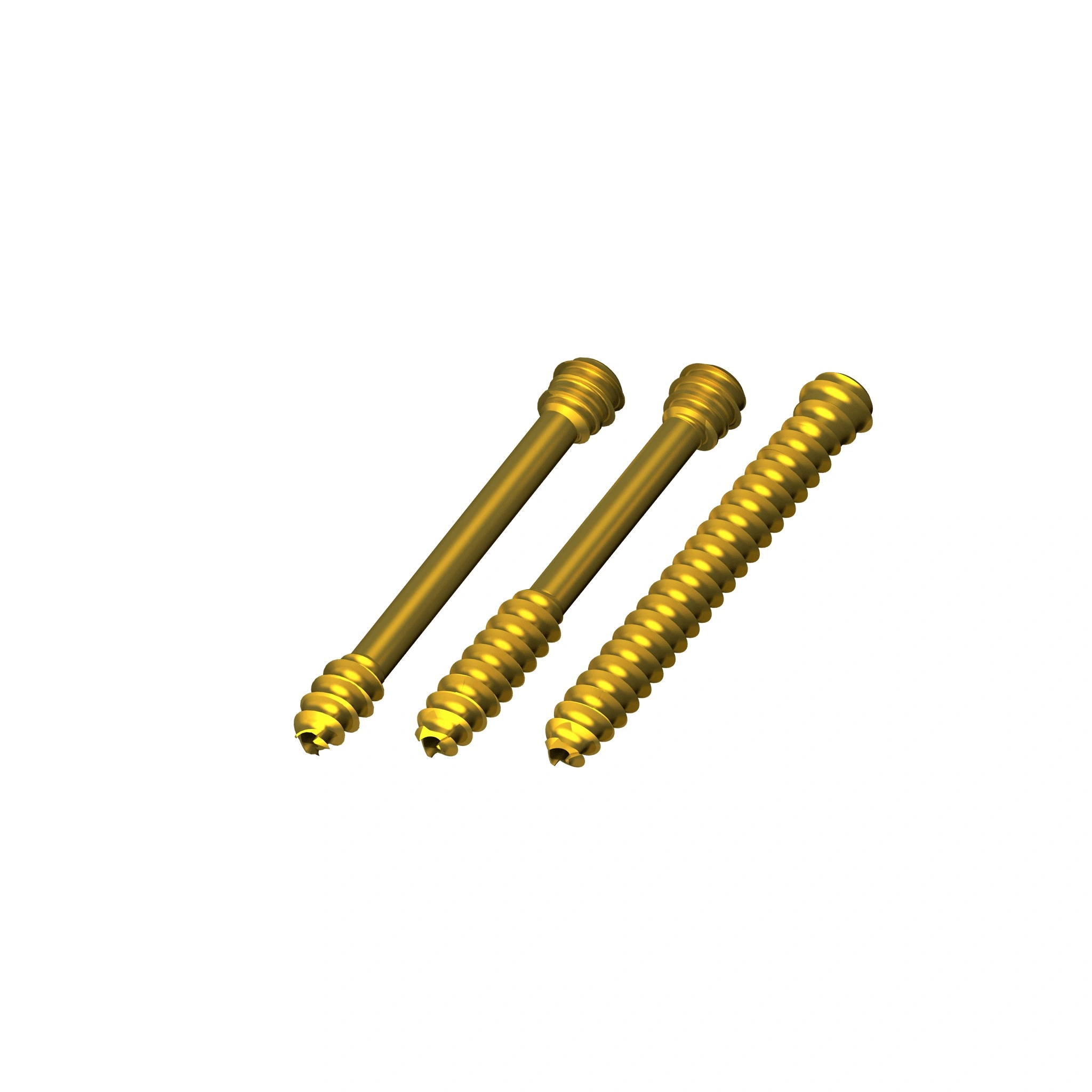
Verified portfolio. Medartis documents APTUS Cannulated Compression Screws (CCS) and headed Cannulated Compression Screws (headedCCS). The reviewed guide lists CCS in 1.7, 2.2, 3.0, 4.0, 5.0 and 7.0 mm system sizes, with headedCCS beginning at 2.2 mm. Its product information identifies titanium alloy to ASTM F136 and HexaDrive interfaces for specified entries.
System relevance. The distinction between CCS and headedCCS is useful when a buyer wants separate headless and headed options. Preserve both names in the tray plan. A headless system size should not be read as the largest external dimension at every point along the implant.
Instrument compatibility. Request the exact HexaDrive size and corresponding driver code rather than substituting a generic hex or star driver. Identify the intended wire, measuring instrument, drill and countersink. Where the catalog offers different thread lengths or sterile references, include those variants explicitly in the RFQ.
Distributor relevance. A modular assortment can be assessed against a particular hospital service, such as hand or foot-and-ankle fixation. The product page’s application examples are not a reason to stock every size for every procedure. Use the current IFU and customer requirements to set the opening configuration.
What buyers should verify. Confirm which sizes and packaging formats are available locally, the current document revisions and any restrictions relevant to the intended application. Check the supplied model against the regulatory dossier instead of treating the APTUS name as a single authorization covering every instrument and implant.
Official sources reviewed: APTUS CCS product page; CCS/headedCCS technical guide; product information.
4. Compare the Seven Manufacturers by System Scope and Specifications
The table summarizes the selected families, not every screw sold by each company. Size ranges are discrete portfolio spans and do not imply that every intermediate diameter exists. Where a field was not established in the reviewed public materials, it is marked for model-specific verification.
| Brand | Platform reviewed | Published diameter examples or span | Material evidence | Head design | Cannulation ID | Drive evidence | Distributor margin or cost review |
|---|---|---|---|---|---|---|---|
| DePuy Synthes | CCHS and CSS+ | Combined portfolio lists 2.0–7.5 mm; verify family-specific sizes | Titanium portfolio; confirm exact alloy per SKU | Headless CCHS; headed CSS+ | Not established for all models; request drawing | StarDrive; CSS+ 4.5/5.5 mm form specifies T15 | No verified margin figure; compare instruments, packaging and replenishment |
| Stryker | Asnis III; separate Micro/Fixos offerings | Asnis III: 4.0, 5.0, 6.5, 8.0 mm | Asnis III guide lists titanium alloy and 316LVM stainless steel | Asnis III headed; Fixos separately headless | Request model-specific specification | Asnis III hexagonal recess | No verified margin figure; distinguish material and tray configurations |
| Smith+Nephew | LEOS | Small 2.0–4.0 mm; large 5.5–7.0 mm | Corporate report describes titanium fixation; confirm grade | Headed and headless options | Request model-specific specification | Verify from current component list | No verified margin figure; price exact head/thread combinations |
| Zimmer Biomet | Zimmer Cannulated Screw Systems | Portfolio 3.0–7.5 mm | Biodur 108 stainless steel for the reviewed system | Headed configurations | Examples: 1.35 mm for 3.0 mm screw; 3.4 mm for 6.5 mm screw | Verify current driver specification | No verified margin figure; compare accepted material and complete set |
| Acumed | Acutrak 2 | Micro/Mini/Standard/4.7/5.5/7.5 families; tip/tail dimensions differ | Reviewed IFU identifies ASTM F136 titanium alloy | Fully threaded headless | Guide-wire values are not lumen IDs; request specification | 4.7 example uses 3.0 mm hex | No verified margin figure; include family-specific instruments |
| Arthrex | Compression FT | 2.5, 3.5, 4.0, 5.0, 7.0 mm | Titanium; exact grade requires confirmation | Fully threaded headless | Request model-specific specification | Verify matched driver code and size | No verified margin figure; compare standalone and larger-size modules |
| Medartis | APTUS CCS/headedCCS | CCS 1.7–7.0 mm; headedCCS 2.2–7.0 mm | Product information identifies ASTM F136 titanium alloy | CCS and headedCCS | Request model-specific specification | HexaDrive; size depends on model | No verified margin figure; compare thread variants and refill scope |
Official links supporting these entries appear in the corresponding profiles. Regulatory status remains a separate SKU-and-market check. A material standard, product-page listing or historical clearance does not establish destination-market eligibility for an entire brand.
Compare Complete-Set Cost Before Estimating Margin
Public, comparable distributor buy prices were not established in this review. Manufacturer names cannot support a credible margin percentage. Request quotations with the same quantities, currency, shipping terms, packaging format and remaining shelf life where applicable.
Use a complete-set cost sheet covering opening implant inventory, reusable instruments, replacement wires and drills, packaging, freight, registration work, consignment carrying cost and expected replenishment. Keep actual quotations separate from planning assumptions.
A low implant price may be offset by mandatory instrument purchases, slow refills or an assortment that does not match demand. Conversely, a larger opening instrument investment may support a useful long-term supply arrangement. Those outcomes depend on the written offer and customer use, not on the brand’s position in a list.
5. Check Instrument Readiness Across the Procedure Workflow
The following sequence organizes procurement around the stages a clinical team needs to support. It is an instrument-readiness checklist rather than an operative technique. Clinical positioning, trajectory, drilling, implant selection and fixation assessment must follow the product instructions and qualified clinical judgment.
5.1 Guide-Wire Placement and Imaging Readiness
Check that the supplied tray contains the specified wires, protective or guiding components and associated handles. Record wire diameter, length, tip configuration and quantity. The wire must be identified by the supported component code, not only by a generic description such as “threaded K-wire.”
Confirm that relevant imaging and procedural requirements are addressed by the hospital’s own preparation. A supplier’s tray list should clearly distinguish included instruments from hospital equipment or consumables that are outside the quotation.
For sample evaluation, have the receiving team compare the packing list, labels and actual components. Record whether the sample is a commercial device, a nonclinical demonstration item or another clearly defined format. That classification should remain visible when samples are transferred between the distributor, sales team and hospital.
5.2 Measurement and Cannulated Drilling
The measuring instrument should correspond to the specified wire and the manufacturer’s length convention. A replacement gauge from another system may fit over a wire but still use a different reference. Record compatible part numbers and ask how revisions are controlled.
For drills, distinguish cutting diameter from lumen diameter and usable length. Include the specified connection, protective sleeve and any permitted drill guide. If the system contains a stepped drill or a profile drill, identify it as a distinct component instead of replacing it with a generically similar drill bit.
Reusable drills require current cleaning, inspection and replacement instructions. The purchasing plan should identify replacement availability and the process for removing damaged or worn instruments from a loan tray. A mixed collection of instruments with missing identities is difficult to support even if individual parts appear serviceable.
5.3 Screw Insertion, Compression Instruments and Washers
Confirm the matched driver, shaft, handle and any system-specific compression sleeve. If the implant mechanism depends on dedicated instrumentation, list that component explicitly. It should not appear only in a technique guide that the buyer discovers after placing the order.
Where washers are included, identify the compatible headed screw families and their dimensions. A washer spreads load at the screw-head/bone interface; the need for one is not determined by screw diameter alone. Bone quality, the selected construct, anatomy and the specific system matter. AO’s femoral neck example describes selective use, which is different from requiring a washer for every large screw.
Headless implants also should not be assigned a standard washer configuration without evidence. Keep headed screws, washers and headless compression assemblies in separate columns of the component map. This reduces the chance that a refill order is based on an assumed rather than documented relationship.
5.4 Completion, Wire Accountability and Tray Return
Clinical teams perform final implant and fixation checks under their procedures. The distributor’s role is to support identifiable components, the relevant instructions and an agreed process for recording implants and consumables used.
For tray return, reconcile component counts and product codes, including wires and removable instrument parts. Record any missing, bent or damaged component and escalate product complaints through the agreed channel. Cleaning and processing responsibilities should be defined between the hospital, distributor and supplier.
Implants labeled single use must not be handled as reusable instruments. For unused stock, follow the applicable instructions and local policies concerning handling, processing and packaging. The fact that an implant sat in a tray does not by itself define whether it is acceptable for another case.
6. Evaluate XC Medico Cannulated and Compression Screw Manufacturing Options
XC Medico is the publisher and a potential sourcing partner, presented separately from the seven international brands. Its public product pages establish identifiable products and a starting point for an RFQ. The final offer should define the actual implants, instruments, material specifications and regulatory documentation supplied.
6.1 Build a Model-Specific Implant Matrix
XC Medico lists cannulated screw products, partially threaded cannulated screws, Herbert cannulated compression screws and a 3.0/3.5/4.0 mm headless compression screw range. These are separate product references; buyers should request their current controlled specifications before assembling one combined system.
The headless product page lists 3.0 mm lengths of 14–40 mm, 3.5 mm lengths of 16–50 mm and 4.0 mm lengths of 20–60 mm, with 2 mm increments. The Herbert page includes a 2.5 × 10 mm reference. These published examples do not establish a continuous 2.4–7.3 mm range with the same design or material grade.
| Product family | Verified public reference | What the RFQ should resolve |
|---|---|---|
| Partially threaded cannulated screw | Titanium-alloy listing with diameter/length references | Exact thread length, guide wire, drive and material grade |
| Herbert cannulated compression screw | Separate product family; example RSHBKJ2510, 2.5 × 10 mm | Current dimensions, compression design and supported instruments |
| Headless compression screw | 3.0/3.5/4.0 mm page with length table | Exact alloy, thread options, wire and drive specifications |
| Large headed cannulated screw | Separate 7.3 mm product page | Current length/thread matrix and matched large-size instruments |
For large-size inquiries, the 7.3 mm partially threaded screw page provides a specific starting point. For a tender requiring 2.4, 3.0, 4.0, 4.5, 6.5 and 7.3 mm configurations, request an itemized availability response. Treat unconfirmed entries as requirements to resolve rather than filling gaps from a general portfolio claim.
6.2 Request Evidence for Machining and Cannulation Quality
Precision machining should be evaluated through the resulting specification and quality records. A statement that a supplier uses CNC or Swiss-type equipment does not establish a particular lumen tolerance, process capability or zero-defect outcome.
For the proposed screw, request controlled drawings or an agreed specification covering thread form, core and external diameters, cannulation, recess and relevant surface requirements. Ask which characteristics are inspected, what methods are used and how records link the material and production lot to the finished implant.
If the project requires Swiss-type turning or a particular manufacturing process, include that requirement in the technical discussion. Confirm the actual process route and qualified capability for the device being quoted. Avoid replacing measurable acceptance criteria with adjectives such as “flawless concentricity.”
A practical technical review can combine a dimensional report for representative samples, a material certificate, a functional compatibility check and a relevant mechanical-test summary. Agree on what can be shared commercially and what requires controlled access. Confidentiality should be handled through an appropriate review arrangement rather than used to avoid defining the specification.
6.3 Specify Instruments and Screw Caddies Separately
XC Medico has a public cannulated headless compression screw instrument set and a separate cannulated headless compression screw box. A buyer should identify the exact implant family supported by the offered set and request a full instrument list with quantities and codes.
For each tray, record the wire, depth gauge, drill, tap or countersink where applicable, driver and replacement parts. Include the expected opening screw assortment and the refill map. A set that contains instruments but no implants should be priced and labeled accordingly.
Where the customer requires anodized aluminum screw caddy containers, confirm the actual offered model’s material, finish, implant positions, dimensions and validated processing instructions. A category page is a route to a supplier discussion, not proof that every listed box has the same construction.
A screw caddy organizes implants; it should not automatically be described as a complete sterile-barrier system. Determine how the loaded tray is cleaned, packaged, sterilized and maintained under the applicable instructions. Confirm that any customized labels, inserts or silicone holders are included in the processing assessment.
6.4 Define OEM, Marking, Packaging and Regulatory Responsibilities
XC Medico’s orthopedic implant contract manufacturing services provide a starting point for discussing private labels and customized projects. The RFQ should distinguish a standard catalog order, laser-marking request, customized tray, packaging change and implant design change.
Changing a logo is different from changing pitch, cannulation ID, material or a driver interface. Design changes can affect mechanical performance, instrument compatibility, cleaning, packaging and the regulatory evidence needed for the final product. The project plan should identify verification work and release requirements before production quantities are agreed.
For laser marking, define the content, location, legibility, traceability and any technical restrictions relevant to the implant. For packaging, state whether the requirement is nonsterile supply or a particular sterile format. A cleanroom statement alone does not establish validated terminal sterilization or permission to market a sterile implant.
Ask for current quality-system certificate scope, product-specific market-access documents, the proposed legal-manufacturer arrangement and change-control responsibilities. MOQ, development charges, validation costs and lead time should be quoted for the exact project. A standard-product MOQ on a website is not an automatic commitment for a custom implant or sterile private-label configuration.
7. Commercial Procurement Checklist for Orthopedic Distributors
7.1 Verify Regulatory Identity and the Supporting Dossier
Begin with the legal manufacturer, device name, model codes, intended use and destination market. The entity issuing a quotation may not be the manufacturer named on the label. Identify the registration holder, importer or authorized representative where those roles apply.
ISO 13485 addresses a quality management system; it is not product marketing authorization. FDA establishment registration and device listing do not mean device approval or clearance. A 510(k), where applicable, is a device clearance, not an “FDA-certified manufacturer” status. FDA explanation of registration and certification claims.
For EU supply, check the applicable classification, declaration of conformity and conformity-assessment documentation, including notified-body scope where required. Tie those records to the actual model and intended use. A CE mark displayed beside a broad catalog does not resolve every product’s status.
For performance evidence, request the applicable mechanical and biological evaluation information for the final device. FDA guidance for orthopedic non-spinal bone plates, screws and washers describes information relevant to premarket submissions. Its applicability depends on the device and pathway; it is not a supplier certificate. FDA submission guidance.
| Document or record | Buyer verification question |
|---|---|
| Legal manufacturer and responsible parties | Do the label, IFU and contractual roles agree? |
| Quality-system certificate | Is the certificate current and relevant to the site and activity? |
| Product registration or clearance | Does it cover the offered model and intended destination? |
| Catalog and SKU table | Are diameter, length, thread and packaging variants unambiguous? |
| Material certificate and specification | Is the claimed alloy or grade supported and traceable? |
| Dimensional and inspection information | Are critical implant and instrument features controlled? |
| Mechanical verification | Are tests relevant to the screw design and claimed performance? |
| Biological evaluation | Does the evidence address the finished device and relevant processing? |
| Sterile or nonsterile processing records | Are supplied condition, cleaning and sterilization responsibilities clear? |
| Packaging and shelf-life information | Does the evidence match the actual supplied configuration? |
| Compatibility and instrument IFUs | Is the complete system supported, including reusable components? |
| Complaint, traceability and change agreement | Can affected lots be identified and changes communicated? |
7.2 Build SKU Ratios from Actual Demand
There is no defensible universal stocking ratio between 6.5/7.3 mm femoral configurations and 3.0 mm small-bone configurations. Demand depends on the hospital’s case mix, selected systems, contracts and local practice. A catalog’s breadth is not a forecast.
Start with customer purchase history where available. Track diameter, length, thread option, material, packaging format and whether the product belongs to a headed or headless system. Analyze demand at that level before grouping it into a broad “cannulated screw” total.
Separate shelf-ready sales from consigned stock. A screw sitting in a hospital caddy is not the same as a completed sale or a distributor warehouse unit. Record ownership, location, lot and any expiry or processing restrictions so that inventory figures reflect usable stock.
If an opening assortment must be estimated, record the assumptions and define a review date. Rebalance from actual consumption and replenishment experience. Avoid converting an assumed fast-moving size into a factual sales claim in marketing copy or a purchase commitment unsupported by customers.
7.3 Set Consignment and Tray Replenishment Rules
Agree on a tray-level bill of materials before placement. Each slot should map to a specific implant or instrument code. The agreement should state who owns the stock, who records use, how refills are authorized and how missing or damaged components are handled.
For implants, reconcile quantity used against the correct diameter, length and thread option. For instruments, record condition and replacement needs separately. A driver shaft returned in a tray should not be counted as serviceable inventory solely because it is physically present.
Define cleaning, transport and processing responsibilities with the customer and supplier. Keep lot traceability and the applicable instructions accessible. Where a tray is moved between hospitals, make its configuration and processing status identifiable rather than relying on a salesperson’s memory.
Agree on refill lead times, minimum quantities, substitute-product rules and escalation contacts. Substituting a different wire, driver or screw variant should require the documented compatibility and customer review appropriate to the change. An urgent shortage does not create technical interchangeability.
7.4 Request Sample Sets and an OEM Catalog
Prepare an RFQ with the destination country, required screw families, exact dimensional requirements, material specification, sterile or nonsterile format and forecast quantities. Include the expected instrument list and caddy layout. Ask the supplier to respond item by item, identifying exclusions and unconfirmed requirements.
To discuss an XC Medico configuration, request sample screw sets and an OEM catalog. Define whether the sample is for dimensional review, nonclinical handling evaluation or another permitted purpose. Availability, sample status, pricing and market eligibility should be confirmed in the written offer.
For a custom project, attach a change list and separate required features from preferences. Ask for the development plan, verification responsibilities, documentation scope and estimated lead time. This creates a concrete technical and commercial proposal that the buyer can review before committing to production.
8. Frequently Asked Questions About Sourcing Screw Systems
What is the difference between a standard cannulated screw and a Herbert headless compression screw?
A cannulated screw has a central passage for its specified guide wire; it may be headed or headless. A Herbert-style screw is a headless compression design using different thread pitches at its ends. Other headless systems may use continuously variable pitch or dedicated compression instrumentation. Cannulation alone does not define how compression is generated.
When is a washer required with a 6.5 mm or 7.3 mm cannulated screw?
A washer is not automatically required because a screw is 6.5 mm or 7.3 mm. It can distribute load beneath a compatible headed screw, but its use depends on the system, anatomy, bone quality and fixation construct. The clinician should follow the relevant instructions and assessment; buyers should stock the specified compatible washer where needed.
Is a star drive always better than a hexagonal drive for compression screws?
No. Drive performance depends on the complete recess-and-driver design, dimensional fit, engagement, material and instrument condition. Star-shaped and hexagonal interfaces both appear in established systems. Compare supported model-specific evidence and use the matched driver rather than assuming one shape is universally superior or interchangeable.
Can XC Medico customize thread pitches and cannulation inner diameters for OEM partners?
Buyers can submit those requirements for technical and commercial evaluation. Availability must be confirmed for the exact project. Changing pitch or cannulation can affect compression behavior, strength and instrument compatibility, so the project may require additional verification and regulatory review. Agree on the final specification, evidence, costs and release responsibilities before ordering.
What quality controls help reduce guide-wire binding inside a cannulated drill?
Relevant controls include specified wire and lumen dimensions, straightness or runout checks, internal-finish and burr controls, functional compatibility verification, and suitable cleaning and inspection of reusable instruments. These controls reduce avoidable mismatch but cannot guarantee that binding never occurs. Request evidence for the exact wire, drill and instrument combination.
Are Ti6Al4V ELI and pure titanium the same material?
No. Ti6Al4V ELI is a titanium alloy, while commercially pure titanium is a different material category. Confirm the applicable material standard, grade, condition and certificate for the offered implant. A generic “titanium” or TC4 description does not by itself establish conformity with an ELI specification.
Can screws, guide wires and drivers from different manufacturers be mixed?
Do not assume cross-manufacturer compatibility from a matching nominal diameter or a physically fitting connection. Obtain product-specific evidence and review the applicable instructions and local requirements. Screw cannulation, wire tolerance, measurement references and driver geometry can differ between systems that appear similar.
Sources and Update Notes
Review date: October 20, 2026. Official sources are linked beside the claims they support. Public product listings establish an identifiable portfolio, while current controlled documents are needed for a purchase decision. This review did not independently test products or audit manufacturing sites, certificates or distributor agreements.
- Manufacturer portfolios: DePuy Synthes CCHS/CSS+ and headless resources; Stryker Asnis and Fixos pages; Smith+Nephew LEOS; Zimmer Cannulated Screw Systems; Acumed Acutrak 2; Arthrex Compression FT; Medartis APTUS CCS/headedCCS.
- Clinical design context: AO Surgery Reference, used for broad compression-design distinctions and selected washer-use context. Operative instructions were not reproduced as a purchasing protocol.
- Material context: ASTM F136 and F67 public summaries. Verify the applicable edition and destination-market recognition rather than assuming a newer publication automatically replaces every regulatory reference.
- Mechanical and regulatory context: FDA recognition of ASTM F543, FDA submission guidance and selected historical device records. Clearance for one family is not transferred to a newer or differently manufactured family.
- XC Medico portfolio: live screw, instrument, container, OEM/ODM and contact pages linked in the sourcing section. Published dimensions are examples tied to those pages, not a claim of a continuous universal range.
Update the comparison when model names, responsible manufacturers, product availability, labeling, material specifications or market-access documents change. A public brochure’s continued availability does not establish current stock. No comparative distributor margin or clinical superiority claim is made in this guide.
Editorial Accuracy Note
This article supports commercial investigation by professional buyers. It does not select fixation for an individual patient or replace device instructions. Clinical suitability and product use depend on the exact system, current labeling and qualified clinical assessment. Specifications and examples should remain tied to their identified models and sources.
Request a Documented Screw-System Configuration
Send XC Medico your required diameters, lengths, thread options, material specification, destination market and instrument needs. Request a matching implant-and-instrument list, sample availability, documentation package and itemized quotation.

