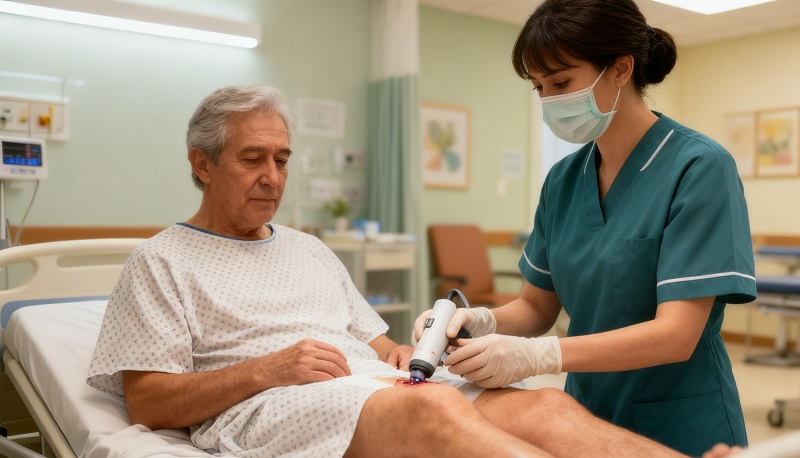
![What Is Pulsed Lavage and How Does It Work in Modern Wound Care]()
Pulsed lavage is a medical method that uses short bursts of fluid to clean wounds. Doctors use special tools for wounds because some patients have big risks. People with diabetic foot ulcers need extra care. Every year, about 18.6 million people get these ulcers. Half of these people get infections. New systems like XCmedico’s Medical Pulsed Lavage help clean wounds better. They also help patients heal faster.
Key Takeaways
Pulsed lavage uses quick fluid bursts to clean wounds well. It removes germs and dead tissue faster than older ways.
This method helps lower infection risk and helps wounds heal faster. It works well for wounds that last a long time and for surgery sites.
New pulsatile lavage systems are easy to use. Many let you use one hand and have built-in suction for better cleaning.
Safety is very important. Always follow rules to stop infection. Do not use pulsed lavage on sensitive places like nerves or arteries.
Pulsed lavage works for many wound types. It can help with bone wounds, injuries, and wounds that do not heal fast.
Pulsed Lavage Overview
What Is Pulsed Lavage
Pulsed lavage is a way to clean wounds using bursts of fluid. The system pushes the fluid out with controlled pressure. This helps wash away bacteria, dead tissue, and dirt from the wound. Traditional irrigation uses a syringe or pours water, but pulsed lavage uses a powered device. The device cleans wounds better and more evenly. It removes more germs and helps wounds heal faster.
Tip: Pulsed lavage is quicker and lowers infection risk compared to old ways.
Here is a simple table to show how pulsed lavage is different:
Feature | Pulsed Lavage | Whirlpool Therapy |
Technology | Powered device delivering solution at pressure | Immersion in water |
Treatment Time | Shorter treatment times | Longer treatment times |
Cost | Reduced cost | Higher cost |
Cross-Contamination Risk | Lower risk | Higher risk |
Suitability for Extensive Wounds | Not suitable | Suitable |
Sterile Conditions | Not maintained after initial treatment | Maintained |
Indications | Arterial/venous insufficiency, diabetes, etc. | General wound care |
Purpose in Wound Care
Pulsed lavage helps wounds heal faster and stay clean. It is good for people with chronic wounds, diabetic ulcers, or after surgery. Pulsed lavage removes bacteria and dead tissue better than other ways. This lowers infection risk and helps new skin grow.
It removes bacteria and dead tissue well.
It gives wounds a good, even cleaning.
It lowers infection risk for patients.
It helps wounds heal faster and better.
Studies show pulsed lavage helps about 70% of lower leg wound infections heal. Doctors and nurses trust this method for good results. Pulsed lavage gives wounds the best chance to heal and helps patients get better sooner.
How Pulsatile Lavage Systems Work
![How Pulsatile Lavage Systems Work]()
Equipment and Technology
Pulsatile lavage systems use new technology to clean wounds fast. These systems spray fluid in short, strong bursts. The fluid washes away bacteria, dead tissue, and dirt. You can hold and use the device with one hand. This makes cleaning wounds easier and quicker. The system usually comes in a ready-to-use, clean kit. This saves time and helps stop germs from spreading.
Most pulsatile lavage systems have both irrigation and suction. Suction pulls out fluid and dirt while you clean. This keeps the wound dry and clear. Some systems have digital pressure checks. This helps you use the right force and not hurt soft tissue. The flow can change by itself, so every user gets the same cleaning power.
The parts in these systems are safe for the body. Many use special plastics and tubing that fight germs. These materials help stop infections. The nozzle is used only once, so each patient gets a clean tip. Some systems spray in many streams. This helps you clean every part of the wound.
Here is a table that lists the main features of modern pulsatile lavage systems:
Feature | Description |
Single-hand operation systems | You can use one hand for better efficiency. |
Pre-assembled, pre-sterilized kits | Saves setup time and lowers cross-contamination risks. |
Integrated suction-irrigation units | Cleans and removes fluid at the same time. |
Digital pressure monitoring | Keeps irrigation force safe for soft tissue. |
Auto-adjustable flow rates | Gives steady cleaning power for every user. |
Data logging for surgical documentation | Helps you keep records for quality control. |
Biocompatible polymers and anti-microbial tubing | Lowers infection risk with safe materials. |
Single-use nozzle designs | Ensures a fresh, clean tip for each patient. |
Multi-stream jet patterns | Improves cleaning in wound management. |
You can use pulsatile lavage systems for many wounds. These include orthopedic wounds, trauma wounds, and chronic wounds. The system changes to fit each wound type. This gives you the right cleaning for every situation.
Step-by-Step Process
You can follow easy steps to use pulsatile lavage systems for cleaning wounds. Here is a simple guide:
Prepare the System
Open the clean kit. Attach the single-use nozzle. Make sure the system is ready.
Set the Pressure and Flow
Change the pressure and flow rate. Use the digital screen to keep the force safe.
Position the Device
Hold the device with one hand. Put the nozzle close to the wound. Make sure you cover the whole area.
Start Pulsatile Irrigation
Turn on the system. The device sprays fluid in bursts. The many streams help you clean all wound surfaces.
Use Suction for Fluid Removal
Suction pulls out fluid and dirt as you clean. This keeps the wound dry and clear.
Check and Adjust as Needed
Watch the wound and change settings if needed. The flow changes by itself to keep cleaning steady.
Finish and Dispose
When done, take off the nozzle and throw it away. Clean the device as the instructions say.
Pulsatile lavage systems work for many wound types. For orthopedic wounds, you can use pulsatile lavage therapy to lower bacteria. This is important for bone and joint injuries. For trauma wounds, you can use low-pressure pulsatile lavage therapy to manage high bacteria. For chronic wounds, you can use daily whirlpool or pulse lavage therapy for cleaning and removing dead tissue.
Here is a table that shows how pulsatile lavage systems work for different wounds:
Wound Type | Treatment Method |
Orthopedic | Pulsatile lavage therapy lowers bacteria, which is important for orthopedic wounds. |
Trauma | Low-pressure pulsatile lavage therapy helps manage high bacterial contamination in trauma wounds. |
Chronic Wounds | Daily whirlpool or pulse lavage therapy helps with irrigation and mechanical debridement. |
Tip: You can use pulsatile lavage systems for many wound types. The system gives you strong cleaning power and helps wounds heal faster.
Pulsatile lavage systems give you a safe and quick way to clean wounds. You can trust these systems for orthopedic, trauma, and chronic wounds. The technology helps lower infection risks and helps patients heal better.
High-Pressure Pulsatile Lavage Benefits
Enhanced Cleaning and Debridement
Doctors want wounds to be very clean during surgery. High-pressure pulsatile lavage gives strong cleaning power. It uses bursts of fluid to wash away bacteria, dirt, and dead tissue. You can use this method for soft tissue cleaning and wound irrigation. It works well for pulsed lavage wound debridement in many surgeries. High-pressure pulsatile lavage is good for traumatic wounds and contaminated wounds.
Many studies show it removes more debris than cleaning by hand. The table below shows what the studies found:
Study Title | Findings |
Fluid Lavage of Open Wounds (FLOW) | No difference in outcomes between very low, low, and high-pressure irrigation in open fractures |
High-Pressure Pulsatile Lavage Irrigation of Fresh Intraarticular Fractures | Effective at removing particulate matter from bone |
High Pressure Pulsatile Lavage Irrigation of Intraarticular Fractures | Effects on fracture healing |
You can trust high-pressure pulsatile lavage to clean wounds fast. Experts say it removes bacteria and debris better than low-pressure methods. This is true for contaminated wounds that are cleaned later. A cleaner wound helps the healing process.
Infection Control and Healing
It is important to stop infection and help wounds heal after surgery. High-pressure pulsatile lavage lowers infection risk by washing away bacteria and dead tissue. This method works well for wound irrigation in traumatic and contaminated wounds. You can use it in surgery to help wounds heal faster.
Clinical results show high-pressure pulsatile lavage gives strong first cleaning. It removes bacteria and lowers infection risk. The table below compares different cleaning methods:
Method | Effect on Bacteria | Tissue Damage Risk | Recommendation |
High-Pressure Pulsatile Lavage | Initial clearance | Higher risk | Use with caution for heavily contaminated wounds |
Traditional Methods (Saline) | Effective without | Lower risk | Recommended for general use |
You should use high-pressure pulsatile lavage for wounds that need deep cleaning. This is important after trauma or surgery. The method helps wounds heal faster and gives better results. You can rely on high-pressure pulsatile lavage for wound irrigation, debridement, and infection control in surgery.
Note: Always follow best steps to protect healthy tissue when using high-pressure pulsatile lavage.
Safety and Best Practices
![Safety and Best Practices]()
Safety Guidelines
You must always follow safety rules when using pulsed lavage systems. These devices need to meet world safety standards. This keeps patients safe and makes sure the device works well. The table below lists the main safety certifications you should check:
Standard | Description |
ISO 13485 | Sets rules for medical device quality management. |
CE Marking | Shows the device meets European safety rules for medical devices. |
FDA Approval | Proves the device is safe and works well in the U.S. |
When using pulsed lavage, follow these steps to keep everyone safe:
Use a single-patient room or cubicle with hard walls and closed doors.
Wear waterproof gowns, masks, sterile gloves, and hair covers.
Only bring needed equipment into the room.
Cover flat surfaces with sheets or towels.
Put a mask or clean cloth on the patient’s face for treatments above the waist.
Cover all patient lines, ports, or other wounds.
Clean all touched surfaces after the procedure.
Never reuse disposable items like tips and suction tubes.
Store reusable handpieces in a clean, sterile way.
Throw away dirty fluid canisters in a red biohazard container.
Tip: These steps help stop infection and keep everyone safe.
Contraindications and Precautions
You need to know when pulsed lavage is not safe to use. High-pressure pulsed lavage can hurt soft tissue, cause deep injury, or even kill cells. It can also push bacteria deeper into the wound. To stop problems, remember these safety tips:
Do not use pulsed lavage with suction on nerves, tendons, arteries, or bones you can see.
Do not use on face wounds, bleeding wounds, body cavities, or new grafts.
Be careful with patients who take blood thinners, as they bleed more easily.
Patients who cannot feel pain may not notice injury. Deep wound tunnels can get hurt by the tip.
Keep irrigation pressure at 15 psi or less to stop bacteria from going deeper.
Use latex-free tubing and tips for patients with latex allergies.
Note: Always check the patient’s health and wound type before starting pulsed lavage. Careful use helps you avoid problems and helps wounds heal better.
You have learned that pulsed lavage cleans wounds fast and safely. More people need these systems because there are more surgeries now. Hospitals want better ways to stop infections. Doctors and nurses pick new tools for better healing.
Pick XCmedico’s Medical Pulsed Lavage to help your patients heal well. You can contact XCmedico to get more details or start working with them.
FAQ
What types of wounds can you treat with pulsed lavage?
Pulsed lavage can help with many kinds of wounds. You can use it for surgical wounds and chronic ulcers. It also works for burns and injuries from accidents. The system is good for orthopedic wounds and soft tissue wounds.
Is pulsed lavage safe for all patients?
Most patients can use pulsed lavage safely. You should not use it on nerves, arteries, or new grafts you can see. Always check the patient’s health before you start.
How often should you use pulsed lavage on a wound?
Use pulsed lavage as often as your doctor says. Some wounds need cleaning every day. Other wounds may need it less often. Always listen to your healthcare provider.
What are the main benefits of using pulsed lavage?
Pulsed lavage helps take away bacteria, dead tissue, and dirt fast. It lowers the chance of infection and helps wounds heal quicker. The system lets you control the cleaning better.