Spine implants help you get better after bad back problems. These devices give support and keep your spine steady or fix its shape. You might need spine implants if you have problems like degenerative disc disease, herniated discs, spinal stenosis, or spondylolisthesis. Spinal implants help your back stay strong and let you move with less pain. Doctors use spine implants to protect your spine while it heals and to help you feel better. Spine implants come in different shapes and materials. Each type is made for a special need.
Key Takeaways
Spine implants help your back heal and lessen pain. They keep the spine steady and make it easier to move.
Fusion implants join vertebrae to make the spine stable. They work well for problems like degenerative disc disease. They often have good results.
Non-fusion implants keep the spine flexible. They let you move and may help you heal faster. You do not need bone grafts with these.
Picking the right implant depends on your health and what you want from surgery. Talk to your doctor to choose the best one for you.
Implants are often made from titanium and PEEK. These materials are strong and safe. They help the implant last a long time.
Types of Spine Implants
There are many kinds of spinal implants used in surgery. Doctors pick the right device for your problem and treatment plan. The main groups are fusion and non-fusion spinal implants. Each group has its own features and jobs.
Tip: Learning about implant types helps you talk with your doctor.
Fusion Spine Implants
Fusion spinal implants join two or more vertebrae together. These devices keep your spine steady and help with pain. You might need fusion if you have degenerative disc disease, trauma, or spondylolisthesis. Some common fusion spinal implants are pedicle screws, rods, plates, and interbody cages. These devices hold bones in place while they heal and fuse.
Category | Types |
Fusion Implants | Cages, Plates, Rods |
Non-Fusion Implants | Artificial discs, Expandable rods |
Doctors often use lumbar interbody fusion for spine problems. In this surgery, they put an implant like an interbody cage between vertebrae. This keeps the spine straight and helps healing. Fusion spinal implants give strong support and high fusion rates. Studies show cervical fusion rates are 98.9%, and lumbar fusion rates are 97.9%. Most patients feel less pain and move easier after surgery.
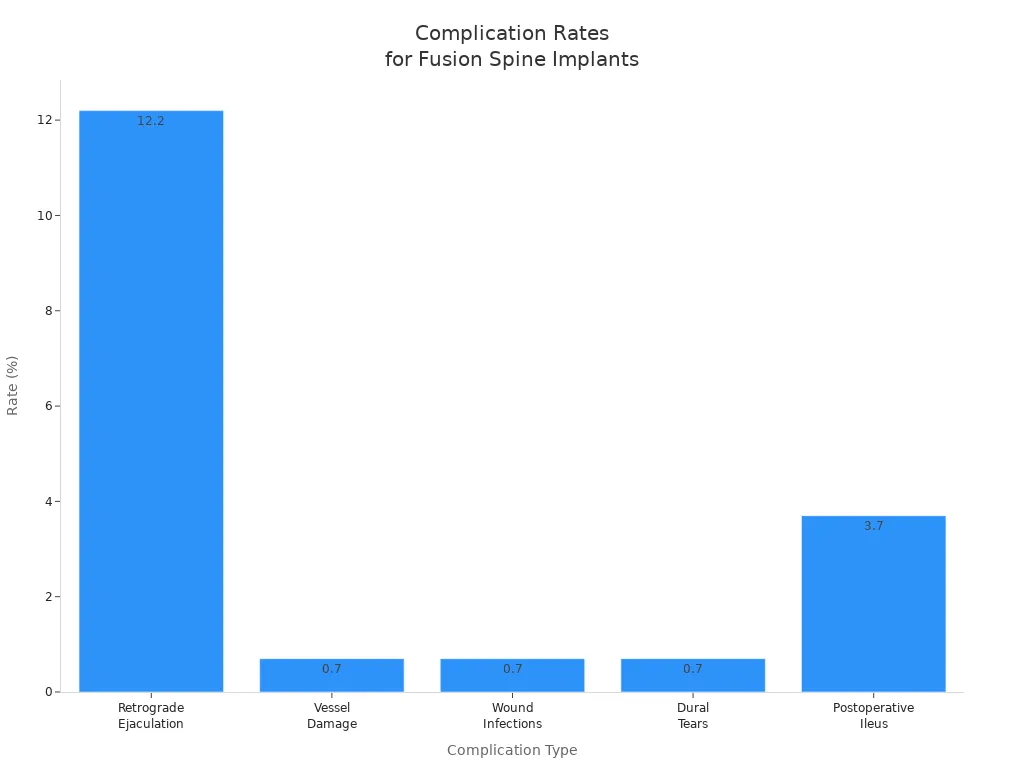
Fusion can have risks too. Some people get problems like infection, vessel damage, or wound issues. The total complication rate for fusion is between 13.4% and 30%. You should talk to your doctor about these risks before surgery.
Non-Fusion Spine Implants
Non-fusion spinal implants let your spine keep moving. These devices do not join bones together. They support your spine and help with pain. Non-fusion implants include artificial disc replacement and expandable rods. Doctors use non-fusion implants when you need to keep your spine flexible.
Type of Implant | Description | Preferred Cases |
Artificial Disc Replacement | Replaces a damaged disc with a prosthetic implant that maintains motion. | When preserving spinal mobility is essential. |
Decompression Procedures | Removes bone or tissue pressing on spinal nerves to relieve pain. | In cases of nerve compression without the need for fusion. |
Non-fusion implants help you get back to normal faster. You may walk and climb stairs soon after surgery. These devices keep future treatment options open and lower the risk of problems in nearby spine parts. Non-fusion methods like vertebral body tethering let you keep moving and feel comfortable.
Non-fusion implants may help you return to activities in six weeks.
Fusion can lower movement by about 10 degrees at the fused spot.
Motion-preserving implants lower the risk of problems in nearby segments.
Common Spine Implant Devices
Many devices are used in spinal surgery. Each device helps support or fix your spine.
Plates: Plates connect bones and keep them steady during fusion.
Rods: Rods hold vertebrae together and help fix spine shape.
Interbody cages: Cages go between vertebrae and help fusion.
Artificial discs: Artificial discs replace damaged discs and keep your spine moving.
Screws: Screws attach plates and rods to bones.
These devices work together to help your spine. Doctors choose the best mix for your needs. The total complication rate for these devices is between 13.4% and 40%. Common problems are infection, vein injury, and nerve issues. Most patients get better after surgery, but you should talk about all risks with your doctor.
Note: It is important to know what device you have for safety and quality. Ask your doctor about the materials and tracking of your spinal implants.
Functions of Spinal Implants
Spinal implants help you get better after back problems. These devices help your spine heal and keep it steady. They also let you move with less pain. Some implants make your spine stable. Others help you move or fix spine shape. Each type helps your health in a special way.
Stabilization and Support
You need spinal stabilization if your spine is not steady. Spinal implants work like shock absorbers. They support your vertebrae and spread stress across your joints. This helps you move safely and lowers your chance of injury.
Implants spread pressure and keep your spine straight.
Dynamic stabilization systems let you move a little but keep you stable.
Devices like DIAM™ help control movement and limit bending after surgery.
Studies show spinal implants help you move better and share weight. Doctors check how much your spine moves and how much pressure is inside your discs. Modern implants help keep your spine stable while you heal.
If you have spinal fusion surgery, your doctor may use rods, screws, or cages. These devices hold your bones in place. They help your spine fuse and heal the right way.
Some implants stop more spine problems from happening. Dynamic stabilization systems keep the spinal canal open and keep parts of your spine in shape. This can delay bigger surgeries, especially for younger people. Only a few older patients with degenerative stenosis get help from interspinous devices.
Motion Preservation
You may need motion-preserving implants to keep your spine flexible. These devices let you move more easily and lower problems in nearby spine parts. Motion-preserving implants include artificial discs and dynamic devices.
Type of Device | Description |
Total Disc Replacement (TDR) | Replaces the whole disc so you can still move. |
Prosthetic Nucleus Replacement | Replaces the center of the disc and lets you move some. |
Posterior Dynamic Devices | Keep you stable but let you move, using flexible parts. |
Facet Replacement | Replace the facet joints so you can keep moving your spine. |
You may move better and feel less pain after getting these implants.
Patients with disc prostheses have fewer problems in nearby spine parts than those with fusion.
VAS scores for back pain drop from 8.6 to 1.6 after surgery.
VAS scores for leg pain go down from 7.3 to 1.1.
ODI scores get better from 46.12±7.3 to 27±9.3.
Many patients say they feel less pain and can do more.
Studies show that your range of motion gets better after surgery. You do not lose movement in nearby spine parts. This helps you stay active and feel good.
Correction of Spinal Deformities
Spinal implants help fix problems like scoliosis or kyphosis. These devices keep your spine straight while you heal. Doctors use rods, screws, and hooks to make your spine straight and hold it in place.
Implants keep your spine in the right spot while you heal.
They work with spinal fusion to keep your spine straight for a long time.
For scoliosis, surgery makes your spine straight and uses implants to keep it steady.
For kyphosis, implants help bring back a natural curve and make your spine stable.
Outcome Type | Success Rate |
General spinal instrumentation | 70–80% |
Pedicle screw systems | Better results for keeping your spine straight and strong |
Adolescent idiopathic scoliosis | Curve correction rates of 68–80% |
You can expect good results for fixing spine problems with modern implants. These devices help you get better alignment and lasting results. Doctors use spinal fusion and new implants to fix spine shape and help with pain.
Tip: Ask your doctor what kind of implant will fix your spine and how it helps you heal.
Spinal implants give you support to get better, move, and feel less pain. Whether you need stabilization, motion preservation, or deformity correction, these devices help with many spine problems.
Spinal Implant Materials
![Spinal Implant Materials]()
Picking the right material for spinal implants is important. It helps keep you safe and helps you heal. You want implants that last a long time. They should work well with your body. They help you get better after interbody fusion or other spine surgeries. Doctors and buyers look for strong and flexible materials. They also want materials that are safe for your body.
Titanium Alloys
Titanium alloys are used a lot in spinal implants. You see them in interbody fusion cages, rods, and screws. These alloys are strong and safe. The table below shows why titanium alloys are good for spinal surgery:
Property | Description |
Mechanical Strength | High tensile strength keeps your implant stable during movement and healing. |
Corrosion Resistance | Titanium resists rust and damage, even inside your body. |
Young's Modulus | Titanium bends like human bone, lowering stress shielding and helping bone growth. |
Biocompatibility | Safe alloying elements prevent bad reactions and support healing. |
Cold Workability | Titanium shapes easily, so manufacturers can make custom implants for special cases. |
Titanium matches your bone’s flexibility. This helps your interbody fusion heal better. It also lowers the chance of implant problems.
PEEK and Polymers
PEEK and other polymers are new choices for spinal implants. You find PEEK cages in interbody fusion surgeries. PEEK is stiff like your bone. This helps lower stress shielding. You also get clear X-ray and MRI pictures. This makes it easier for doctors to check your healing.
PEEK is light and feels comfortable.
You do not have problems with temperature changes.
Doctors can see your healing clearly on images.
But PEEK has a smooth surface. This makes it hard for bone cells to stick. Sometimes, bone does not grow well on it. The implant might move. PEEK’s biological inertia can change long-term results.
Advantages of PEEK | Disadvantages of PEEK |
Matches bone stiffness, reducing stress | Lower cell adhesion, poor bone integration |
Good for imaging and monitoring | Can cause implant displacement |
Comfortable and wear-resistant | May lead to unsatisfactory outcomes |
Material Selection Factors
You need to think about many things when picking spinal implant materials. This is true for interbody fusion or other surgeries.
Your body may need custom implants if you have tumors or infections.
Doctors pick materials based on your health and bone quality.
They also think about what the surgery needs to do.
Manufacturers must follow strict rules and give good products.
Studies and expert advice help doctors choose the best materials.
Tip: Ask your supplier about material certifications and how they make the implants. Good materials help you stay safe and heal better after interbody fusion.
Spine Implant Selection
Patient and Surgical Needs
It is important to pick a spine implant that fits your health and surgery type. Your age and bone strength matter when choosing an implant. Other health issues can also change what works best for you. If you have osteoporosis, surgery can be riskier. Doctors may use cement augmentation or expandable screws to help your bones hold the implant better.
Evidence Type | Description |
Complications in Surgery | Osteoporosis makes surgery harder, so doctors plan carefully. |
Biomechanical Evaluations | Weak bones can make implants loose and cause problems. |
Optimization Techniques | Doctors use special ways to help patients with weak bones. |
Hospitals think about your needs and what the surgery should do. Some people need implants to keep their spine steady. Others need to keep their spine moving. Picking the right implant helps you heal faster and lowers your chance of problems.
Manufacturer and Product Advantages
You want to trust the company that makes your spinal implant. Hospitals and buyers look for good value when picking implants. They care about how well the implant works, not just the price. Many hospitals have groups that check if spinal devices are safe and work well. They make deals that connect the price to how well patients recover.
Hospitals look at safety and results before buying.
They want implants that help patients heal quickly.
Value-based buying means better care and better results.
You should check if the company follows strict quality rules. The best companies meet standards like ISO 13485 and MDR. These rules help make sure implants are safe and work well.
Standard/Certification | Description |
ISO 13485 | Quality rules for medical devices |
MDR | EU rules for medical devices |
ASTM F2077-24 | Tests for fusion devices |
MDSAP | Checks for global safety rules |
XC Medico Spine System Features
XC Medico offers many spinal implant choices. You can find products for problems like degenerative diseases, injuries, and tumors. The XC Medico Spine System uses strong titanium and certified PEEK. These materials help your body heal and last a long time.
Feature | Description |
Comprehensive Product Portfolio | Treats many spine problems, like deformities and injuries. |
High-Quality Materials | Uses strong titanium and safe PEEK for better healing. |
Surgical Technique Versatility | Works for open and minimally invasive surgeries. |
Ergonomically Designed Instruments | Makes surgery easier and more comfortable for doctors. |
You can ask for custom implants with XC Medico’s OEM and ODM services. The company can design, test, and package products for your needs. This helps hospitals and sellers build their own brands and meet local market needs.
Tip: Picking a trusted company like XC Medico helps you get safe implants and better results.
Pros and Cons of Types of Spinal Implants
Benefits and Risks of Fusion Implants
Fusion implants give your spine strong support. They help bones grow together. Your back stays steady with these devices. Doctors use fusion implants because they work well. Some grafts have a 95.3% success rate. You may feel less pain after surgery. You can move better too.
Benefits:
Some grafts have high fusion rates.
These implants support unstable spines.
You may get long-term pain relief.
Risks:
You might feel pain after surgery.
Infection can happen in up to 10.2% of cases.
Graft problems may occur in 35.1% of patients.
Pseudarthrosis can cause more issues.
Talk to your doctor about these risks before surgery.
Advantages and Limitations of Non-Fusion Implants
Non-fusion implants help keep your spine flexible. You can move more easily with these devices. You do not need bone grafts. This lowers some surgery risks. You may recover faster. But you could have mechanical problems. More research is needed for long-term results.
Advantages | Limitations |
Surgery has fewer problems. | Mechanical failure can happen. |
No need for bone grafts. | Not enough long-term proof. |
Faster recovery with lumbar TDR. | Subsidence happens in 9% of cases. |
Lower surgical problems overall. | 36% get adjacent level degeneration after 10 years. |
Ask your doctor which option is best for you.
Safety, Longevity, and Cost Considerations
Safety and how long implants last are important. Most early failures happen in six months. Poor bone quality or device design can cause this. Pseudarthrosis affects up to 24% of patients. Artificial discs may last 50 to 100 years. They need fewer repeat surgeries than fusion implants.
Studies show artificial disc replacement can last many years. It has lower reoperation rates than fusion implants.
Type of Implant | Average Longevity | Failure Rate |
Posterior Spinal Implants | Last about 28.7 months. | Failure rate is 0.4% to 22%. |
Artificial Discs | May last 50–100 years. | Reoperation rate is 3.7% to 11.4%. |
Costs depend on the material and surgery type. In America, spinal surgery costs $50,000 to $250,000. Better materials cost more but work better. Ask your supplier about safety and long-term value.
Spine implants help you get better and move easier. They also help you feel less pain in your back. You can pick fusion or non-fusion devices. Each type does something special for your spine. Good implants help you heal faster and feel better.
If you choose XC Medico, you get safe products and help from experts.
FAQ
What materials do spine implants use?
Spine implants are made from titanium alloys and PEEK. These materials are strong and safe for your body. Titanium does not rust. PEEK lets doctors see clear images. Both help you heal well and last a long time.
How do I choose the right spine implant for my needs?
Think about your health and bone strength. Your surgery goals matter too. Ask your doctor which implant is best for you. Good companies make safe and high-quality products.
Can I request custom spine implants for my hospital or clinic?
Yes, you can ask for custom implants. Companies like XC Medico offer special services. You can get private molds and custom packaging. They also make instrument kits just for your needs.
What quality standards should I look for in spine implants?
Look for implants with ISO 13485, MDR, and ASTM certifications. These standards mean the product is safe and works well. High-quality implants help patients get better results.
How does XC Medico support international bulk buyers?
You get expert help and good prices. XC Medico has many products and custom options. They check quality carefully. You can ask for quotes and get help with shipping and paperwork.