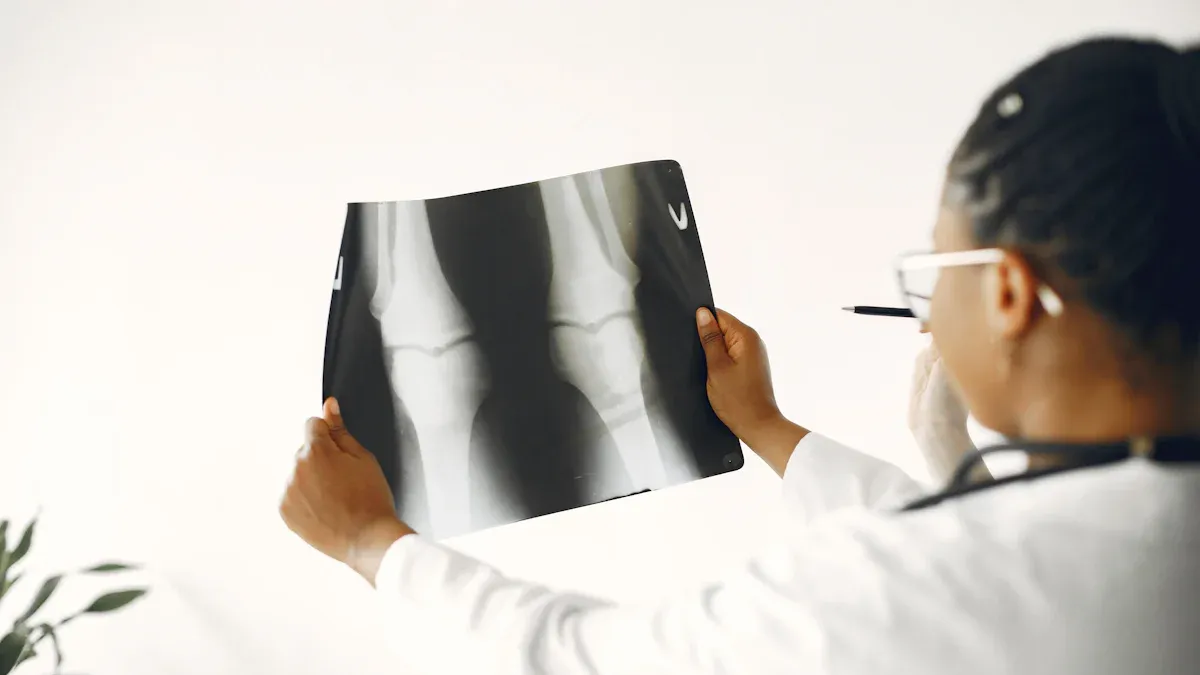
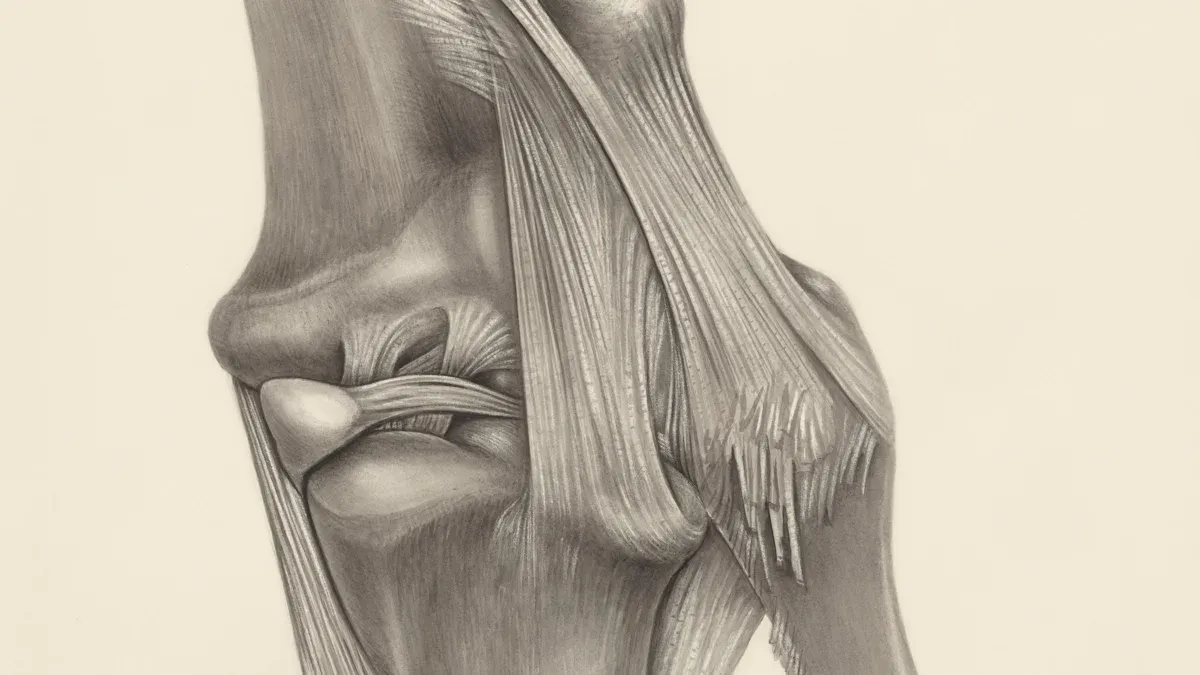
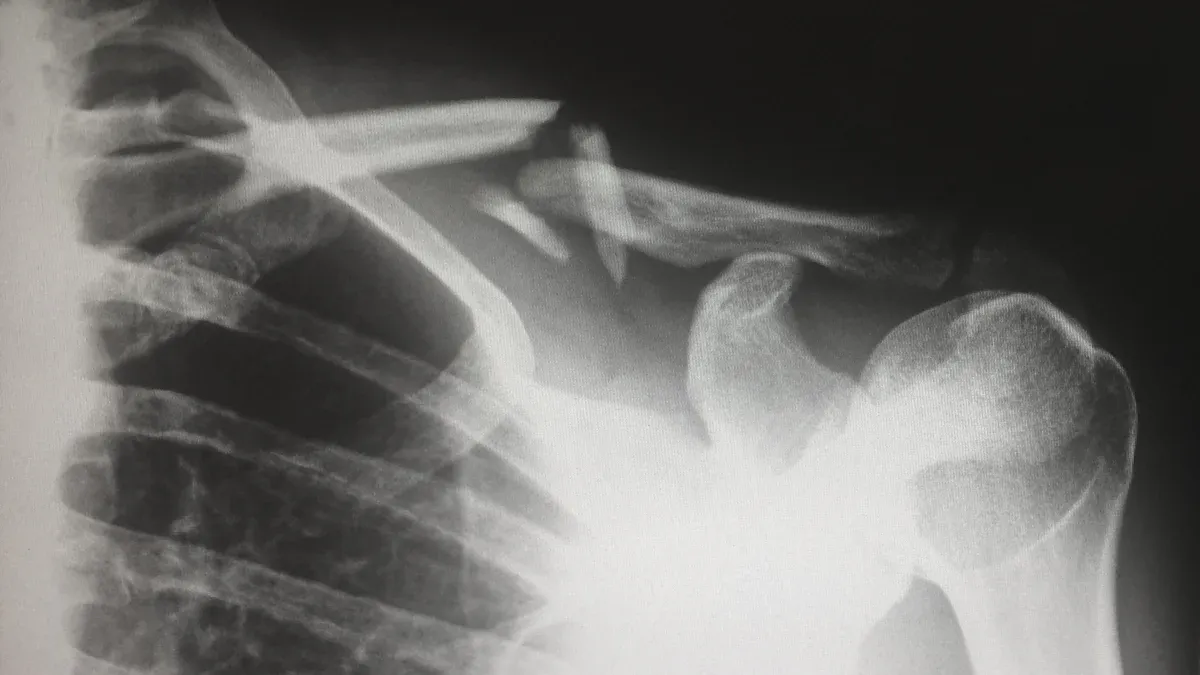
The difference between a locking plate and a non-locking plate comes down to one mechanical idea: how the screw connects to the plate. In a locking plate, the threaded screw head locks into the plate hole, so screws and plate behave as one rigid, fixed-angle unit that does not depend on friction against the bone. In a non-locking (conventional) plate, the screws press the plate onto the bone, and stability comes from friction at the plate–bone interface.
That single design difference cascades into everything else — bone contact, periosteal blood supply, compression at the fracture site, behaviour in osteoporotic bone, hardware removal rates, and cost per construct. This guide compares locking vs non-locking plates across mechanism, biomechanics, clinical indications, and procurement, so the implant matches both the fracture and the patient.
Locking vs Non-Locking Plates at a Glance
If you only read one part of this page, read this table. It summarises the differences that change clinical decisions.
| Feature | Locking plate | Non-locking plate |
| Screw–plate connection | Threaded screw head locks into the plate hole | Plain screw head; plate is held only by friction |
| Fixation principle | Fixed-angle (angular stable) construct; screws cannot toggle | Load transfer through plate–bone compression |
| Plate–bone contact | Does not need precise contouring or firm compression | Must be contoured to sit flush on the bone |
| Effect on blood supply | Periosteum under the plate is preserved; indirect healing with callus | Plate compresses the cortex; periosteal perfusion may be reduced |
| Fracture-site compression | Not generated through the plate (needs a separate lag screw) | Created by eccentric screw placement |
| Osteoporotic or comminuted bone | Maintains hold and resists screw loosening | Risk of screw pull-out and loss of reduction |
| Typical indications | Metaphyseal, peri-articular, periprosthetic, osteoporotic, comminuted fractures | Simple diaphyseal fractures in good-quality bone |
| Relative cost per construct | Higher | Lower |
| Hardware removal | Less frequent in most comparative series | More frequent |
Table note: cost, removal and complication figures vary by fracture type, implant system and health system. Treat the last three rows as directional, not universal.
Key Takeaways
-
Mechanism decides everything. Locking screws create a fixed-angle construct; non-locking screws rely on friction between plate and bone.
-
Locking plates tolerate imperfect fit. They do not need to be contoured exactly to the bone, which helps preserve blood supply and simplifies surgery in comminuted fractures.
-
Non-locking plates need accurate contouring. They work best in strong bone with a simple fracture pattern, where they can also generate compression.
-
Outcomes are often similar; complications differ. Published comparisons across common fracture types report broadly comparable functional results, with the differences concentrated in wound problems, reoperation and hardware removal.
-
Choose by bone quality and fracture pattern first, cost second. Weak or comminuted bone favours locking; simple fractures in healthy bone favour non-locking.
How Locking and Non-Locking Plates Work
How a locking plate works
A locking plate is used when the construct itself has to provide stability. The screw head carries threads that engage matching threads in the plate hole, so the screw and plate are mechanically coupled. Angle and position are fixed by the plate, not by how tightly the screw bites the bone.
Three consequences follow. First, the plate does not have to be pressed onto the bone, so it can be left slightly off the surface and the periosteal blood supply beneath it survives. Second, because the screw cannot toggle, the construct resists pull-out even when bone quality is poor or the fracture is in many pieces. Third, controlled micromotion at the fracture gap encourages bridging callus — the principle behind indirect healing.
Tip: A locking plate is the natural choice when the bone cannot be relied on to hold a screw — osteoporosis, comminution, or a periprosthetic fracture.
The table below lists the biomechanical principles behind those advantages.
| Principle / advantage | Description |
| Mechanical stability | Plate and screw form a single load-bearing unit that does not depend on bone support |
| Independence from the bone surface | No need for a perfect anatomical fit; periosteal perfusion is preserved |
| Prevention of screw loosening | Locked threads hold screw angle throughout healing, even under cyclic load |
| Angular stability | Resists toggling, bending and torsional failure in weak or comminuted bone |
How a non-locking plate works
A non-locking plate — also written "no-locking plate", and often called a conventional or compression plate — works the opposite way. The screws pass through the plate and into the bone, pulling the plate down onto the cortex. Stability comes from friction at the plate–bone interface: the greater the compression, the greater the resistance to movement.
This mechanism has real advantages. It transfers load along the plate and generates compression across the fracture line, which encourages primary bone healing in simple patterns. It also costs less and requires no specialised locking instrumentation. But it has one hard requirement: the plate must be contoured accurately. If the plate does not sit flush, the friction that holds the construct together is lost and reduction may be lost with it.
Note: Non-locking plates perform best in healthy bone with a simple fracture. Accurate contouring is not optional — it is the mechanism.
The table below compares how the two construct types distribute load.
| Construct type | Load distribution | Normal bone model | Osteoporotic bone model |
| Non-locking plates | Friction at the plate–bone interface; shear stress is concentrated at the screw–bone interface | Higher stiffness and more cycles to failure | Performance deteriorates sharply |
| Locking plates | Shear stress is converted to compression, which bone tolerates better | Lower stiffness in isolation | Superior resistance to displacement and torque |
Key technical differences at a glance
| Feature | Locking plates | Non-locking plates |
| Screw design | Screw-head threads match the plate hole | Standard screws; no thread engagement with the plate |
| Fixation method | Fixed-angle construct; screws lock to the plate | Accurate contouring to bone; stability by friction |
| Bone healing | Indirect healing with callus; periosteal blood supply preserved | Direct healing; cortical compression may reduce perfusion |
| Stability in poor-quality bone | High — the fixed-angle design does not depend on bone strength | Lower — screws may loosen or pull out |
| Compression at the fracture site | Not possible through the plate | Possible, but lost if the plate is not contoured exactly |
When to Use a Locking Plate and When to Use a Non-Locking Plate
Locking plate indications
Locking plates are used where the bone cannot be trusted to hold a screw. Typical situations include a displaced proximal humerus fracture in an older patient, a distal femur or distal radius fracture with metaphyseal comminution, a periprosthetic fracture around a hip or knee replacement, and open fractures where soft-tissue damage limits the surgical approach.
In these cases the plate carries the load rather than the bone. Because screw angle is fixed by the plate, the construct resists bending and torsion and provides more cycles to failure — which matters when healing will be slow. Locking plates are also useful when a non-locking plate would need excessive contouring, since they tolerate a small gap between plate and bone.
Rule of thumb: choose a locking plate for severe or unstable fractures, poor bone quality, or when fixation must not depend on screw purchase.
Non-locking plate indications
Non-locking plates remain the right answer for simple fractures in good bone. A transverse or short oblique diaphyseal fracture in a healthy adult is a classic indication: the plate can be contoured to the cortex, generate compression across the fracture line, and support primary healing.
They are also the pragmatic choice where resources are limited. The implant costs less, the technique is familiar, specialised locking instrumentation is not required, and removal — if it is ever needed — is straightforward. For straightforward reductions in strong bone, a non-locking plate is often both simpler and cheaper than a locking construct.
Note: choose a non-locking plate for simple fracture patterns, healthy bone, and cases where compression or cost-efficiency is the priority.
Matching plate choice to the patient and fracture
Patient factors matter as much as the fracture line. Older patients with reduced bone mineral density are more likely to benefit from angular stability; younger patients with simple patterns rarely need it. The table below summarises the trade-offs.
| Plate type | Best suited to | Relative cost | Operative time | Stability in weak bone | Hardware removal |
| Locking plate | Older patients, osteoporotic bone, comminuted or peri-articular fractures | Higher | Usually longer | High | Less frequent |
| Non-locking plate | Younger patients, good bone stock, simple diaphyseal fractures | Lower | Usually shorter | Lower | More frequent |
Advantages and Disadvantages of Each Plate Type
Advantages and disadvantages of locking plates
A locking plate gives strong, angle-stable support without needing a perfect anatomical fit or hard cortical compression, which makes it dependable in difficult bone. The same design, however, brings trade-offs. Locking plates are thicker and more prominent, and the literature reports a higher rate of wound complications and reoperation in some fracture types — most notably around the distal radius. Several comparative studies also found no functional advantage over non-locking plates despite the higher cost.
| Advantages of locking plates | Disadvantages of locking plates |
| Superior biomechanical properties in weak bone | More wound complications in some series |
| Better stability in osteoporotic bone | Higher risk of revision surgery reported in certain indications |
| Fixed-angle fixation resists screw toggling | No proven functional benefit in some fracture types |
| No need for a perfect bone fit; periosteum preserved | Greater plate thickness and prominence |
| Reliable for complex and comminuted patterns | Higher implant cost and, in some reports, higher reoperation rates |
Reported problems cluster around hardware prominence, wound healing and — for distal radius plating — carpal tunnel symptoms. Discuss the trade-off explicitly when selecting a locking construct.
Advantages and limitations of non-locking plates
A non-locking plate is simple to use, easy to contour and easy to remove, and it adapts to a wide range of simple fracture patterns. It costs less, needs no locking-specific instrumentation, and lets the surgeon apply compression at the fracture site. For hospitals working to a budget, that combination is hard to beat.
Simple technique: familiar instrumentation, straightforward insertion and removal.
Versatile: suitable for many simple fracture patterns and bone shapes.
Cost-efficient: lower unit price, meaningful at volume.
The limitations are equally clear. Non-locking fixation depends on friction, so it depends on bone quality. In osteoporotic or comminuted bone, screws can pull out and reduction can be lost; the plate fails more often. Compression under the plate can also compromise cortical perfusion. If the plate is not contoured accurately, the construct never achieves the friction it relies on.
Tip: match the plate to fracture pattern and bone quality. Non-locking fixation fails most often when it is used outside its indication, not because the design is flawed.
Cost, Inventory and Procurement Considerations
Procurement decisions are not the same as clinical decisions, and the two have to be reconciled. Locking plates carry a higher unit price, but they can reduce revision and hardware-removal procedures in complex cases, which shifts cost from the operating theatre to the implant budget. Non-locking plates are cheaper per unit and cover a large share of routine trauma volume.
A practical purchasing strategy is to stock both, clearly mapped to indications: locking constructs for osteoporotic, metaphyseal and periprosthetic fractures; non-locking constructs for simple diaphyseal work. Standardising on a system that offers both plate types — with shared instrumentation, matched screw platforms and consistent documentation — reduces inventory complexity, shortens set-up time and lowers the risk of a missing implant mid-case.
Tip: evaluate total cost of care, not unit price. Factor in instrumentation, sterilisation, set completeness, revision risk and lead time.
Choosing a Plate Manufacturer
Plate choice is only half the decision; the other half is who makes it. For a trauma implant to be dependable, the material, tolerances, surface finish and sterilisation process all have to be controlled — and the supplier has to evidence that control through certification.
XC Medico manufactures orthopedic trauma implants including locking plates and no-locking plates within a documented quality system: ISO 13485 for medical device quality management and ISO 10993 for biocompatibility of the materials in contact with tissue. Every batch is traceable, and each implant ships with the documentation hospitals and distributors need for regulatory and tender requirements.
| What to check in a supplier | Why it matters |
| Medical-grade material and full traceability | Consistent mechanical performance and audit-ready documentation |
| ISO 13485 quality management | Recognised as the baseline for global regulatory compliance |
| ISO 10993 biocompatibility testing | Lower risk of adverse tissue reaction |
| Validated sterilisation | Implants arrive clean and ready for use |
| Complete instrument sets and supply continuity | No interruptions mid-case and predictable restocking |
For a combined trauma portfolio and consistent documentation across both plate types, review the orthopedic trauma system or contact XC Medico for the current locking and non-locking plate catalogue, minimum order quantities and lead times.
FAQ
What is the main difference between a locking plate and a non-locking plate?
In a locking plate, the threaded screw head locks into the plate hole, creating a fixed-angle construct that does not depend on friction with the bone. A non-locking plate holds the bone by friction: the screws compress the plate onto the cortex, and the plate must be contoured to fit accurately.
Are locking screws better than non-locking screws?
Not universally. Locking screws are better when bone quality is poor or the fracture is comminuted, because they resist toggling and pull-out. In healthy bone with a simple fracture, non-locking screws perform well, allow compression and cost less. The indication, not the screw, determines which is better.
When should you choose a non-locking plate?
Choose a non-locking plate for simple fracture patterns in good-quality bone — a transverse diaphyseal fracture, for example — or when compression at the fracture site and cost-efficiency are the priorities. It also suits settings where locking-specific instrumentation is not available.
Do locking plates need to be contoured to the bone?
No. That is one of their main advantages. Because stability comes from the screw–plate interface rather than from friction, a locking plate can be left slightly off the bone surface. This preserves the periosteal blood supply beneath the plate. Non-locking plates, by contrast, must sit flush.
Are locking plates better for osteoporotic bone?
Yes — this is their clearest indication. Locking screws hold their angle even when the surrounding bone cannot provide much purchase, so fixation is less likely to fail and screws are less likely to loosen. That is why locking plates are widely used in older patients and in periprosthetic fractures.
Which plate is more cost-effective for a hospital?
It depends on case mix. Non-locking plates cost less per unit and cover routine trauma efficiently. Locking plates cost more but can reduce revision surgery and hardware removal in complex cases. Most trauma centres stock both and map each plate type to its indications rather than standardising on one.
Do locking plates need to be removed?
Usually not, and removal is less frequent than with non-locking plates. Removal is considered when the implant is prominent and irritates soft tissue, when it causes symptoms, or in younger patients where the hardware is no longer needed. The decision is clinical, not routine.
Can the same plate be used for every fracture type?
No single plate fits every indication. Locking and non-locking plates solve different mechanical problems, and within each category there are specific anatomical designs for the proximal humerus, distal radius, distal femur and other sites. Matching design to fracture is what determines outcome.
Conclusion
The difference between locking and non-locking plates is mechanical, but the consequences are clinical and financial. Locking plates create an angular stable, fixed-angle construct that holds in osteoporotic, comminuted and metaphyseal bone without pressing on the periosteum. Non-locking plates use friction and compression to fix simple fractures in strong bone, at lower cost and with simpler technique. Neither is universally superior: outcomes in many comparative series are similar, while complications and cost diverge. Choose by fracture pattern and bone quality first, then reconcile that choice with your inventory and procurement plan.
Explore XC Medico's locking plate and no-locking plate ranges, or talk to our team about matching a plate portfolio to your trauma volume.
Last updated: October 2026. This article is written for orthopedic professionals and procurement teams and is not a substitute for clinical judgement.