![Meniscal repair procedure using arthroscopic suture technique]()
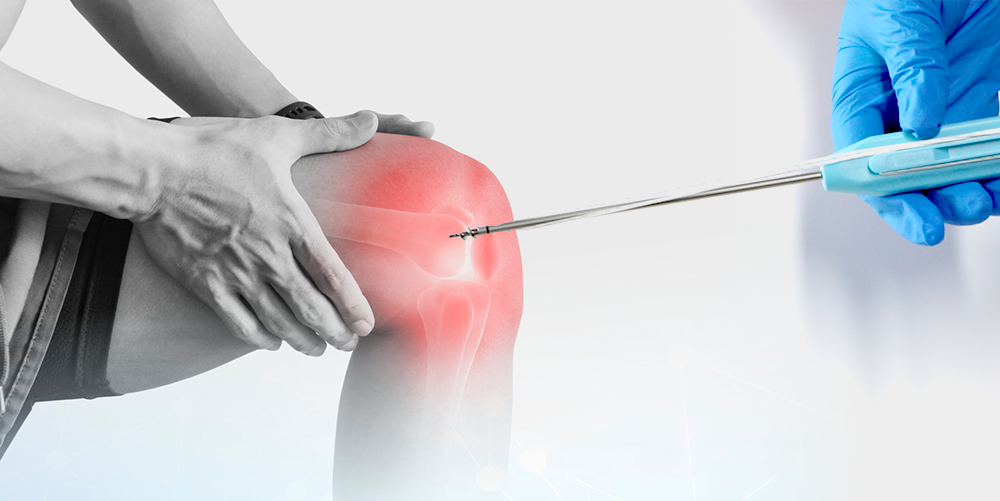
Meniscal repair has become an important procedure in sports medicine and knee preservation surgery. Compared with partial meniscectomy, modern meniscal repair techniques focus on preserving native meniscal tissue whenever possible and restoring knee function through stable fixation.
Successful meniscal repair depends on several factors, including patient selection, tear characteristics, surgical technique, and the quality of repair instruments. Different approaches such as inside-out, all-inside, outside-in, vertical mattress, and circumferential suture techniques are selected according to tear patterns and surgeon preference.
For orthopedic surgeons, hospitals, and medical distributors, understanding both repair methods and the required arthroscopic instruments helps improve procedure efficiency and product selection. XC Medico provides meniscal repair instruments designed for arthroscopic applications, including the Meniscus 2-0# Double Straight Needlefor controlled suture placement during meniscal procedures.
Key Takeaways Meniscal repair techniques should be selected according to tear location, vascularity, and stability requirements.
Inside-out, all-inside, and outside-in repairs remain commonly used approaches for different meniscus tear patterns.
Accurate needle handling and compatible arthroscopic instruments are essential for consistent repair workflow.
Vertical mattress and circumferential sutures provide strong fixation options for specific tear configurations.
Medical distributors should evaluate meniscal repair products based on design, quality control, customization capability, and supply reliability.
Overview of Meniscal Repair Techniques
Meniscal tears can occur because of sports injuries, trauma, or degenerative changes. The choice between repair and removal depends on tear pattern, patient condition, and healing potential.
Modern meniscal repair focuses on preserving the meniscus because it plays an important role in load distribution, knee stability, and cartilage protection.
| Technique | Typical Application | Main Characteristics |
| Inside-out repair | Longitudinal tears and peripheral tears | Provides strong fixation with precise suture placement |
| All-inside repair | Many arthroscopic meniscal repairs | Allows faster workflow and avoids additional posterior incisions |
| Outside-in repair | Anterior horn and selected radial tears | Offers good control for specific tear locations |
| Vertical mattress suture | Vertical and complex tear patterns | Provides strong compression across the repair site |
Patient Selection for Meniscal Repair Procedures
Proper patient selection is one of the most important factors influencing meniscal repair outcomes. Surgeons usually evaluate tear location, tissue quality, patient activity level, and associated knee conditions before selecting a repair strategy.
Suitable Candidates for Meniscal Repair
Young and active patients with repairable meniscal tears.
Peripheral tears located in vascularized areas with healing potential.
Acute traumatic tears with good tissue quality.
Patients requiring long-term knee preservation.
Factors That May Affect Repair Selection
| Factor | Consideration |
| Tear pattern | Complex, unstable, or irreducible tears may require alternative treatment strategies. |
| Cartilage condition | Advanced degenerative changes may influence repair decisions. |
| Tissue quality | Poor meniscal tissue may reduce fixation reliability. |
Essential Instruments for Meniscal Suture Procedures
A complete meniscal repair workflow requires reliable arthroscopic visualization, accurate suture delivery, and appropriate fixation tools. Selecting compatible instruments helps surgeons achieve controlled and repeatable procedures.
Common Meniscal Repair Instruments
Arthroscopic instrument sets
Meniscal repair needles and suture devices
Suture passers and graspers
Knot pushers and arthroscopic accessories
Visualization systems for minimally invasive procedures
XC Medico Meniscus 2-0# Double Straight Needle
The XC Medico Meniscus 2-0# Double Straight Needle is designed for arthroscopic meniscal repair applications where controlled needle passage and accurate suture placement are required.
Its double straight needle configuration supports different repair techniques and provides surgeons with a practical option for managing various meniscal tear patterns. The product is manufactured under controlled quality processes and is suitable for orthopedic distributors seeking reliable sports medicine instruments.
| Feature | Benefit |
| Double straight needle configuration | Supports controlled suture placement during meniscal repair procedures |
| Compatible arthroscopic design | Helps integrate into common surgical workflows |
| Quality controlled manufacturing | Supports consistent supply for hospitals and distributors |
Common Meniscal Suture Techniques
Different meniscal tear patterns require different repair strategies. Surgeons select the most appropriate technique based on tear location, tissue quality, accessibility, and fixation requirements. The following techniques are commonly used in arthroscopic meniscal repair procedures.
Inside-Out Meniscal Repair Technique
The inside-out technique is one of the traditional and widely used meniscal repair methods. It allows precise control of suture placement and provides strong fixation, especially for vertical longitudinal tears and peripheral meniscal injuries.
During this technique, sutures are passed from inside the joint through the meniscus and retrieved externally. The surgeon then secures the sutures outside the capsule while protecting surrounding soft tissues.
| Advantages | Considerations |
| Strong mechanical fixation | Requires careful protection of nearby neurovascular structures |
| Accurate control of suture position | May require additional small incision |
| Suitable for many peripheral tears | Requires experience with suture handling |
All-Inside Meniscal Repair Technique
The all-inside technique has become increasingly popular because it allows complete arthroscopic repair without requiring additional posterior incisions. It is commonly used for many types of meniscal tears, especially when minimizing surgical exposure is preferred.
Modern all-inside repair devices combine needle delivery systems and fixation components to simplify workflow. Proper instrument selection is important to maintain accurate placement and avoid unnecessary tissue damage.
| Advantages | Clinical Application |
| Reduced accessory incision requirements | Commonly used for posterior horn and peripheral meniscal tears |
| Efficient arthroscopic workflow | Suitable for minimally invasive repair procedures |
| Simplified suture management | Supports different tear configurations |
Outside-In Meniscal Repair Technique
The outside-in technique provides excellent control when repairing certain anterior horn and accessible meniscal tears. The surgeon introduces the needle from outside the joint and passes it through the meniscus before securing the repair.
This method remains useful for selected cases where precise needle positioning is required.
| Advantages | Common Applications |
| Good visualization and needle control | Anterior horn tears |
| Flexible suture positioning | Selected radial and horizontal tears |
Vertical Mattress Meniscal Suture Technique
The vertical mattress suture technique is commonly used because it captures the circumferential collagen fibers of the meniscus and provides strong compression across the repair site.
This technique is frequently selected for longitudinal tears and certain complex tear patterns where stable edge-to-edge fixation is required.
General Procedure Steps
Evaluate the tear pattern using arthroscopic visualization.
Prepare the tear edges to improve contact between repaired surfaces.
Pass the suture through the meniscal tissue with appropriate spacing.
Adjust suture tension to achieve stable fixation without excessive compression.
Secure the knot and confirm repair stability.
Technical Note Vertical mattress sutures are frequently selected when stronger vertical fixation is preferred. The choice of suture pattern should always be based on tear characteristics and surgeon experience.
| Parameter | Vertical Mattress Suture | Horizontal Mattress Suture |
| Fiber orientation | Captures circumferential collagen fibers | Provides horizontal compression |
| Typical use | Longitudinal and peripheral tears | Selected horizontal cleavage tears |
| Fixation characteristics | Strong vertical stabilization | Broad tissue compression |
11-8 Meniscal Suture Technique
The 11-8 suture technique combines vertical sutures with a crossing configuration to improve stabilization of selected complex meniscal tears.
This technique uses multiple suture directions to distribute fixation forces across the repaired area. It can be considered when additional reinforcement is required for challenging tear patterns.
Basic Technique Concept
Place vertical sutures on both sides of the tear.
Introduce a crossing suture configuration between the vertical sutures.
Approximate the torn edges while maintaining appropriate tension.
Secure the repair and confirm stability arthroscopically.
| Feature | Purpose |
| Multiple fixation directions | Improves control of complex tear patterns |
| Vertical component | Provides strong tissue capture |
| Crossing component | Helps maintain tear edge approximation |
Cross-Stitch and Circumferential Meniscal Repair
Cross-stitch and circumferential repair techniques are designed for specific tear patterns where multidirectional stabilization is needed. These methods are often considered for complex or radial meniscal injuries.
Cross-Stitch Repair
The cross-stitch configuration creates an X-shaped fixation pattern across the tear. This arrangement helps distribute forces in multiple directions and may improve mechanical stability for selected repairs.
Suitable for complex tear configurations.
Provides multidirectional fixation.
Requires accurate suture positioning.
Circumferential Suture Repair
Circumferential sutures aim to restore the natural compression function of meniscal tissue by creating a repair construct that follows the collagen fiber orientation.
| Technique | Main Application | Key Benefit |
| Cross-stitch | Complex and radial tears | Multidirectional stabilization |
| Circumferential repair | Selected radial tears | Restores hoop stress function |
Modified Outside-In and Flipping Suture Methods
Modified outside-in methods provide another option for repairing certain long or bucket-handle meniscal tears. These approaches allow additional control of suture placement while maintaining arthroscopic visualization.
The flipping suture method is another technique used for specific tear patterns. Selection between different approaches depends on surgeon preference, tear characteristics, and available instruments.
Comparison of Meniscal Repair Techniques
| Technique | Strengths | Typical Use |
| Inside-out | Strong fixation and precise control | Peripheral and longitudinal tears |
| All-inside | Efficient arthroscopic workflow | Common minimally invasive repair procedures |
| Outside-in | Good control for selected locations | Anterior horn and accessible tears |
| Vertical mattress | Strong tissue capture | Longitudinal tears |
| Circumferential | Supports restoration of meniscal mechanics | Selected radial tears |
How to Select Meniscal Repair Instruments
Choosing suitable meniscal repair instruments is important for hospitals, surgeons, and medical distributors. The ideal product should combine reliable design, consistent manufacturing quality, and compatibility with arthroscopic procedures.
Key Factors for Evaluating Meniscal Repair Devices
| Evaluation Factor | What to Consider |
| Needle design | Evaluate needle shape, handling characteristics, and suitability for different repair approaches. |
| Suture compatibility | Confirm compatibility with commonly used meniscal repair sutures and arthroscopic workflows. |
| Manufacturing quality | Reliable production control helps ensure consistent product performance between batches. |
| Supply capability | Distributors should consider production capacity, customization options, and delivery reliability. |
Features of XC Medico Meniscal Repair Instruments
XC Medico develops orthopedic and sports medicine instruments for global distributors, hospitals, and surgical partners. The meniscal repair product range focuses on practical surgical requirements, including controlled handling, stable manufacturing processes, and support for different arthroscopic procedures.
The Meniscus 2-0# Double Straight Needleis designed for meniscal suture applications where accurate needle positioning and smooth suture passage are required.
| Product Feature | Value for Users |
| Double straight needle structure | Supports controlled placement during meniscal repair procedures. |
| Designed for arthroscopic applications | Fits common sports medicine surgical workflows. |
| Quality controlled production | Supports stable supply for international distributors. |
| OEM and customization support | Helps partners develop suitable product solutions for different markets. |
Why Choose XC Medico as a Meniscal Repair Instrument Supplier
Selecting a reliable orthopedic instrument supplier involves more than evaluating individual products. International distributors usually require stable production capability, responsive communication, documentation support, and long-term cooperation.
| Supplier Capability | XC Medico Support |
| Orthopedic manufacturing experience | Dedicated production systems for orthopedic implants and surgical instruments. |
| Sports medicine product support | Solutions covering arthroscopy-related instruments and repair products. |
| OEM capability | Support for product customization, packaging requirements, and private label cooperation. |
| Distributor assistance | Product catalogs, technical information, and quotation support for global partners. |
Request Meniscal Repair Instrument Solutions
Looking for reliable meniscal repair instruments or sports medicine products for your market? Contact XC Medico for product catalogs, OEM support, and customized orthopedic solutions.
Contact XC Medico Postoperative Care Considerations After Meniscal Repair
Postoperative management plays an important role in protecting the repaired meniscus. Rehabilitation protocols may vary depending on tear type, repair technique, patient condition, and surgeon preference.
General Rehabilitation Considerations
Follow the surgeon's recommended weight-bearing and movement restrictions.
Gradually restore knee mobility and muscle strength.
Monitor pain, swelling, and recovery progress.
Adjust rehabilitation according to repair characteristics.
Because different meniscal repairs have different mechanical requirements, postoperative protocols should always be determined by qualified medical professionals.
Frequently Asked Questions About Meniscal Suture Techniques
What are the main types of meniscal repair techniques?
Common meniscal repair techniques include inside-out, all-inside, outside-in, vertical mattress, circumferential, and cross-stitch methods. The selected technique depends on tear characteristics, location, and surgeon preference.
What instruments are required for meniscal suture procedures?
Typical meniscal repair procedures require arthroscopic instruments, suture devices, repair needles, graspers, and related accessories. The exact instrument combination depends on the selected surgical technique.
How do surgeons choose between inside-out and all-inside meniscal repair?
The choice depends on tear pattern, surgical preference, available equipment, and the required fixation approach. Both techniques are commonly used in modern meniscal repair procedures.
What should distributors consider when selecting a meniscal repair instrument supplier?
Distributors should evaluate product quality, manufacturing capability, customization options, documentation support, and long-term supply reliability.
Is XC Medico a manufacturer or trading company?
XC Medico is an orthopedic manufacturer providing implants and surgical instruments for global medical partners. The company supports distributors with product solutions, OEM cooperation, and orthopedic manufacturing capabilities.