


Trauma implant OEM guide | Distributor and private-label sourcing
A reliable distal tibiofibular locking plate OEM must control more than plate geometry. Buyers should verify the product definition, implant material, locking screw interface, machining and finishing, traceability, testing rationale, packaging route and market-specific documentation before approving samples or production.
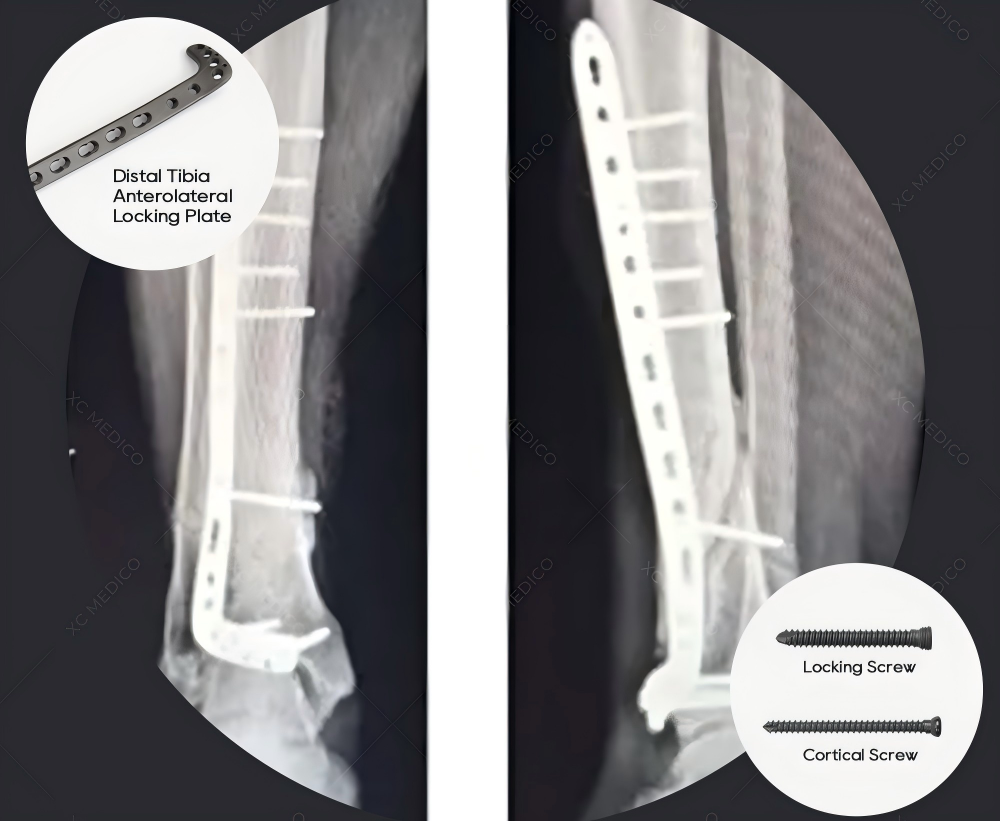
How Do You Qualify a Distal Tibiofibular Locking Plate OEM?
Start by defining the exact plate and screw system, intended market and supply configuration. Then qualify the legal manufacturer and production sites, review the applicable quality-system scope, confirm product-specific market authorization, audit critical processes, inspect representative samples and approve a controlled first production lot.
For the plate itself, focus on anatomical geometry, plate thickness and edge condition, locking-hole location and angle, screw-to-plate interface, material and surface condition. For the program, examine drawings, risk management, verification and validation, traceability, labeling, packaging, sterilization where applicable, change control, instrument support and post-market responsibilities.
Best short answer: select the trauma implant OEM that can repeatedly produce the approved plate-screw-instrument system and provide product-linked evidence for the exact destination market. A visually attractive prototype or low quotation is not enough.
First Define What "Distal Tibiofibular Locking Plate" Means
Search terminology in this category is inconsistent. Buyers may use distal tibiofibular plate, distal fibula locking plate, lateral fibula plate, distal tibia plate or ankle locking plate for products that are not interchangeable. Before requesting an OEM quotation, state the exact anatomical location and intended product family.
XC Medico lists Distal Tibiofibular Locking Plate-I, Distal Tibiofibular Locking Plate-III and a related distal tibiofibular instrument set. Treat these pages as portfolio starting points and request the current controlled specification, regulatory status and compatibility matrix for the exact project.
Critical Design and Quality Features to Review
An anatomical locking plate is an interface system. Its geometry must be controlled together with the mating screws and instruments. The following characteristics often deserve focused review, but the final list should come from the product risk analysis, design outputs and regulatory strategy.
| Feature | Why buyers review it | Possible verification evidence | Control level |
|---|---|---|---|
| Plate contour and dimensions | Defines conformance to the approved design and system positioning. | Controlled drawing, fixture or CMM program, measured report and approved master sample. | Critical |
| Plate thickness, edges and radii | Affects design conformity, surface condition and interaction with surrounding tissue. | Dimensional results, visual standard, edge or radius criteria and magnified inspection. | Critical |
| Locking-hole geometry | Controls screw engagement, trajectory and interface repeatability. | Thread or feature inspection, trajectory measurement, calibrated gauges and functional interface test. | Critical |
| Plate-screw compatibility | The locking mechanism must be evaluated as a defined system, not as two unrelated parts. | Compatibility matrix, assembly method, insertion and removal checks, torque-related criteria where justified. | Critical |
| Material and microstructure | Material identity and processing must match the approved specification. | Mill certificate, receiving verification, heat or lot trace, required metallurgical and mechanical records. | Critical |
| Surface and cleanliness | Burrs, residues, contamination and damage can create quality and registration concerns. | Surface criteria, cleaning validation or verification, residue and particulate rationale, handling records. | Risk based |
| Marking and traceability | Links the device or package to controlled master data and production history. | Marking specification, legibility and durability evidence, UDI data as applicable, lot-trace exercise. | Market based |
Avoid unsupported clinical claims: terms such as "perfect anatomical fit," "zero irritation" or "guaranteed fixation" require appropriate evidence and may be unsuitable for labeling or marketing. Use measurable design and manufacturing language instead.
Trauma Implant OEM Manufacturing Flow
A mature project moves through controlled stages. The buyer should know which organization owns each stage and which records will be included in the design, device or production history.
Review XC Medico's published orthopedic OEM/ODM workflow and implant manufacturing capabilities, then verify project-specific details during supplier qualification.
1Specify Implant Material Without Ambiguous Equivalency
Do not write only "medical titanium," "TC4" or "Ti-6Al-4V" in the RFQ. Identify the governing material standard, alloy grade, product form, condition and any project-specific requirements. ASTM F136, for example, covers wrought annealed Ti-6Al-4V ELI alloy for surgical implant applications. ELI means extra low interstitial and should not be assumed from a generic Ti-6Al-4V or TC4 statement.
The correct material depends on the approved design and regulatory plan. Require traceability from finished plate to the material heat or lot, and reconcile the purchase specification, mill certificate, receiving results, traveler and final release record.
2Control CNC Machining, Fixturing and Locking Interfaces
Five-axis equipment can help manufacture complex geometry, but an equipment list does not prove process capability. Review setup control, custom fixtures, datum strategy, qualified programs, tool-life rules, in-process inspection and the measurement method for angled or threaded locking features.
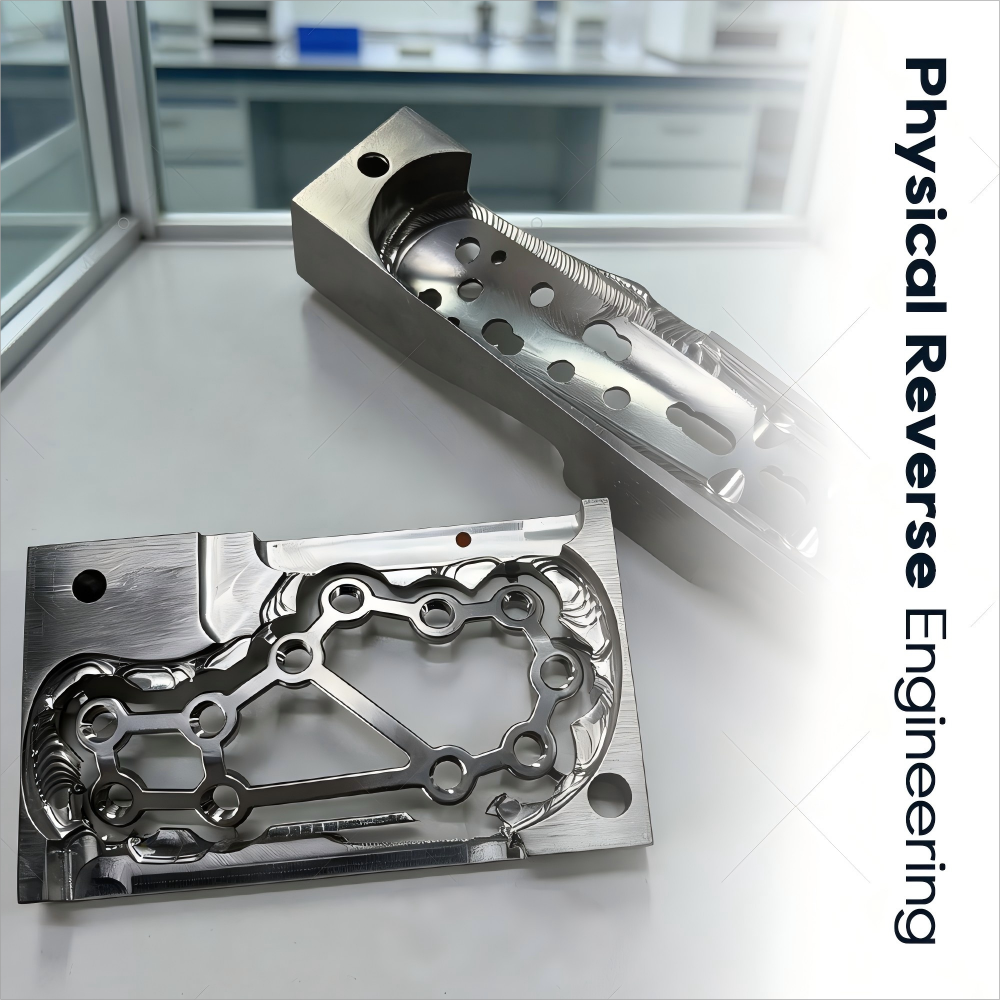
For locking holes, dimensional inspection alone may not fully demonstrate interface performance. The verification plan should address the approved plate, screw, driver and guide combination, including applicable functional acceptance criteria and tool-wear effects.
3Define Deburring, Surface Finishing and Cleaning
Finishing is not merely cosmetic. Establish acceptance criteria for burrs, sharp edges, scratches, pits, embedded media, discoloration and other relevant surface conditions. Use approved visual standards, magnification and measurement where appropriate rather than relying on "looks good."
Cleaning requirements should reflect the device design, residues introduced by machining and finishing, subsequent processing, packaging and supply condition. Map coolants, oils, polishing compounds, particulates and handling contamination. If the product is supplied sterile, cleaning must support the validated sterilization and packaging process. If it is supplied non-sterile, the labeling and reprocessing information must match the intended supply model and applicable requirements.
4Connect Inspection and Testing to Risk and Regulatory Strategy
A complete plan can include material verification, dimensional inspection, visual and surface assessment, plate-screw interface tests, corrosion or other material-related evaluation, mechanical performance, cleaning, package testing and sterilization validation as applicable. Do not copy a competitor's test list without confirming relevance to the subject design and target market.
FDA guidance for orthopedic fracture fixation plates discusses defined device characteristics, material specifications and performance criteria. The applicable pathway and testing depend on the plate design. Some guidance scopes are limited to plate configurations whose worst case can be evaluated using specified methods; complex anatomical plates may require a different or additional rationale. Define worst case by documented engineering and regulatory analysis, not by selecting the most convenient sample.
XC Medico publishes a general orthopedic implant quality-control process. Buyers should request actual product-specific protocols, reports, acceptance criteria, deviations and approvals for the distal tibiofibular locking plate family.
Packaging, Sterilization, UDI and Market-Access Requirements
These requirements are conditional, not universal factory features. Define them from the destination market, device classification, labeler role and intended supply condition.
UDI and laser marking
A laser can mark a logo, catalog number, lot code or other controlled identifier, but "UDI engraving on every implant" is not a universal rule. In the U.S., UDI requirements generally concern device labels and packages, subject to exceptions and alternatives. FDA direct-marking requirements apply when a device is intended to be used more than once and reprocessed before each use. Determine the applicable rule for the implant, reusable instruments and set components separately.
Where marking is specified, validate content, location, legibility, durability, surface impact and linkage to master data. Define who is the labeler and who creates and maintains the UDI record.
Sterile versus non-sterile supply
Blister packaging, gamma irradiation and ethylene oxide are not interchangeable check-box options. If the plate will be supplied sterile, choose and validate a compatible sterilization process, sterile barrier system, forming and sealing process, distribution performance and shelf life. ISO 11607-1 addresses packaging systems intended to maintain sterility of terminally sterilized medical devices.
If the device is supplied non-sterile, define protective packaging, cleanliness state, labeling, validated reprocessing instructions where applicable and the responsibilities of the healthcare facility or downstream organization. Ask the OEM which sterile and non-sterile activities are performed in-house and which are outsourced.
ISO 13485, FDA, CE/MDR and other markets
- ISO 13485: verify certificate issuer, accreditation, organization, site, scope, validity and the activities relevant to the project.
- United States: determine classification and the applicable premarket route for the exact device. A 510(k) is a product-specific submission and clearance route, not a factory certification. The FDA QMSR became effective on February 2, 2026.
- European Union: match the legal manufacturer, device, classification, intended purpose, conformity-assessment route, certificates and declaration. "CE aligned" is not a substitute for valid device-specific evidence.
- Latin America and other regions: requirements differ by country. Create a country-by-country responsibility and document matrix instead of asking for one generic "LATAM dossier."
Regulatory gate: do not publish or accept "FDA certified," "factory 510(k)," "CE approved company" or similar shorthand. Verify the exact device, legal manufacturer, product code, model family and destination-market authorization.
Distal Tibiofibular Locking Plate Sample Approval Checklist
Send the same checklist to every candidate OEM. Require controlled files and measured results, not only photographs.
- Signed NDA and written design, tooling and intellectual-property ownership.
- Approved device definition covering anatomy, side, hole count, lengths and system components.
- Controlled plate, screw and instrument drawings with revisions.
- Applicable material specification and representative mill certificate.
- Finished-device lot-to-material traceability example.
- Critical-to-quality characteristic and inspection matrix.
- Measured first-article report for each representative configuration.
- Locking interface and instrument compatibility evidence.
- Surface-finish and defect-acceptance standard.
- Cleaning, handling and packaging process summary.
- Worst-case and verification or validation rationale.
- Label, marking and UDI responsibility matrix as applicable.
- Sterile or non-sterile supply definition and supporting evidence.
- Current QMS and product-market documentation for the destination country.
- Sample-to-production transfer and approved-master procedure.
- Change-notification, complaint, CAPA and field-action responsibilities.
For a broader audit, use the trauma implant supplier questions and locking plate manufacturer guide.
How to Interpret a Low MOQ for an OEM Plate Program
A low minimum order quantity can reduce inventory exposure during technical and commercial evaluation, but MOQ must be defined precisely. XC Medico's current OEM/ODM page states that customized projects may start from one set. Confirm whether that means one implant set, one complete instrument set, one left/right configuration, one SKU, one sample batch or a mixed system.
Separate four commercial quantities in writing:
- engineering sample quantity for dimensional and functional evaluation;
- verification or validation quantity determined by the approved test plan;
- initial commercial order quantity by SKU, size and side;
- replenishment MOQ after the product enters routine supply.
Low MOQ does not reduce design-control, regulatory or validation obligations. It is a commercial flexibility indicator, not proof of product quality. Review XC Medico's current low-MOQ orthopedic OEM program, then request a project-specific quotation because configurations and commercial terms can change.
What Evidence Should the OEM Provide at Each Approval Gate?
| Gate | Required input | Buyer decision | Do not proceed when |
|---|---|---|---|
| 1. Feasibility | Product definition, market, drawings or reference input, responsibilities and preliminary risk. | Authorize engineering work. | Anatomy, IP ownership, regulatory role or system scope is unclear. |
| 2. Prototype | Controlled drawings, material identity, measured report, interface results and deviations. | Approve design iteration or freeze. | Samples cannot be linked to drawings, materials and results. |
| 3. Verification | Approved plan, worst-case rationale, production-equivalent samples and completed reports. | Approve technical evidence. | Test articles or methods do not represent the marketed device. |
| 4. Registration | Market-specific dossier, labels, authorization records and economic-operator responsibilities. | Approve market submission or launch. | Corporate certificates are offered instead of device-specific evidence. |
| 5. First production lot | Device history, final inspection, traceability, packaging, release and shipment records. | Approve routine supply. | Manufacturing differs from the approved sample or validation baseline. |
| 6. Ongoing supply | Quality and delivery metrics, changes, complaints, CAPA, audit status and periodic review. | Maintain, condition or suspend approval. | Changes are unreported or repeated failures remain ineffective. |
Related Trauma Implant Manufacturing Resources
Prepare a Distal Tibiofibular Plate OEM Review
Send the intended market, plate family, left/right and size matrix, screw interface, instrument needs, supply condition and registration role. XC Medico can then confirm available standard products, customization scope, current MOQ, sample plan, documentation and estimated lead time.
Frequently Asked Questions
What should I send for a distal tibiofibular locking plate OEM quotation?
Provide the target market, intended device and anatomy, product matrix, drawings or authorized reference input, plate and screw material requirements, mating screw and instrument specifications, sterile or non-sterile supply condition, packaging, labeling, annual forecast and required regulatory documents. State whether the project is standard distribution, private label or new design development.
Are distal tibiofibular and distal fibula locking plates the same?
Not necessarily. Suppliers and buyers use category terms inconsistently. Confirm the specific anatomical location, design, side, length, hole pattern, intended use, screw compatibility and product authorization. Do not approve a quotation based only on a similar product name.
Is TC4 the same as ASTM F136 Ti-6Al-4V ELI?
Do not assume equivalence. ASTM F136 specifically covers wrought Ti-6Al-4V ELI for surgical implant applications. Generic TC4 or Ti-6Al-4V wording may not establish ELI grade, condition, product form or compliance with the applicable standard. Put the exact material specification and revision in the controlled purchase requirements.
How should locking-hole quality be verified?
Start with controlled dimensional and feature inspection, then add appropriate functional verification of the approved plate-screw-instrument interface. Review thread or locking geometry, trajectory, surface condition, tool wear, calibrated gauges, assembly behavior and acceptance criteria. The method must match the actual locking design.
Does every implant need a UDI laser marked directly on it?
No universal statement should be made. In the U.S., labels and packages are generally subject to UDI requirements unless an exception or alternative applies. FDA direct marking applies to a device intended for more than one use and reprocessed before each use. Determine the rules separately for single-use implants, reusable instruments and other system components.
Must the plate be supplied in sterile blister packaging?
No. The marketed supply condition may be sterile or non-sterile. If supplied sterile, the sterilization method, sterile barrier system, sealing process, distribution performance and shelf life require appropriate validation. If supplied non-sterile, protective packaging, cleanliness, labeling and reprocessing responsibilities must be defined.
What is the MOQ for a custom locking plate program?
XC Medico's current OEM/ODM page states that customized projects may start from one set, but the exact definition depends on configuration. Confirm sample quantity, validation quantity, commercial MOQ by SKU and replenishment MOQ in the quotation. Commercial terms may change and do not replace technical or regulatory requirements.
Which documents should accompany the samples?
Request the approved drawing revision, material certificate and trace link, first-article dimensional report, critical-feature results, plate-screw interface evidence, surface and cleaning records as applicable, marking sample, packaging information, deviations and a clear statement of whether the sample is production-equivalent.
Official Technical and Regulatory References
- U.S. FDA: Orthopedic Fracture Fixation Plates - Performance Criteria for the Safety and Performance Based Pathway
- U.S. FDA: Orthopedic Non-Spinal Bone Plates, Screws, and Washers - 510(k) Submission Guidance
- U.S. FDA: Quality Management System Regulation (QMSR)
- U.S. FDA: Unique Device Identification Basics
- ASTM International: ASTM F136 specification for wrought Ti-6Al-4V ELI surgical implant alloy
- ISO: ISO 11607-1 packaging for terminally sterilized medical devices

