You might need an external fixation device if you break your leg, ankle, or foot. This is more common when the injury is complicated or the skin and soft tissue are hurt. Doctors use external fixators to hold your bones steady. They help your bones heal after a bad accident. Recent studies say external fixation works best for tibial pilon fractures, open fractures, and strong injuries. Other treatments may not be safe for these cases. XC Medico gives advanced solutions like the broken leg external fixation device. These devices help you heal safely and well.
Key Takeaways
External fixation devices hold broken bones steady from outside the body. They help with tough fractures and injuries to skin or soft tissue.
These devices can help bones heal faster. They may cause fewer problems than internal fixation methods. They lower infection risk and help people recover quicker.
External fixators work for many injuries. They can help with broken legs, ankles, and feet. They give support but let you move a little while healing.
It is important to watch and care for the device after surgery. Patients must keep pin sites clean. They should look for infection signs to heal safely.
Picking the right external fixation device helps recovery. Choices like the Ilizarov apparatus and XC Medico's products fit different orthopedic needs.
Surgeries Using External Fixators

Broken Leg External Fixation Device Applications
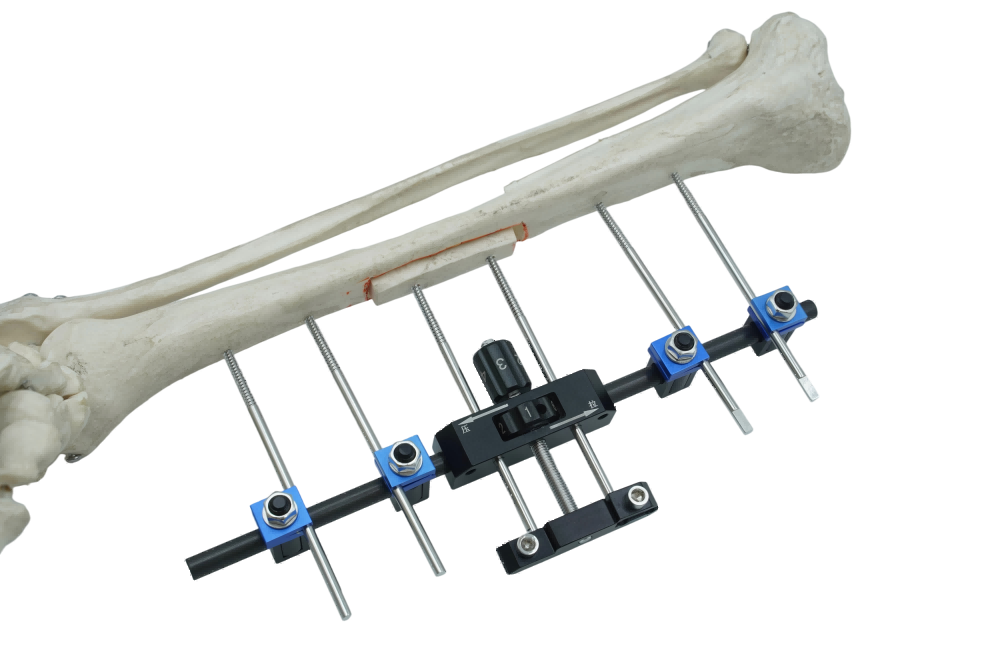
You might need a broken leg external fixation device if your fracture is complicated or you have a bad injury. Doctors use external fixators when your skin and soft tissue are hurt. These devices keep your bones steady from outside your body. Metal pins and rods connect to a frame that holds your leg still. This helps your bones heal and protects your skin and muscles.
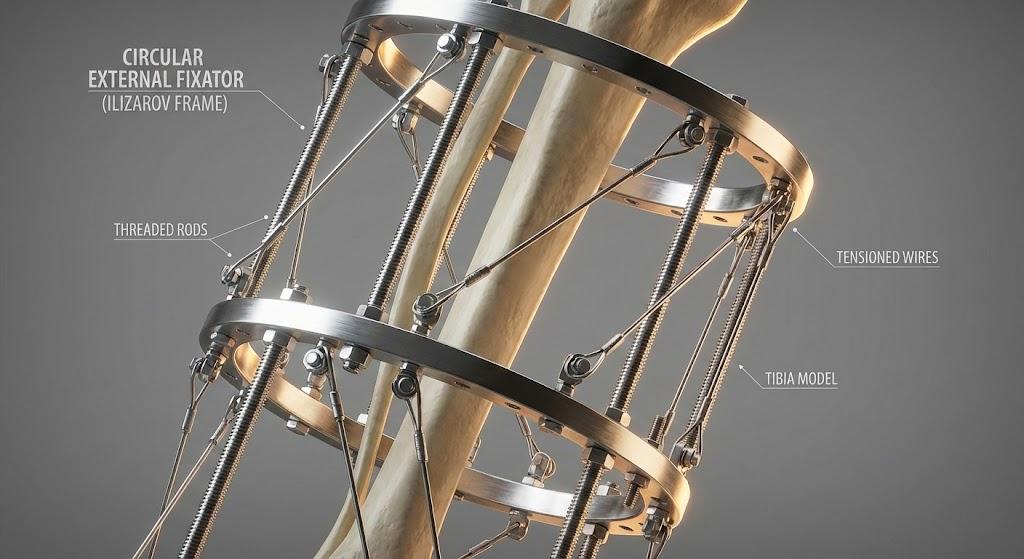
External fixators work well for tibial diaphyseal fractures and open fractures. Studies show that using external fixation with K-wire intramedullary fixation makes surgery faster and healing quicker. You also have fewer problems and spend less money than with other treatments. The Ilizarov apparatus from XC Medico gives strong support and lets you move early. You get closed reduction, so your soft tissue is safer. Doctors can take off the device easily when your bone is healed.
Note: Locked plate external fixation can treat tough open tibial plateau fractures. This method helps keep your knee working and helps your bone heal.
If you hurt your foot or ankle, external fixators can help keep your bones steady. These devices screw into your broken bones and connect to a frame outside your skin. Doctors use them for bad injuries or when other treatments are not safe. External fixation devices for the ankle and foot let doctors change your bone position while you heal.
You might have small problems in about 44% of cases and big problems in 9%. Most small problems happen after four weeks. Big problems usually show up around 3.7 weeks. Wires and half pins can cause issues, but doctors watch you closely to keep you safe. XC Medico has special external fixation device ankle and external fixation device foot products. These include radiolucent fixators, so doctors can see your bones clearly during treatment.
Tip: External fixators are important for foot and ankle injuries because they give stability and flexibility. You can heal safely even if your injury is hard to treat.
Limb Lengthening and Deformity Correction
You may need external fixators to make your limb longer or fix bone shape problems. The Ilizarov apparatus is a common tool for these surgeries. Doctors use it to slowly stretch your bone and fix its shape. Most people get great or good bone results in 95.2% of cases. Many patients say they feel better and can move more easily.
The Mini Fixator series from XC Medico has many choices for custom treatment. You can use universal compression extension types and joint motion types. These choices help you heal faster and move better.
Here is a table comparing fixators for deformity correction:
Parameter | Smart Correction Fixator | Ilizarov Fixator |
Correction Period (days) | 49.05 ± 35.6 | 66.53 ± 47.7 |
Residual Deformity | Much lower | Higher |
Bone Healing Index | Not listed | Much better |
You can see the Smart Correction fixator fixes deformities faster and more accurately. The Ilizarov fixator helps your bone heal better. Both choices give you good results.
Table: XC Medico has many kinds of external fixators for different needs.
Type of Device | Clinical Application |
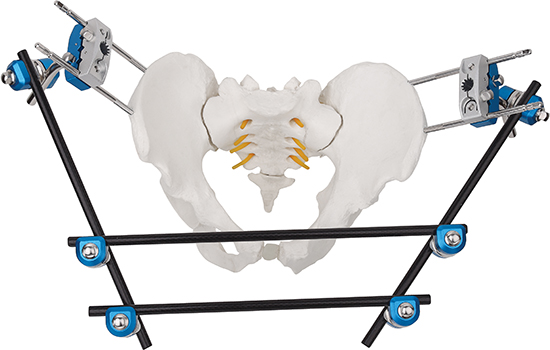
Monolateral Fixators | Used for simple fractures, giving good support and easy adjustment while healing. |
Circular and Ring Fixators | Best for tough fractures, giving strong support from all sides, especially for hard cases. |
Bi-Frame External Fixation Device | Good for fractures needing extra support, can change as you heal. |
Hybrid and Modular Systems | Flexible systems that mix features from different fixators, helpful for many fracture types, especially near joints. |
You can pick the best external fixation device for your injury and treatment plan. XC Medico’s products cover all the main needs in orthopedic surgery.
Why Choose External Fixation
Advantages Over Internal Fixation
Doctors sometimes pick external fixators instead of internal fixation. External fixators help you heal faster. They do not hurt your tissues as much. You spend less time in the hospital. You have fewer problems after surgery. Many people with foot and ankle injuries get better with external fixation. It lowers the chance of infection and tissue death.
Here is a table that compares external and internal fixation:
Advantage | External Fixation | Internal Fixation |
Recovery Time | Usually shorter | Longer |
Complication Rates | Lower, especially for infections | Higher, especially with weak tissue |
Doctors use external fixators when your skin or muscles are hurt. You get better results and fewer deep infections. For example, only 10% of patients had infections with external fixation. In another group, 24% had infections. This means you are safer while you heal.
When External Fixators Are Preferred
You may need external fixators in special cases. Doctors choose external fixation for severe soft tissue injuries or active infections. If you have osteoporosis, external fixators work better. They do not need strong bone to hold. High-energy open fractures often need external fixators. Other treatments may not be safe.
Here are some common reasons for using external fixators:
Severe soft tissue injuries
Active infections
Severe osteoporosis
High-energy open fractures
Patient instability or other problems
People in developing countries, older adults, and those hurt in war often need external fixation devices. These fixators help you heal when hospitals have fewer resources. They also help when you need a shorter hospital stay. If you hurt your foot or ankle, external fixators give you support for safe healing.
External fixation devices like the broken leg external fixation device, external fixation device ankle, and external fixation device foot can help many types of injuries. You can trust these devices to keep your bones steady and help you heal well.
External Fixation Procedure
Device Placement and Adjustment
External fixators are used in many orthopedic surgeries. Doctors start by putting you on your back on a special table. This table lets them see clear images during surgery. The team gets all the tools ready, like pins, rods, and clamps. Pins are put near the broken bone. Sometimes, doctors make small cuts or put pins right through the skin. After the pins are in, rods and clamps are added to make a strong frame.
Here is how the process goes step by step:
You lie on a table that helps doctors see inside.
All the needed parts are collected before starting.
Pins are placed in the right spots on your body.
Rods and clamps are attached to hold everything steady.
Clamps are tightened after the bone is lined up.
Doctors check and care for the skin around the pins.
Doctors use pictures to make sure pins and fixators are in the right place. The table below shows ways doctors check pin placement:
Technique | Description |
Image Intensifier | Helps doctors put pins in safely and correctly. |
Image Intensification Control | Checks pin placement from two different angles. |
After surgery, doctors may need to change your external fixators. These changes help your bones line up better and heal slowly. For circular fixators, changes often start 5 to 14 days after surgery. Your doctor will tell you how to adjust the length and how often. X-rays are used often to check how your bone is healing.
Monitoring and Duration
You must follow rules to keep your external fixator safe. Doctors and nurses look at the pin sites for infection. You learn to watch for redness, swelling, or leaking. The orthopedic team checks how you are healing and if the frame is still strong. Nurses write down what they see and tell doctors if anything changes.
Monitoring Protocols for External Fixation Devices | Description |
Pin Site Care | Learn to spot infection and keep pin sites clean. |
Regular Assessments | Doctors check healing and frame strength often. |
Documentation and Communication | Nurses record changes and tell doctors quickly. |
You may need external fixators for different amounts of time. For limb lengthening, the device stays on for about 4.5 to 6.2 months. The bone grows about 1.0 mm each day during the stretching phase. After that, the bone gets stronger in the next phase. For foot and ankle injuries, the time depends on how fast you heal. Your doctor will decide when to take off the fixators.
External fixation devices like the broken leg external fixation device, external fixation device ankle, and external fixation device foot from XC Medico help you get better. These devices let doctors check your healing and make changes easily.
Recovery and Risks

Patient Expectations
You will start getting better in the hospital after surgery. Most people stay in the hospital for one to seven days. Doctors and nurses check your leg often and help with pain. When you go home, you need to move safely and keep your pin sites clean. You might feel tired at first, but you will get more energy soon. The table below shows what happens during each part of recovery:
Stage | Duration | Description |
Hospital Stay | Day 0-7 | You stay in the hospital to recover and be watched. |
Recovery at Home | Week 1–4 | You control pain, stop problems, and start moving. |
Mid-Recovery | Week 4–12 | You feel stronger and have more energy. |
After your doctor takes off the external fixation device, you may need rehab. There is no strict rule for rehab after external fixation. Many doctors think rehab helps you move better and heal faster. You should listen to your doctor and ask about exercises that are right for you.
Physical therapy can help you.
You should keep your muscles strong and flexible.
Watch out for pain or swelling.
Most people who had external fixation for a bad fracture are happy with their results. Many say they would pick the same treatment again. Some people feel pain or have trouble moving, but most get better.
Complications and Safety
You should know about risks with external fixators. Pin site infections happen most often. You might see redness or swelling near the pins. Sometimes, the fixation can get loose and bother your soft tissue. Other risks are pin tract infection, nonunion, malunion, delayed union, hardware failure, and nerve or blood vessel problems.
Here are the main problems you should look for:
Pin site infection
Loosening of fixation
Nonunion or malunion
Delayed union
Hardware failure
Neurovascular issues
Recent studies show dynamic external fixation has fewer problems than traditional internal fixation. The table below compares the rates:
Fixation Type | Complication Rate (%) | Notes |
Dynamic External Fixation | 2.4 | Lower infection rates and fewer issues |
Traditional Internal Fixation | 3.8 | Higher risk of problems |
You can lower your risk by keeping pin sites clean and doing what your doctor says. If you hurt your foot or ankle, external fixators help you heal safely. Many people with external fixation devices for leg or foot and ankle injuries say they are happy with their results. Most would choose this treatment again.
External fixation devices like the broken leg external fixation device, external fixation device ankle, and external fixation device foot from XC Medico help you recover and stay safe. You can trust these fixators to help you heal after a bad fracture.
External fixation devices help you heal if you break your leg, ankle, or foot. They give your bones support and let you move a little. These devices are good for hard injuries. The table below explains why they work well:
Feature | Benefit |
Modular systems | Change the device without needing sleep medicine |
Dynamic correction | Fix broken bones that move too much |
Hybrid frames | Help make bones longer or fix their shape |
You spend less money and stay safe with these devices. Many doctors pick XC Medico because they are trusted and deliver fast. They also help doctors with any questions. Pick XC Medico for your broken leg external fixation device, external fixation device ankle, and external fixation device foot.
FAQ
What is an external fixation device?
External fixation devices keep broken bones steady. Doctors put pins and rods outside your skin. These devices help bones heal after surgery or injury.
When do you need a broken leg external fixation device?
You need this device for tough fractures. Doctors use it when skin or muscles are hurt. It helps your leg heal and keeps bones in place.
How long do you wear an external fixation device ankle or foot?
You wear the device for a few weeks. Your doctor checks your healing often. They decide when to take the device off.
Are external fixation devices safe?
These devices are safe if you follow care rules. You must keep pin sites clean and watch for infection. Doctors and nurses help you stay safe while you heal.
Can you walk with an external fixation device?
You might walk with the device if your doctor says it is okay. Some devices let you move a little. Always listen to your doctor about walking and activity.