![How Do Knee Ligament Fixation Devices Change ACL Repair?]()
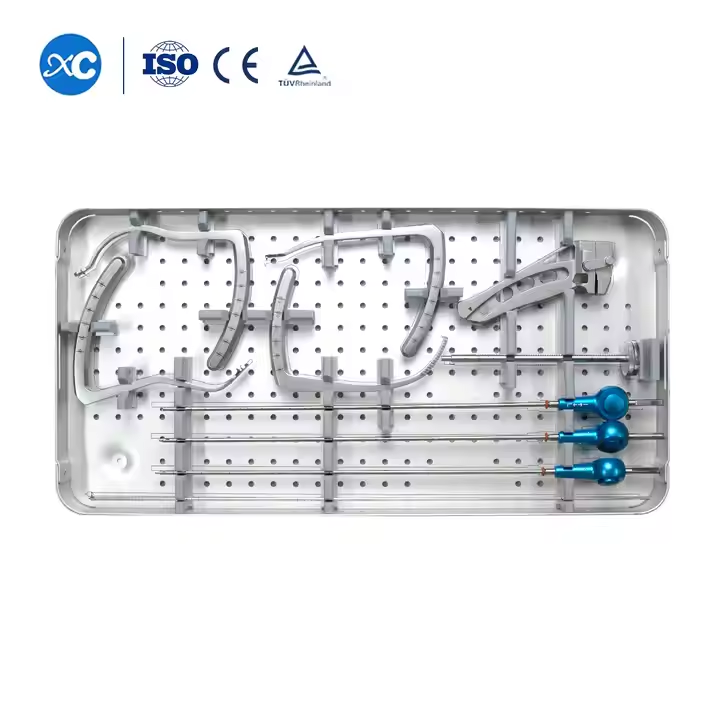
You see knee ligament fixation devices change ACL repair. They give better support and help you heal faster. Surgeons use new tools like XC medico’s All-in Cruciate Ligament Reconstruction Instrument Set. These tools help doctors get very accurate results. Knee ligament fixation devices make surgery less invasive. This means you feel less pain and get better quicker.
Patients often go home the same day after using knee ligament fixation devices.
Look at the data below to see how knee ligament fixation devices help:
Outcome Measure | Repair Group | Reconstruction Group | p-value |
Physical Function Score | Higher | Lower | 0.040 |
Rate of Additional Procedures | 30% | 63% | 0.02 |
Knee ligament fixation devices help you get better results and feel happier.
Key Takeaways
Knee Ligament Fixation Devices in ACL Surgery
![Knee Ligament Fixation Devices in ACL Surgery]()
What Are Fixation Devices?
Fixation devices are very important in acl reconstruction. These devices hold the new tissue in your knee during surgery. Surgeons use them to keep the graft in place after taking out the damaged acl. There are different types of fixation devices used in surgery. Each one works in its own way to keep the graft steady. Some examples are screws, buttons, and press-fit plugs. These tools make acl reconstruction safer and more dependable. Surgeons use fixation devices so the graft does not move or slip while you heal. You get help from these devices because they let your knee heal faster and stronger after surgery.
Role in Anterior Cruciate Ligament Repair
Fixation devices help with the main steps in acl reconstruction. During surgery, the surgeon attaches the new tissue to your bone using these devices. These tools keep the graft tight and safe so you can move your knee sooner. Fixation devices let you start rehab early after acl reconstruction. Surgeons pick the best device for your knee and the graft type. You can check the table below to see how different fixation methods work in acl reconstruction:
Fixation Method | Mechanism of Action | Advantages and Disadvantages |
Transverse femoral fixation | Uses expansion, side pressure, or suspension | Benefits: Stops graft damage; Good for repeat surgeries. Disadvantages: Centered fixation, not in the right spot, hard to see directly. |
Button fixation | Holds soft tissue and bone block on the outside of the bone | Advantages: Very strong at first, simple to use. Disadvantages: Can stretch or move, tunnel may get bigger. |
Press-fit bone plug | No hardware, helps keep tunnel from getting bigger | Advantages: Helps tendon heal to bone, strong and stiff. Disadvantages: N/A. |
Fixation devices make acl reconstruction work better. These devices help you get good results from surgery. You heal faster and feel better after acl reconstruction. Fixation devices give your knee the support it needs to be strong and steady.
How Fixation Devices Are Used
Surgical Application Steps
Many steps in acl surgery use fixation devices. These devices help keep the graft in place. Surgeons follow a careful plan to make sure the graft stays secure. Here is how interference screws help with graft fixation during acl repair:
The surgeon makes a small cut near your knee to reach the patella tendon.
The tendon is measured, and cuts are made to get the graft ready.
Bone blocks are taken from the tibial tubercle and patella, then shaped for graft fixation.
The bone blocks are trimmed so they fit through a sizing sleeve.
Sutures go through each bone block and tendon to help hold the graft.
The best bone block is moved toward the femoral canal for graft fixation.
The graft is stretched on a board with tension to get it ready.
The surgeon drills a tibial tunnel at a certain angle and then makes a femoral tunnel.
Guidewire placement is checked with imaging, and the femoral tunnel is prepared.
The graft is put into the femoral tunnel, making sure the bone plug is in the right spot.
The surgeon fixes the graft in the tibial tunnel and checks alignment before putting in the interference screw.
Each step helps keep the graft secure and steady. This process helps you get good results from acl surgery.
Surgeons use other ways to fix the graft in acl repair. These include:
Intratunnel fixation with interference screws
Suspensory fixation using suture-buttons, anchors, staples, or screws with washers
Hybrid fixation strategies that use more than one method
Extra fixation techniques like suture anchors and staples
Each way tries to stop the graft from moving and make it stable. Interference screws help keep the graft from moving in the tunnel. Suspensory fixation gives strong support but may let the graft move a little more. Hybrid and extra fixation methods give more support when needed.
Tip: Good graft fixation during acl surgery helps you start rehab sooner and lowers the chance of problems.
Securing the ACL Graft
You need strong graft fixation for acl repair to work well. The fixation device holds the graft tight, which helps you heal and start rehab early. Solid fixation lets you begin exercises without a brace. This means you can move your knee soon after surgery. The fixation is strong and does not depend on how fast the graft joins with your bone. You recover faster because the fixation keeps the graft from slipping.
Suspensory fixation methods also help keep the graft secure. Studies show suspensory fixation, especially with femoral cortical suspension, leads to less graft movement than other ways. This means your graft stays stable while you heal. Both aperture and suspensory fixation work well, and patients feel about the same pain after surgery.
Here is a table that shows how suspensory fixation compares to other ways:
Fixation Method | Stability | Pain Levels | Graft Slippage |
Suspensory Fixation | High | Low | Minimal |
Aperture Fixation | High | Low | Slightly Higher |
Strong graft fixation helps stop slippage and supports early rehab. The fixation device keeps your graft steady, so you heal faster and get back to normal activities. Surgeons pick the best fixation method for your acl repair based on your needs and the graft type.
Note: Solid graft fixation is important for early rehab and long-term success after acl surgery.
International buyers want fixation devices that give steady graft fixation, are easy to use, and work well. You want products that help surgeons fix the graft exactly and work quickly. Good fixation devices help patients do better and lower the chance of needing another surgery. Picking high-quality fixation devices makes sure your investment is worth it and you are happy with the results.
Types of Knee Ligament Fixation Devices
There are different fixation devices for acl repair. Each device helps keep the graft steady and helps you heal. Knowing how these devices work helps you pick the best one.
Interference Screws
Interference screws are used a lot in acl surgery. They come in two types: bioabsorbable and metallic. Bioabsorbable screws slowly dissolve, so you do not need them taken out. Metallic screws are made from titanium and stay strong for a long time.
Material Type | Description |
Bioabsorbable | Made from special plastics that dissolve, so no second surgery is needed. |
Metallic | Made from titanium, which is strong and lasts a long time. |
You can use interference screws for bone-to-bone or soft tissue-to-bone repairs. These screws hold the acl graft tightly. Doctors use them for many ligament surgeries, not just acl. Their shape keeps the graft from moving and helps you start moving your knee sooner.
Holds grafts tightly
Works for many acl repairs
Used in acl, PCL, and MPFL surgeries
Buttons and Anchors
Buttons and anchors are another way to fix the graft in acl surgery. These devices are used for suspensory fixation. Studies show buttons and anchors help the tendon stick to the bone better than some other ways. The EndoButton design keeps the acl graft tight, so it does not get loose after surgery. This helps you heal and keeps your knee healthy for a long time.
Hybrid and Internal Brace Options
Hybrid fixation and internal brace options use more than one method. Internal brace augmentation makes the ligament stronger and helps your knee move better. You can start rehab sooner because this method lets you move early. Hybrid techniques mix all-inside reconstruction, primary repair, and internal bracing. This way, you keep more of your own acl and do not need as many extra grafts. You have less pain from surgery and better tension in your ligament.
Tip: Picking the right fixation device helps your acl repair stay strong and steady. People from other countries want devices that are easy to use, work well, and help you heal fast.
Benefits and Considerations
Improved Stability and Healing
You want your knee to feel strong after acl surgery. Fixation devices help keep your graft safe and steady. When the surgeon picks the right fixation, your graft does not move. This helps your knee heal faster and makes it more stable. You can start moving your knee sooner because the graft is held tight. Most surgeons like to use bioresorbable screws for acl repair. These screws help your graft heal well and lower the chance of more surgeries. You get better results when your graft stays in place during healing.
Comprehensive instrument sets help surgeons put the graft and fixation devices in the right spot, which leads to better results.
Patient Outcomes and Recovery
You want to return to your normal life soon after acl surgery. Good fixation lets you start rehab early. Studies show knee braces after acl reconstruction do not help you feel or move better. Bracing can even slow your recovery and make you less active. If your graft is secure, you do not need a brace to protect your knee. You can trust the fixation to keep your graft safe. Surgery for acl injuries costs less over time than not having surgery, especially for young adults. Even if surgery costs more at first, you get better results and fewer problems later.
Risks and Selection Factors
You should know about the risks of each fixation device. Some risks are screw breakage, knee swelling, tunnel widening, and graft slipping. All fixation devices can have problems like graft loosening or knee instability. The table below shows common risks:
Risk Description | Fixation Device Type |
Screw breakage | Interference screws |
Postoperative knee effusion | Interference screws |
Tunnel widening | Interference screws |
Graft slipping or loosening | All fixation devices |
Graft healing in an elongated fashion | All fixation devices |
Resulting knee instability | All fixation devices |
Graft laceration during insertion | Metal interference screws |
Breaching of the far cortex | Suspensory fixation devices |
When you pick a fixation device for acl repair, think about these things:
Device type and material
How stable it is
Patient age, sex, and activity level
Cost and long-term results
Younger patients may need stronger fixation because they move more. Bioabsorbable devices may cost more at first but can lower the need for more surgeries. You want a device that helps your graft heal and keeps your knee steady.
Advancements in ACL Repair
Modern Techniques vs. Older Methods
There are big differences between new and old acl repair. In the past, doctors did open surgery for acl injuries. This made healing slow and raised the chance of problems. Now, doctors use arthroscopic surgery and better fixation devices. These let doctors work through small cuts and use cameras to see better. You heal faster and feel less pain.
Here is a table that shows how new acl repair is different from old ways:
Aspect | Modern Techniques (Arthroscopic, Cortical Buttons) | Older Techniques (Open Surgery) |
Recovery Time | Faster recovery and rehabilitation | Slower recovery |
Complication Rates | Lower complication rates | Higher complication rates |
Graft Healing | Improved graft healing with cortical buttons | Variable outcomes |
Visualization and Precision | Enhanced visualization and precision in graft placement | Limited visualization |
Modern fixation devices, like interference screws and cortical buttons, hold the graft steady. These help your acl heal faster and stop the graft from moving. New technology, like nanotechnology and AI planning, helps doctors put the graft and fixation in the right spot. You get a safer and more dependable acl repair.
Impact on Surgical Success
You want your acl surgery to work well. New fixation devices and full instrument sets help make this happen. These tools let doctors work fast and with care. You spend less time in surgery and start healing sooner. Modern fixation methods, like compression and suspension, keep your graft safe. This helps your acl heal inside the bone tunnel.
New ideas, like the BEAR implant, use your body’s own healing. This lets you keep more of your ligament and heal faster. People also feel happier with these new ways.
Important things that changed acl repair are:
AI algorithms for custom surgery plans
Fixation device nanotechnology for quicker healing
Technology for better accuracy
Full instrument sets for faster surgery
When you pick new fixation devices and full instrument sets, you get better results, fewer problems, and feel happier. People from other countries want these features to make sure every acl repair is safe and works well.
You want your acl surgery to go well. Good knee ligament fixation devices and new instrument sets help your knee stay stable. They also help you heal faster and get better results. Studies say screws, Rigidfix, TransFix, and Endobutton all work well for acl repair. They have few problems later on:
Fixation Device Type | Efficacy | Safety | Long-term Complications |
Screws | Good | Acceptable | Low |
Rigidfix | Good | Acceptable | Moderate |
TransFix | Good | Acceptable | Low |
Endobutton | Good | Acceptable | Low |
Big acl instrument sets help doctors work quickly and carefully. These sets help with every part of acl surgery, like taking the graft and fixing it in place. You get a better surgery and better results.
Modular designs work for many acl surgeries.
Tools help make bone tunnels and hold grafts tight.
Sets work for first-time and repeat acl repairs.
Pick a supplier you can trust for your acl surgery. XC medico’s All-in Cruciate Ligament Reconstruction Instrument Set gives doctors good tools for every acl surgery. You can count on XC medico for quality, speed, and strong support in every acl repair.
FAQ
What makes knee ligament fixation devices important for ACL repair?
Fixation devices keep your ACL graft steady. They help your knee heal quickly. These devices lower the chance of graft moving. You get a stronger knee after surgery and better results.
How do advanced instrument sets like XC medico’s help surgeons?
Surgeons get all their tools in one set. This saves time and keeps things neat. Surgeons work faster and make fewer mistakes. You get safer surgery and better results.
Are these devices safe for international patients?
You can trust these devices to be safe. They use strong medical stainless steel. Their design follows international rules. You get safe and reliable results every time.
What should bulk buyers look for when choosing fixation devices?
Check for good quality and long-lasting use. Look for sets that are easy to use. Make sure the supplier gives support and quick delivery. You want products that help surgery go well and make patients happy.
How do fixation devices affect recovery time?
Strong fixation helps you heal faster. These devices let you start rehab early. You get back to normal life sooner. Your knee feels steady and safe while you recover.