![What is a suture passer used for?]()
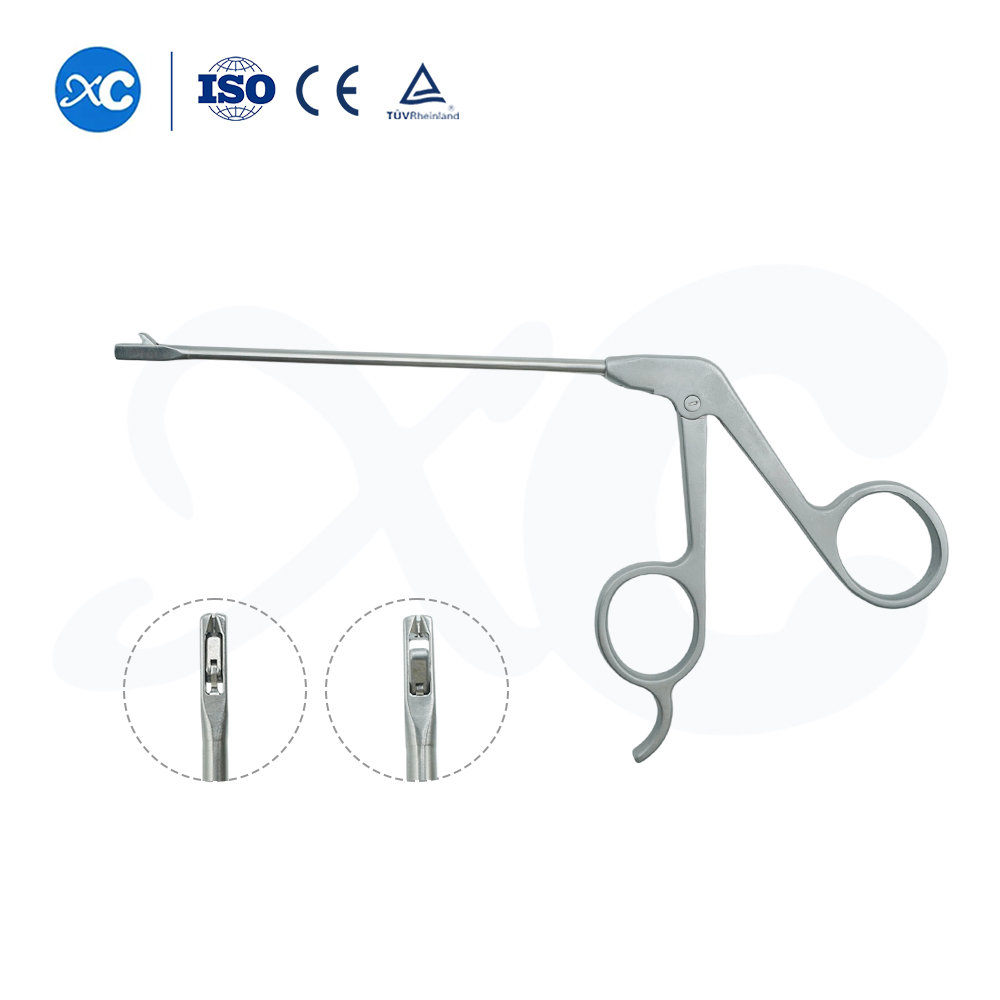
A Suture Grasper is an essential tool that doctors use during surgery to efficiently pass sutures through tissue. This device is widely utilized in both bone and soft tissue procedures, making it a staple in modern surgical practices. Suture Graspers play a crucial role in ensuring wounds are closed quickly and securely, which is increasingly important as the number of surgeries performed each year continues to rise. The demand for sutures and related instruments remains robust, with projections indicating that by 2025, this segment will account for 56.22% of the market share. Choosing a reliable Suture Grasper supplier ensures that healthcare professionals have access to high-quality tools, ultimately benefiting patient outcomes.
Segment | Market Share (2025) | Growth Factors |
Sutures & Staplers | 56.22% | Essential for wound closure; increasing number of surgeries worldwide |
Key Takeaways
Suture passers are important tools for surgery. They help doctors close wounds fast and well. This helps lower harm to the tissue.
Doctors use suture passers in surgeries like arthroscopy and laparoscopy. These tools let doctors sew in small spaces. This helps patients heal faster.
Picking a good Suture Grasper supplier is important. Good tools make surgery safer and work better.
Suture passers can be manual or automatic. This gives doctors choices for different surgeries. It also helps things go faster in the operating room.
There are disposable and reusable suture passers. Disposable ones help stop infections. Reusable ones can save money over time.
How Suture Passers Work

Mechanism and Design
Suture passers are different from other surgical tools. They have special mechanical parts. These tools help you pass sutures through soft tissues like tendons. You do not need to use much force. The design helps you avoid making big cuts in the tissue. Suture passers use small-caliber needles. This lets you place sutures exactly where you want. It also helps lower tissue damage.
Tip: The needle tip’s shape and strength are very important. A strong tip does not break easily. This keeps surgery safe and works well.
Here are the main features you will see in suture passers:
Feature | Description |
Flexible Needles | Side openings let you pass sutures smoothly. This lowers tissue trauma. |
Ergonomic Design | The handle fits your hand well. This gives you better control. |
Specific Configurations | You can pick models for different tissue thicknesses. This makes your work easier. |
Manufacturers make suture passers from stainless steel, titanium, and nitinol. Stainless steel is strong and does not rust. Titanium is strong and good for people with allergies. Nitinol is flexible and very strong. This helps you do hard procedures.
Surgical Application Steps
When you use a suture passer, you follow simple steps:
Hold the needle behind the middle to keep it steady.
Put the needle straight into the tissue. You can use forceps to lift the tissue.
Move the needle through the tissue and pull the suture with it. Make sure the suture stays straight.
Tie the knot by making a loop. Pick up the short end and finish the knot to hold the tissue.
You can grab the tendon, pass the suture, and take it out in one move. This helps you work fast and lowers the chance of tissue damage. Suture passers help you close wounds tightly with less harm. This is very important for patient healing.
Suture Passer Uses in Surgery
Suture passers are very important in many surgeries. They are helpful when you need to put sutures in small or hard-to-reach places. These tools help you close wounds and fix tissues quickly and accurately. This can help patients get better faster and lowers the chance of problems.
Arthroscopic and Laparoscopic Procedures
Doctors use suture passers a lot in arthroscopic and laparoscopic surgeries. These surgeries use small cuts instead of big ones. Suture passers let you put sutures in tissue edges without making big cuts. This helps you work in tight spaces, like inside joints or the belly.
In arthroscopic surgery, you fix things like the rotator cuff, meniscus, or labrum. Suture passers help you reach deep inside the joint and put sutures where you need them. You can also use them to close the fascia in spine surgery. Studies show that using a suture passer, like the Spine Scorpion, can make closing up to 75% faster than using curved needles. Saving time is important in busy operating rooms.
Using a Suture Grasper in these surgeries can help you see the tear better, lower the chance of problems, and help patients heal faster.
Here is a table that shows how suture passers help in these surgeries:
Suture-Passing Device | Description |
FIRSTPASS ST | Makes it easy to pass sutures during rotator cuff repair |
Scorpion | Good for passing sutures in small spaces |
SutureLasso devices | Can be used for many different surgeries |
You can also see these benefits:
You can see tissue tears better
There is less risk of hurting muscles or tendons
Patients heal faster and have less pain
Studies show that suture passers work well in these surgeries. For example:
Study Focus | Methodology | Results |
Suture passer vs. conventional needle | Doctors tested on cadavers | Suture passers were easier and faster |
If you pick a good Suture Grasper supplier, your team will have strong tools that make surgery safer and better.
Tendon and Soft Tissue Repair
Suture passers are also used to fix tendons and soft tissues. These surgeries join torn or hurt tissues like tendons, ligaments, or fascia. Suture passers help you put sutures through tough tissue without causing much damage.
In soft tissue repair, you want to avoid big cuts and lower the chance of problems. Suture passers let you work through small openings. For example, when closing thoracolumbar fascia, suture passers make the job faster and easier. This helps save time and money in the operating room.
You should know about possible problems. Some studies say there are low rates of reoperation, nerve injury, and hematoma with suture passers. Most problems are small and do not cause symptoms. But you must always use the right technique and pick the best Suture Grasper for each surgery.
Here is a table that shows some problem rates:
Complication Type | Rate (%) | Notable Techniques with Higher Rates |
Reoperation | 1.2 | Shutt Suture Punch System, Laurus, Anchorsure |
Nerve Injury | 3.8 | Capio |
Hematoma | 1.7 | Laurus, Raz anchoring |
You can lower these risks by choosing a trusted Suture Grasper supplier and following good steps during surgery.
When you use suture passers for tendon and soft tissue repair, patients heal faster and have fewer problems. Your team can also work better and help more patients.
Benefits of Suture Passers and Suture Graspers
Precision and Efficiency
Doctors need tools that help them work fast and well. Suture passers and Suture Graspers give this help. These tools let you put sutures in the right spot. You can tie knots in hard places without losing control. Many doctors use knot pushers and graspers to keep the suture tight. This lowers the chance of knots coming undone. It also helps wounds heal better.
Here is a table that shows how these tools help:
Evidence Description | Contribution to Surgical Precision and Efficiency |
Knot pushers help tie knots in hard-to-reach spots. | They keep sutures tight and stop knots from slipping. This lowers the chance of knot problems. |
Graspers can be used if knot pushers are not there. | They help tie knots and keep the work careful and neat. |
New suture passing tools like RHAPSO™ and GEMINI® help doctors work better. | They make hard suturing jobs easier, hurt tissue less, and help patients heal well. |
You can see that good Suture Graspers make your job easier. These tools help with hard suturing and give better results for patients.
Minimizing Tissue Trauma
Doctors want to keep tissue safe during surgery. Suture passers and Suture Graspers help with this. They let you pass sutures with less force. This means less chance of hurting tissue. You do not need to make big cuts, so tissue stays healthy. Many doctors use special ways to lower tension with these tools. This helps wounds heal faster and lowers the chance of problems after surgery.
Using a suture passer helps put sutures in the right place, which hurts tissue less.
It lowers the chance of hurting organs by mistake.
Special suturing ways help lower harm during surgery.
These ways help wounds heal better and lower the chance of problems.
You can trust a good Suture Grasper supplier to give safe tools. These tools protect tissue and help patients get better fast. That is why suture passers and graspers are important in every surgery room.
Manual and Automatic Options
You can pick manual or automatic suture passers and graspers. Manual ones let you move the suture by hand. Automatic tools use springs or magnets to help you work faster. These tools make passing sutures easier and need less effort. Both types are good for different surgeries. Some hospitals like automatic tools because they save time. They help with tying knots and putting in sutures quickly.
Here is a table with examples of manual and automatic devices:
Device Name | Type | Features |
Mediflex Straight Grasper | Suture Grasper | Large jaw, strong grip, prevents fraying, disposable. |
Mediflex Suture Passer | Suture Passer Guide | Cone-shape, reusable and disposable, safe for trocar port closure. |
SafePass™ Suture Grasper | Suture Grasper | Spring-loaded tip, prevents needle injury, disposable. |
AMT Family of Suture Passers | Suture Passers | Includes RHAPSO™, GEMINI™, ATLAS® U-Stitch, designed for precision and speed. |
RHAPSO™ Suture Passer | Suture Passer | Spring-assisted retriever, ergonomic, reliable. |
GEMINI™ Suture Passer | Suture Passer | Magnetized arm, easy suture passing, for minimally invasive procedures. |
ATLAS® U-Stitch Suture Passer | Suture Passer | Magnetic technology, quick U-Stitch, reduces adverse events. |
Automatic suture passers can make knot tying much faster. They can cut the time by more than half. Both manual and automatic tools help you make strong knots.
Disposable vs. Reusable
You can choose disposable or reusable suture passers. Disposable tools help stop germs from spreading. You do not need to clean or sterilize them. This saves time and helps keep things safe. Reusable tools can be used again and again. They can save money over time. Some hospitals pick disposable tools if they cannot clean instruments well.
Disposable suture passers help lower infection risk.
You do not have to clean them, so you save time.
Reusable tools can be used many times and save money.
Hospitals may pick disposable tools if they lack cleaning equipment.
The effect on the environment is different for each type. Some studies say single-use tools are better for the planet. Other studies say reusable tools are better. The best choice depends on what your hospital needs.
Choosing a Suture Grasper Supplier
When you pick a Suture Grasper supplier, look for good quality and trust. A good supplier checks their products carefully. They answer questions fast and deliver on time. You should check for certifications like ISO 13485 and CE Marking. These show the supplier follows important rules.
Criteria | Details |
Quality Control Processes | Factory audits, sterilization validation, material traceability. |
Responsiveness Metrics | Response times ≤4 hours, on-time delivery rates ≥90%. |
Financial Indicators | Strong online revenue and reorder rates. |
Certification/Standard | Description |
ISO 13485 | Quality management for medical devices. |
CE Marking | Compliance with health, safety, and environmental protection standards in Europe. |
You can trust a supplier like XC Medico. They have over 15 years of experience. They have both CE and ISO 13485 certifications. This means you get safe and new Suture Graspers for your surgeries.
You use suture passers and graspers to help make surgery safer. These tools also help you work faster and more accurately. They let you close wounds and fix tissue with confidence. The table below explains why these instruments are important for your job:
Feature | Benefit |
Safety | Lock-out mechanism prevents suture slips |
Reliability | Tactile feedback confirms each action |
Efficiency | Quick suture capture and retrieval |
Precision | Accurate placement reduces risk |
If you pick a Suture Grasper supplier like XC Medico, you get new technology and strong support. You also get certified quality. XC Medico’s skill and hard work help you give better care to every patient.
FAQ
What is a suture passer?
A suture passer is a tool used in surgery. It helps you move sutures through tissue. This lets you close wounds or fix soft tissue carefully.
How do you choose between manual and automatic suture passers?
Think about what your surgery needs. Manual passers let you control the tool more. Automatic passers help you finish faster. Both types make strong and safe sutures.
Can you reuse a suture passer?
Some suture passers can be used again. You must clean and sterilize them after each use. Disposable passers are thrown away after one use. Always read the product label.
Why is precision important when using a suture passer?
Precision lets you put sutures in the right spot. This means less harm to tissue and faster healing. It keeps patients safe and helps surgeries go well.
What should you look for in a suture grasper supplier?
Pick suppliers with good quality checks, quick help, and certifications like ISO 13485 and CE. Good suppliers give you safe tools for every surgery.