


Pedicle screws, rods and locking components form a posterior fixation construct that can stabilize selected spinal segments while fusion develops. System choice must be based on the treated anatomy, intended use, construct plan, bone quality, compatible instruments and market-specific product documentation.
What Are Pedicle Screws?
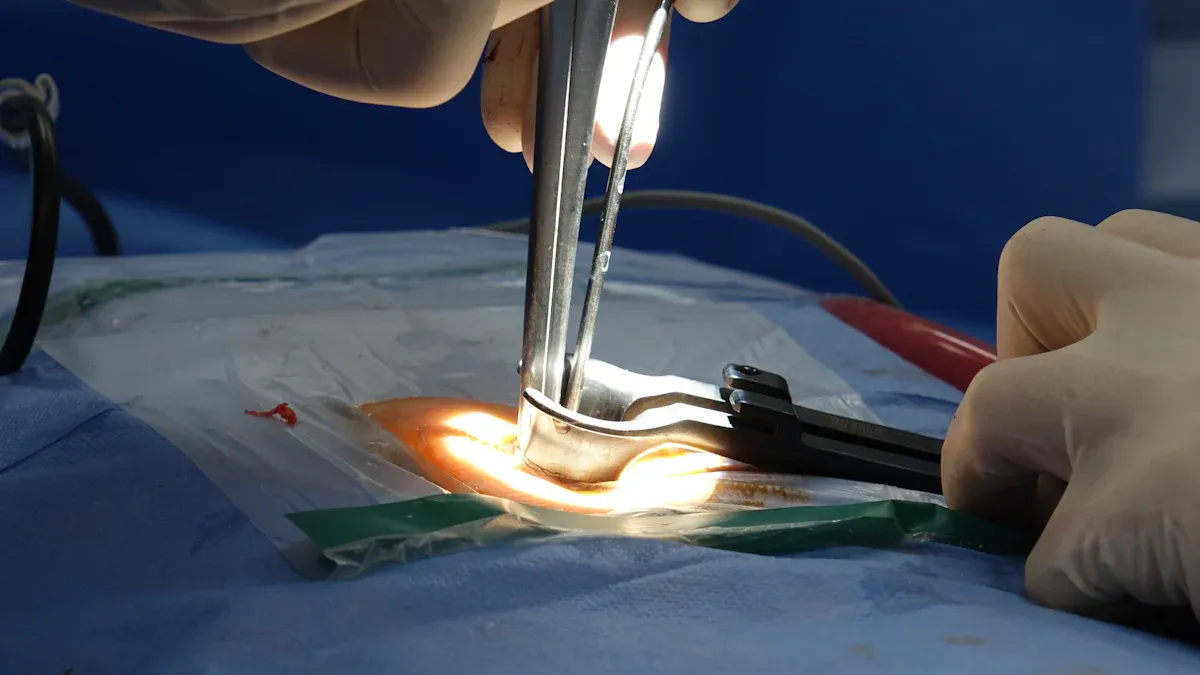
Pedicle screws are implantable fixation components inserted through a vertebral pedicle into the vertebral body. Once connected to longitudinal rods, they provide anchor points for a posterior spinal construct. Depending on the specific system and its labeled intended use, pedicle screw constructs may be used as part of procedures addressing mechanical instability or deformity that requires fusion with instrumentation.
The term “pedicle screw” describes a component category, not one universal implant. Systems differ in screw design, diameter and length ranges, rod diameter, locking mechanism, materials, instruments, insertion workflow and approved indications. These details must be confirmed in the documentation for the exact system being evaluated.
What Makes Up a Pedicle Screw Construct?
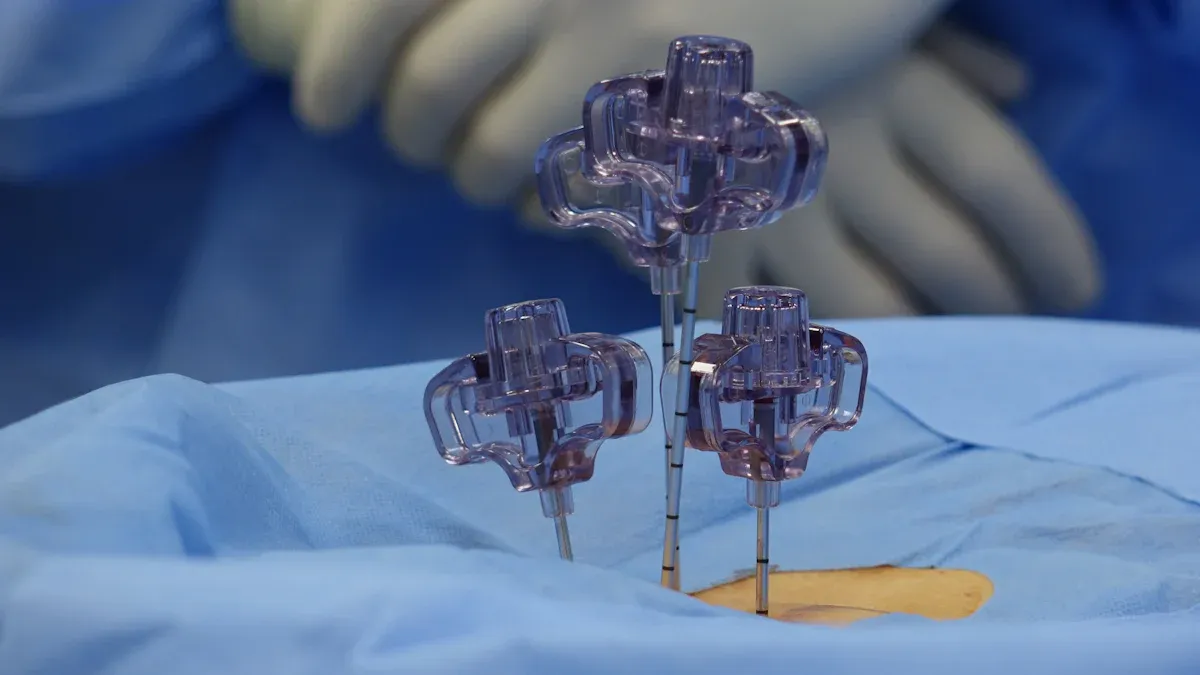
A complete construct normally involves more than the screw itself. The exact component set varies by manufacturer and system, but evaluation commonly includes the following categories.
| Component category | General role in the construct | What buyers should verify |
|---|---|---|
| Pedicle screw | Provides an anchor within the vertebra | Design, dimensions, intended spinal region, material specification and labeling |
| Rod | Connects anchors across the treated levels | Diameter, available lengths or forms, material and compatibility with the screw head |
| Locking component | Secures the rod within the screw head | Locking sequence, required driver, torque instructions and single-use status |
| Connectors | May extend or link parts of a construct when included in the system | Approved configurations and system-specific compatibility |
| Insertion instruments | Support preparation, screw insertion, rod placement and final locking | Instrument list, tray layout, maintenance, replacement and reprocessing instructions |
Distributors should not infer cross-compatibility from similar dimensions or appearance. Components and instruments from different systems should not be mixed unless such use is expressly supported by the relevant manufacturer documentation and applicable requirements.
How Pedicle Screw Fixation Supports Spinal Fusion
Spinal fusion aims to create a continuous bone bridge between selected vertebrae. A pedicle screw-and-rod construct can reduce motion at the instrumented levels and maintain the planned relationship between vertebrae while fusion develops. The construct therefore supports the fusion environment; it is not a substitute for bone preparation, graft strategy or biological healing.
Clinical outcome cannot be predicted from the screw alone. Results may be influenced by diagnosis, spinal level, surgical approach, construct plan, bone quality, implant placement, graft choice, smoking status, comorbidities, adherence to postoperative instructions and other factors. For this reason, a product page or educational article should not promise a particular fusion rate, pain reduction or recovery time.
Thoracolumbar and Cervical Use Require Separate Evaluation
Pedicle morphology, surrounding structures, fixation strategies and available systems differ across the spine. A broad statement that one screw works for “the neck and lower back” is therefore not sufficient for clinical or procurement decisions.
Thoracolumbar constructs may use open or percutaneous pedicle screw systems. Buyers should verify the labeled anatomical scope, screw and rod range, reduction options, compatible instruments and any procedure-specific limitations.
Cervical pedicle fixation involves different anatomical considerations and should not be generalized from lumbar data. Confirm whether the evaluated system is specifically intended for the cervical or occipitocervical-thoracic region and review its dedicated technique and instruments.
XC Medico lists separate posterior cervical products, including a posterior cervical fixation system. Its specifications, intended use and compatibility should be assessed independently from thoracolumbar pedicle screw systems.
Common Pedicle Screw Designs
The following terms describe common design categories across the industry. They do not establish the features of a particular XC Medico product unless confirmed on the corresponding product page and technical documentation.
| Design category | General characteristic | Evaluation point |
|---|---|---|
| Monoaxial | The screw head has a fixed relationship to the shaft | Assess the intended construct application and rod-alignment requirements |
| Polyaxial | The head can articulate before final locking | Review angulation range, locking mechanism and compatible instruments |
| Reduction screw | An extended head may assist rod reduction before final assembly | Verify reduction workflow, tab-removal method and dedicated instruments |
| Solid screw | Designed for insertion through the system's specified preparation workflow | Confirm taps, probes, drivers and insertion sequence |
| Cannulated screw | Contains a central channel that may support guidewire-based insertion | Confirm guidewire, dilator and imaging workflow, plus system warnings |
Screw diameter, length and trajectory are not “bigger is always better” decisions. They are selected using anatomy, bone quality, imaging, construct requirements, surgeon judgment and the limits of the chosen system.
Open vs. Minimally Invasive Pedicle Screw Systems
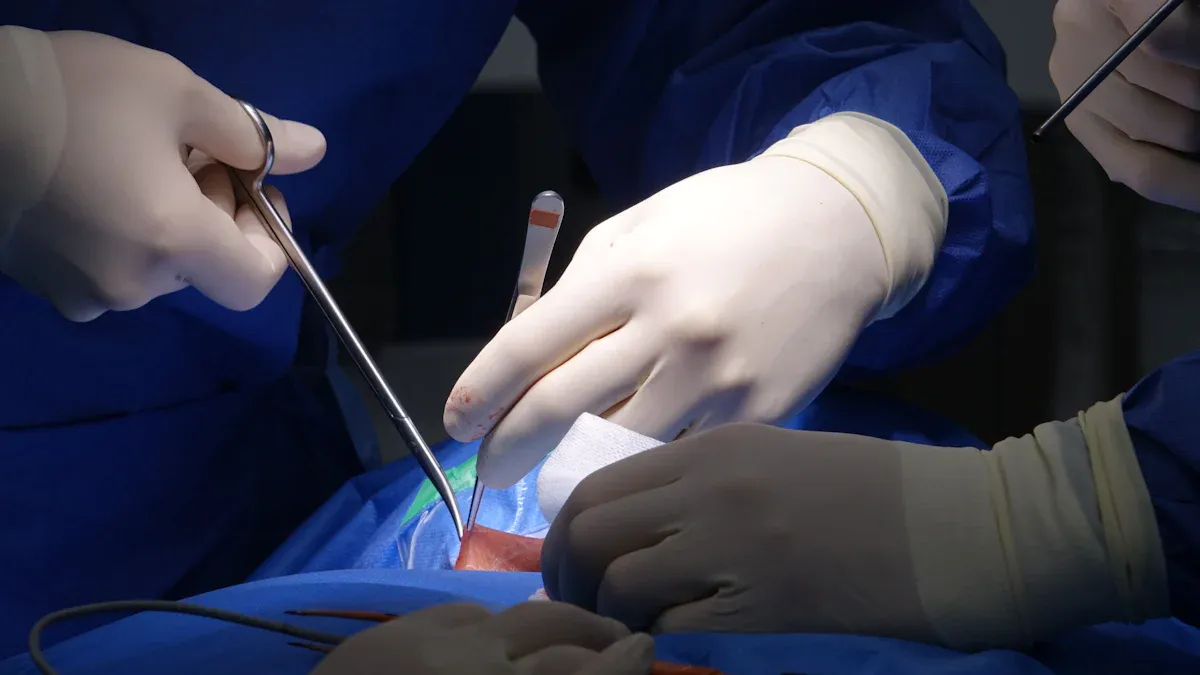
Open and percutaneous systems can both form posterior fixation constructs, but their access, implant delivery and instrument requirements differ. “Minimally invasive” describes an operative approach and workflow; it should not be used as a universal promise of better clinical outcomes for every patient or indication.
| Evaluation area | Open system | Percutaneous/MIS system |
|---|---|---|
| Access | Direct exposure of the posterior elements | Smaller access corridors using dedicated delivery instruments |
| Screw insertion | System-specific open preparation and insertion instruments | Often uses guidewire- and imaging-dependent steps when specified |
| Rod delivery | Rod positioned through the exposed construct | Dedicated percutaneous rod-delivery workflow |
| Instrument requirements | Open tray and construct-manipulation instruments | Dilators, sleeves, towers or extenders and MIS rod instruments as applicable |
| Key procurement question | Is the full open instrument configuration supplied? | Are all access, guidewire, reduction and rod-delivery components included? |
For a system-specific example, review the minimally invasive pedicle screw system page and request its current specification, instrument list and documentation before making a compatibility or market-access decision.
Factors Used to Select a Pedicle Screw System
Clinical selection belongs to the treating team. Procurement teams support that decision by confirming that the proposed configuration is complete, documented and appropriate for the destination market.
Clinical and technical factors
- Spinal region and levels included in the construct
- Diagnosis, instability or deformity addressed by the planned procedure
- Pedicle morphology, available bone corridor and planned trajectory
- Bone quality and any system-specific limitations
- Open, percutaneous or other planned surgical approach
- Required screw-head behavior, reduction strategy and rod configuration
- Surgeon training and familiarity with the exact system
- Product labeling, indications, contraindications, warnings and precautions
Procurement and distribution factors
- Complete screw and rod range needed for the planned cases
- Confirmed compatibility of implants, locking parts and instruments
- Instrument tray completeness, inspection and replacement process
- Sterile or non-sterile supply status and applicable handling information
- Labeling, traceability, lot control and packaging configuration
- Market-specific registration and technical-document availability
- Change-notification responsibilities and version control
- Forecast, replenishment lead time and critical-size inventory
Potential Risks and Evidence Limitations
Potential complications associated with instrumented spinal fusion can include malposition, neurological or vascular injury, loosening, pullout, implant deformation or breakage, infection, loss of correction, nonunion and the need for revision. This is not an exhaustive list. The applicable system labeling should be used for its complete indications, contraindications, warnings, precautions and adverse-event information.
Placement technology is one area where evidence must be described carefully. A 2024 systematic review and meta-analysis of thoracolumbar fixation reported a modest difference in clinically acceptable screw placement between navigated and traditional groups, while finding no significant difference in pain or disability scores. A separate systematic review of cervical pedicle screws did not find a significant navigation-related accuracy advantage. These results should not be combined into a universal claim that navigation always improves every surgical or patient outcome.
Pedicle Screw System Checklist for Distributors
Before requesting a final quotation or building a local registration plan, ask for evidence tied to the exact model and market. The following list is a starting point and should be adapted to local requirements.
| Review category | Questions to ask | Evidence to request |
|---|---|---|
| System scope | Which implants and instruments form the complete system? | Current catalog, component list and instrument list |
| Intended use | Which anatomical region, conditions and users are covered? | Market-specific labeling, IFU and registration evidence |
| Dimensions | Are the required screw, rod and connector ranges available? | Verified specification sheets and ordering codes |
| Compatibility | Which components may be used together? | Manufacturer compatibility matrix or controlled documentation |
| Materials | What material applies to each implant component? | Material specification and applicable conformity evidence |
| Instruments | Does the tray cover preparation, insertion, reduction and final locking? | Tray layout, instrument names and maintenance instructions |
| Supply configuration | Is the product sterile or non-sterile, and how is it packaged? | Packaging configuration, labeling and handling information |
| Traceability | How are model, size and lot identified through distribution? | Sample label, traceability record and complaint workflow |
| Change control | How are product, process, supplier or labeling changes communicated? | Quality agreement and change-notification terms |
Explore XC Medico Pedicle Screw System Pages
The following links are starting points for product evaluation, not statements that the systems are interchangeable or appropriate for a particular patient. Verify the current documentation for the exact configuration you need.
Browse the broader XC Medico product grouping before narrowing the required configuration.
Review the dedicated product page and request its current component and instrument documentation.
Evaluate this system independently for scope, available configurations and documentation.
Check tray completeness and confirm that every instrument matches the selected implant system.
For a wider view of related implants and instruments, visit XC Medico's spinal fixation solutions.
Frequently Asked Questions
What is the role of pedicle screws in spinal fusion?
Pedicle screws act as anchors for a rod-based fixation construct. The construct limits motion and maintains the planned alignment while biological fusion develops. The screws themselves do not create fusion.
What components make up a pedicle screw construct?
A construct commonly includes pedicle screws, rods and locking components, with connectors or reduction components where the specific system permits. Dedicated instruments are required for preparation, insertion, rod placement and final locking.
What is the difference between open and MIS pedicle screw systems?
They differ mainly in access, implant delivery and instrumentation workflow. Percutaneous systems typically require dedicated access and rod-delivery instruments. Neither approach should be described as universally superior for every indication or patient.
Can components from different pedicle screw systems be mixed?
Do not assume compatibility from similar dimensions or appearance. Use only configurations supported by the relevant manufacturer documentation and applicable regulatory requirements.
What documents should a distributor request?
Request the current catalog and ordering codes, system and instrument lists, specifications, labeling and IFU, material information, packaging configuration, traceability information and market-specific regulatory documentation applicable to the exact products.
References and Evidence Scope
- US FDA. Guidance for Industry and FDA Staff: Spinal System 510(k)s.
- Papalia GF, et al. Navigated thoracolumbar pedicle screw fixation versus conventional techniques: systematic review and meta-analysis. Spine. 2024.
- Accurate placement and revisions for cervical pedicle screws placed with or without navigation: systematic review and meta-analysis. 2023.
- Perdomo-Pantoja A, et al. Accuracy of current techniques for placement of pedicle screws in the spine: systematic review and meta-analysis. Spine. 2019.
Medical and regulatory disclaimer: This article provides general educational and procurement information. It is not medical advice, a surgical technique, product labeling or a substitute for the applicable IFU. Clinical decisions must be made by qualified healthcare professionals. Product availability, intended use, registration status and documentation can vary by market and configuration; verify them before purchase or use.
Evaluate a Pedicle Screw System for Your Market
Tell XC Medico your destination market, required spinal region, preferred system type and documentation needs. Request a product-specific component list, instrument configuration and available regulatory information before comparing quotations.
Request system documentation
