


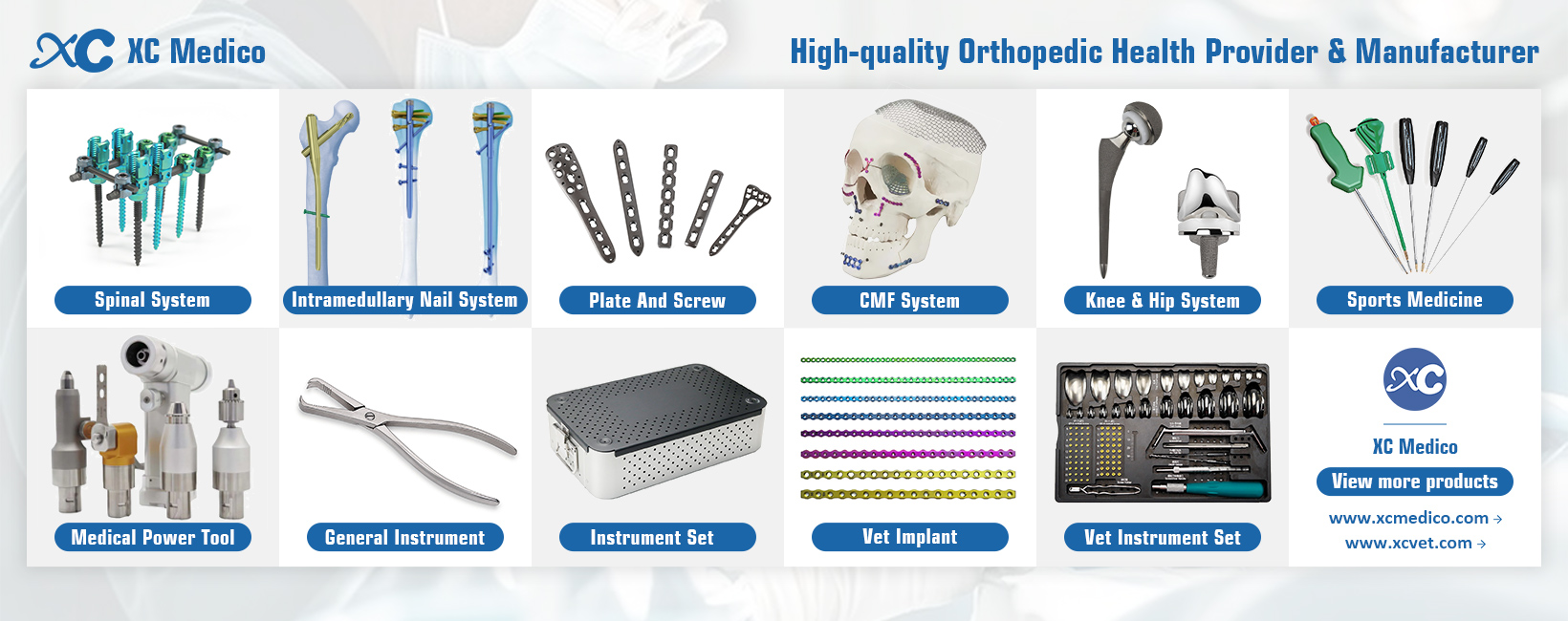
Use these ten checks to compare orthopedic implant manufacturers on regulatory scope, traceability, quality controls, production readiness, commercial terms and long-term support—not on price claims alone.
Quick answer
A reliable orthopedic implant manufacturer should be able to provide evidence—not only promises—covering its legal identity, quality-management scope, product-specific market authorization, material traceability, design and process validation, production capacity, OEM terms, delivery controls, complaint handling and references relevant to your market.
Start with documents, verify them independently, inspect how the factory applies its procedures, and complete a controlled sample order before making a long-term commitment.
Choosing an orthopedic implant manufacturer is a risk-management decision. A low quotation can become expensive if certificate scope does not match the product, instruments are incomplete, documentation delays registration, or replenishment is unreliable. At the same time, a polished website or a long product catalog does not prove that a manufacturer can meet the requirements of your target market.
This guide is designed for international orthopedic distributors, importers, hospital procurement teams and private-label buyers. It focuses on the questions and evidence needed before supplier approval. It does not replace a regulatory review, quality audit, legal review or clinical evaluation.
Documents to request before comparing quotations
Ask every shortlisted manufacturer for the same evidence package. A standard request makes comparison easier and reduces the risk of choosing a company because it supplied attractive—but incomplete—marketing material.
| Review area | Evidence to request | What to verify | Common warning sign |
|---|---|---|---|
| Company identity | Business licence, factory address and legal manufacturer details | The contracting party, manufacturer and certificate holder are clearly connected | A trading company is presented as the legal manufacturer without explanation |
| Quality system | Current ISO 13485 certificate and scope | Issuer, validity, address, activities and covered product categories | The certificate is expired or its scope does not cover the requested products |
| Market access | Product-specific registrations, clearances, certificates or declarations | Model names, intended market, certificate number and current status | Company registration is described as approval for every product |
| Traceability | Sample material certificate, lot record, traveller and inspection record | Records connect raw material, production lot and finished product | Only a generic material specification is available |
| Validation | Applicable design, mechanical, process, cleaning and packaging evidence | The evidence applies to the requested model and configuration | Test summaries omit model numbers, methods or acceptance criteria |
| Supply performance | Capacity statement, standard lead times and recent delivery data | Quoted lead time reflects real capacity and inventory availability | Every order is described as urgent-capable without supporting data |
| After-sales control | Complaint, CAPA, vigilance and recall procedures | Responsibilities and escalation times are defined | No documented process exists after shipment |
1Confirm the company’s legal identity and manufacturing role
First determine who will manufacture the implants, who owns the design and registration, who will appear on the label, and who will sign the contract. “Supplier,” “factory,” “brand owner” and “legal manufacturer” are not automatically the same entity.
Compare the company name and address shown on the business licence, quality-system certificate, product documentation, quotation, label artwork and bank account. If different entities are involved, ask for a written explanation of their roles and contractual relationship.
- Verify the physical manufacturing address, not only the sales-office address.
- Ask which processes are performed in-house and which are outsourced.
- Confirm who controls design changes, technical files and complaint investigations.
- For private-label projects, identify which party will hold registrations in each market.
2Verify quality-system scope and product-specific market authorization
ISO 13485 is a medical-device quality-management standard, but a certificate should be reviewed in context. Check the legal entity, site address, covered activities, product categories, issue and expiry dates, and the status of the certification body. A valid certificate is an important starting point; it is not a substitute for product-specific evidence.
For the United States, do not accept “FDA registered” or “FDA certified” as proof that a device is cleared or approved. The FDA states that establishment registration and device listing do not denote approval, clearance or authorization. Ask for the applicable product classification and premarket submission information, where required, and verify it in the relevant FDA database.
For the European Union, review the manufacturer’s role under Regulation (EU) 2017/745, the applicable conformity-assessment route, declaration of conformity and certificate scope. Where relevant, verify notified-body and certificate information through official European resources such as EUDAMED.
Do not approve a supplier based on logos
ISO, CE and FDA logos in a brochure are not sufficient evidence. Record the exact certificate or submission number, the covered legal entity, product family, model and target market, then verify each item independently.
Examples of certification documents provided by XC Medico
The images below are document examples for initial review. Before supplier approval, request current full-resolution copies and verify the legal entity, manufacturing site, certificate number, issuing body, validity dates, covered activities and applicable product scope.
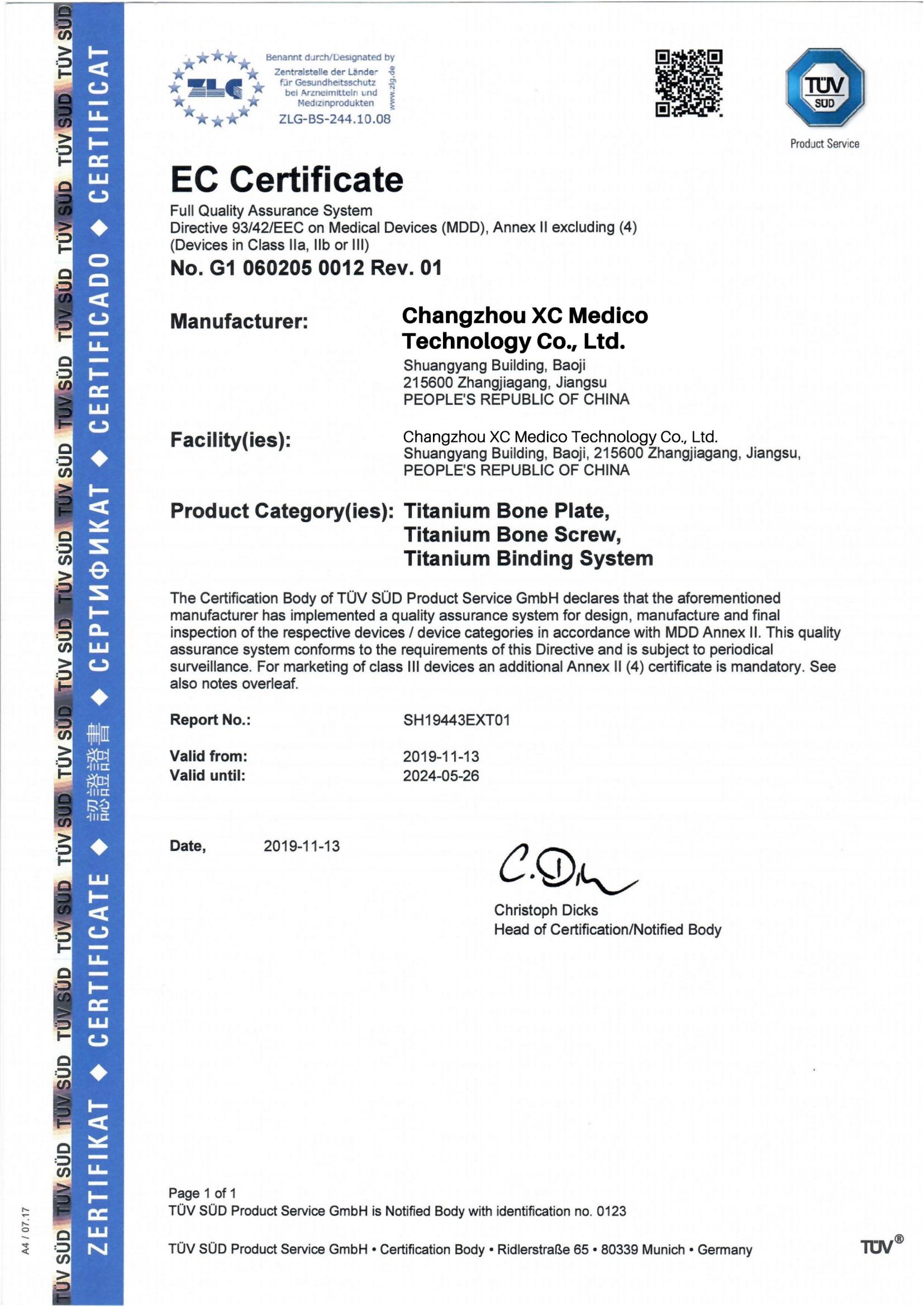
TÜV SÜD CE certificate document example
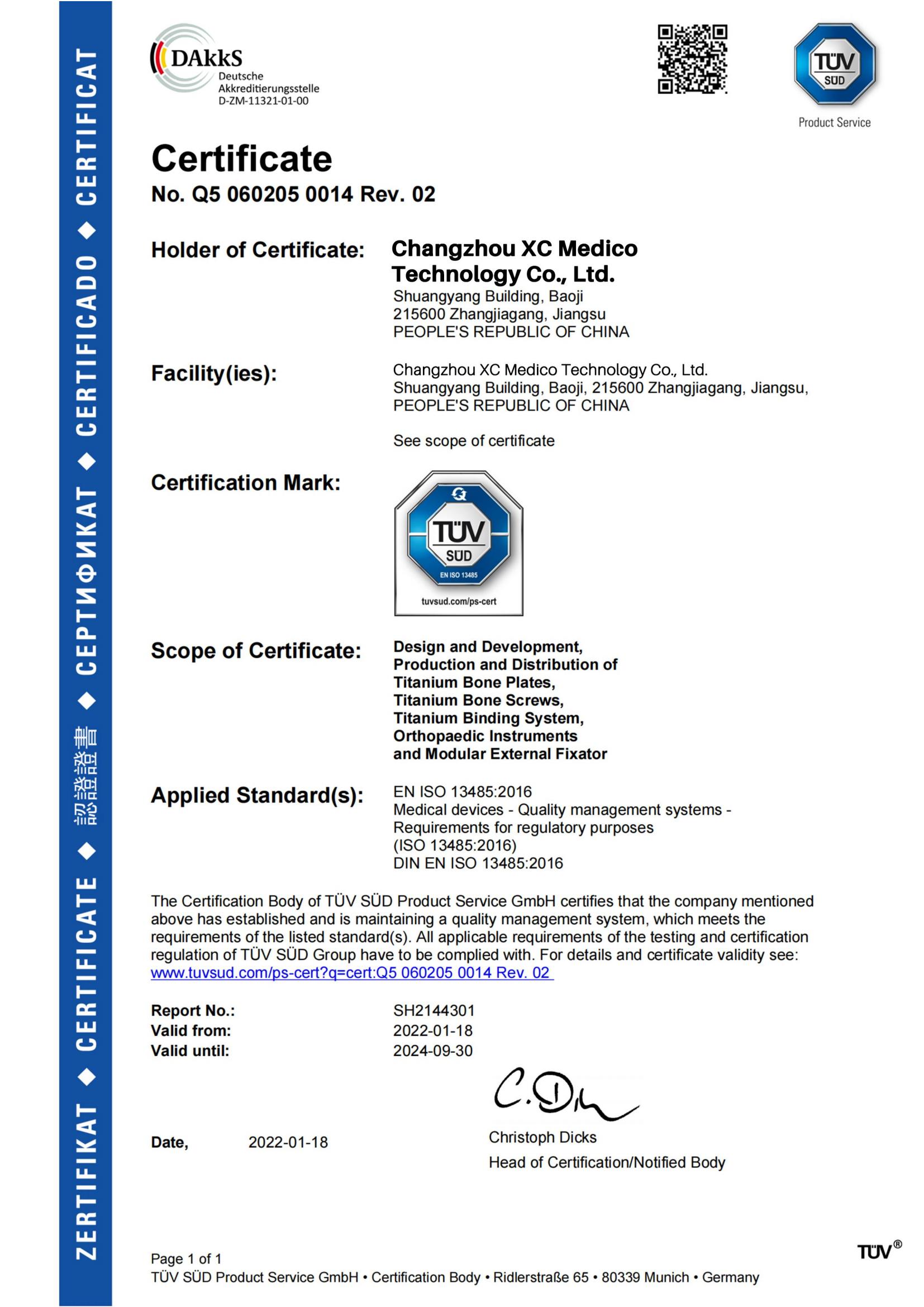
TÜV SÜD ISO 13485 certificate document example
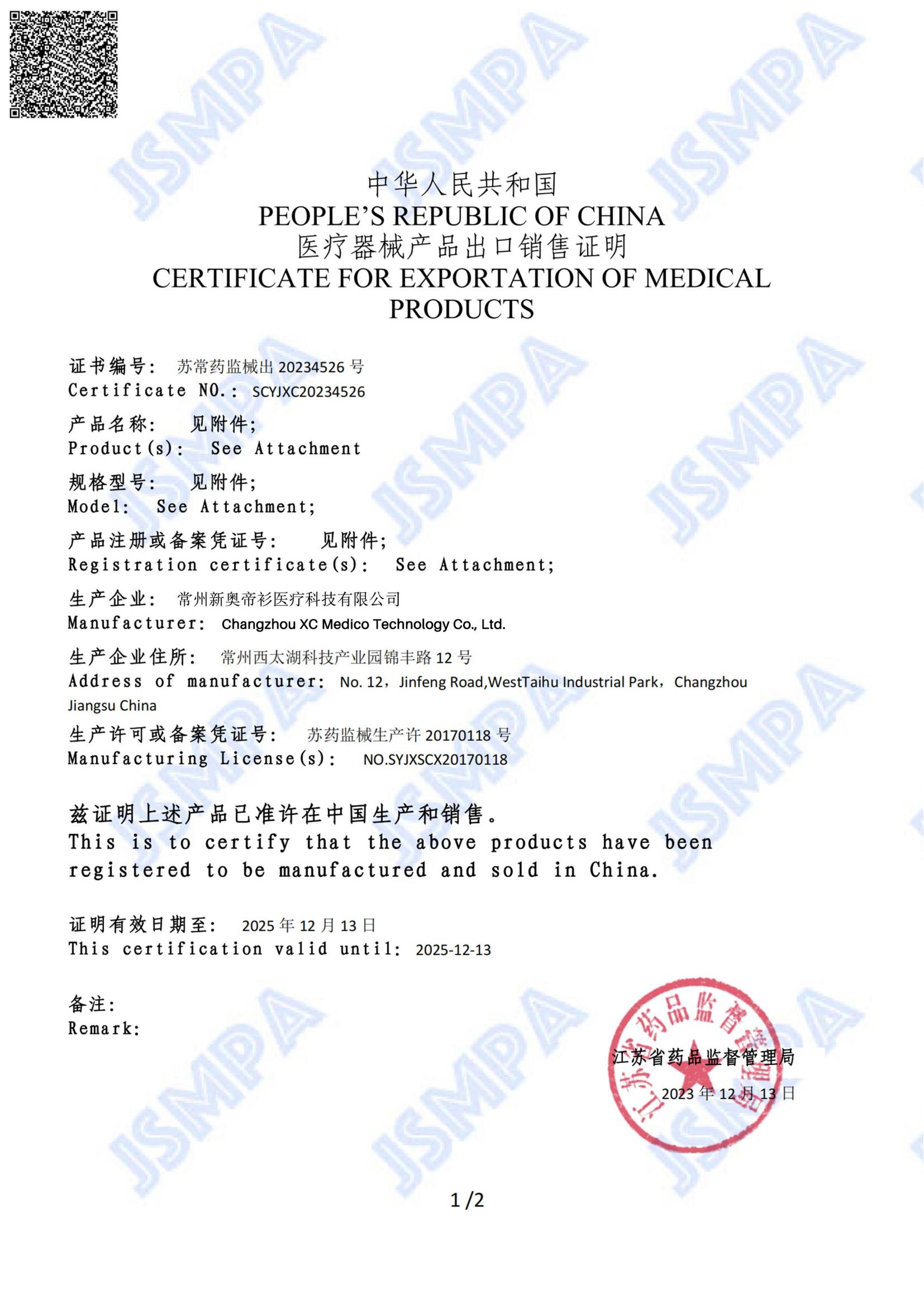
Spine FSC document example
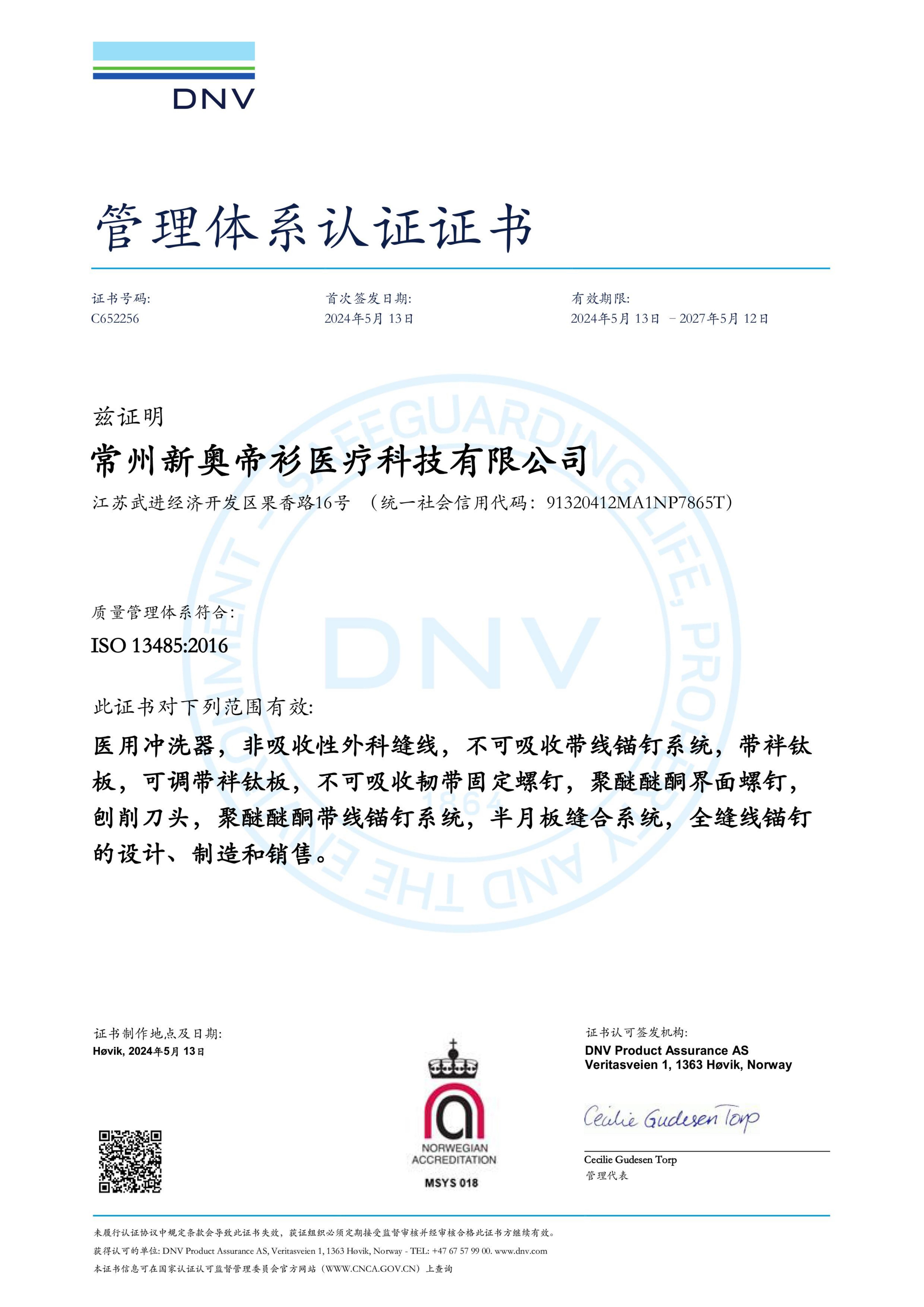
ISO 13485 certificate document example
Document images are shown for reference only and should not be treated as evidence that every product is authorized in every market.
3Review raw-material and production traceability
Orthopedic implant procurement requires more than confirming a material grade on a catalog. Ask the manufacturer to demonstrate how a finished implant can be traced back through machining, heat treatment or surface treatment, inspection and incoming raw-material records.
A useful traceability sample should connect the finished-product lot or serial identifier with the raw-material certificate, production traveller, key process records and final inspection. The exact tests and standards depend on the device, material, intended use and market; avoid applying a generic checklist to every implant family.
- Request a redacted sample batch record for a comparable product.
- Check how nonconforming material is identified, segregated and dispositioned.
- Ask how outsourced special processes remain traceable.
- Confirm how long quality records are retained for the relevant market.
XC Medico’s public orthopedic implant quality-control overview can be used as a starting point for a discussion, but a buyer should still request product- and lot-specific evidence during qualification.
4Examine design validation, process validation and testing
Ask what evidence supports the exact implant system you plan to purchase. A test report for a different size, material or configuration may not be representative. The manufacturer should be able to explain how the tested configuration was selected and how the results apply across the product family.
Depending on the product, the review may include design inputs, risk management, dimensional inspection, mechanical testing, biocompatibility, cleaning, packaging, sterilization or special-process validation. Your quality and regulatory teams should define which records are necessary for the target market and intended use.
During a factory review, compare written procedures with actual production. XC Medico provides a public overview of its orthopedic implant manufacturing process; distributors should use such information to prepare more specific audit questions rather than treating a website description as audit evidence.
5Assess the product portfolio, instruments and system completeness
A broad catalog is useful only when the systems needed by your customers are complete, consistently documented and realistically available. Review implants, instruments, trays, cases, spare parts, size ranges and replenishment items as one system.
- Confirm which SKUs are standard, made to order or being phased out.
- Check whether instruments and implant variants match the same documented system.
- Review labeling, instructions for use and packaging configuration by market.
- Ask how design changes and discontinued components are communicated.
- Confirm that compatibility statements are documented and limited to validated combinations.
Do not accept broad statements such as “compatible with all systems” or “MRI safe” without device-specific labeling and supporting evidence. Compatibility and MR safety information must be evaluated for the exact product and intended conditions.
6Check production capacity, inventory and delivery controls
Capacity should be assessed against your forecast, not as a standalone factory number. Share a realistic SKU mix, order frequency, tender schedule and target service level. Then ask the manufacturer to explain available capacity, bottleneck processes, inventory policy and lead-time assumptions.
Review the difference between in-stock products, standard production and customized items. Ask how raw-material shortages, outsourced processes, equipment maintenance and demand peaks are managed. Recent on-time delivery data for comparable orders is more useful than a general promise of fast shipping.
XC Medico’s implant supply-chain and warehousing overview describes its public process positioning. A distributor should follow up with a current availability snapshot and written lead times for the exact systems under consideration.
7Clarify OEM/ODM, MOQ and intellectual-property terms
Private-label and customized projects require decisions that are not covered by a unit price. Before approving samples, document who owns drawings, tooling, verification data, packaging artwork and resulting registrations. Define how confidential information is protected and whether designs may be supplied to other customers.
- Separate standard private labeling from true design customization.
- Define sample, validation and production-approval stages.
- Record minimum order quantities by SKU and by complete system.
- Agree on design-change notification and revalidation responsibilities.
- Clarify tooling ownership, territory terms and termination rights.
For a deeper commercial review, use this OEM manufacturer due-diligence checklist alongside your quality and legal assessment.
8Evaluate registration, tender and technical-document support
A manufacturer may produce acceptable products and still be a poor fit if its documentation does not support registration or tenders in your market. Create a document matrix before placing the first commercial order.
The matrix should identify each required document, owner, language, format, revision, expected delivery date and confidentiality condition. Review how the manufacturer controls updates when a certificate, label, instruction, specification or design changes.
Request a market-specific document pack
Instead of asking, “Do you have CE or FDA?”, provide the target country, product family and model list. Ask the manufacturer to map each SKU to the available regulatory and technical evidence. Have qualified regulatory personnel verify that the documentation is sufficient for your intended market.
9Review complaint handling, CAPA and recall readiness
Supplier qualification should cover what happens after shipment. Ask how complaints are received, assessed, investigated, trended and closed. Confirm how the manufacturer communicates potentially reportable events, field actions, recalls and corrective actions to distributors and other economic operators.
- Who is the primary complaint and vigilance contact?
- What information is required to start an investigation?
- How are returned products controlled and examined?
- How are root cause, CAPA and effectiveness checks documented?
- How are affected lots and customers identified during a field action?
Do not rely on informal “technical support” as a substitute for documented post-market procedures and clearly allocated regulatory responsibilities.
10Run a controlled sample order and supplier scorecard
A sample order tests more than product appearance. Use it to evaluate quotation accuracy, document control, labeling, packaging, communication, lead time, inspection results and response to questions. Record acceptance criteria before the sample is ordered.
Score each manufacturer using the same weighted criteria. A typical scorecard can include regulatory fit, quality evidence, traceability, technical capability, system completeness, supply reliability, documentation, commercial terms and support. Treat price as one factor rather than the overriding factor.
| Category | Suggested weight | Example scoring question |
|---|---|---|
| Regulatory and quality-system fit | 25% | Does verified evidence cover the legal entity, site, product and target market? |
| Traceability and validation | 20% | Can the supplier connect product claims to controlled records? |
| Product and instrument completeness | 15% | Is the required system complete, documented and supportable? |
| Capacity and delivery | 15% | Are capacity, inventory and lead-time claims supported by current data? |
| Documentation and post-market support | 15% | Can the supplier support registration, tenders, complaints and change control? |
| Commercial fit | 10% | Are price, MOQ, payment, IP and territory terms sustainable? |
Adjust the weights for your market and product risk. Any critical regulatory, quality or traceability failure should be treated as a gate, not compensated for by a low price or a high score elsewhere.
Common red flags when selecting an implant manufacturer
Claims without scope
The manufacturer says “FDA, CE and ISO certified” but cannot connect the claim to the legal entity, product, model and market.
Documents that cannot be verified
Certificate numbers, issuing bodies, dates or covered products are missing, inconsistent or unavailable for independent verification.
Price before requirements
A firm quotation is offered before the manufacturer confirms product configuration, packaging, documentation and registration needs.
Generic test reports
Reports do not identify the tested model, configuration, method, acceptance criteria or connection to the requested product.
Unclear manufacturer identity
The names on the contract, certificate, label, invoice and bank account differ without a documented explanation.
No post-market process
Support depends on individual sales contacts rather than documented complaint, CAPA, vigilance and recall procedures.
How to compare XC Medico with other manufacturers
Apply the same checklist to XC Medico and every other shortlisted manufacturer. Public factory, quality-control and supply-chain pages can help you prepare questions, but supplier approval should be based on current documents and evidence relevant to your products and market.
A practical next step is to prepare your target-country list, required product systems, estimated order pattern, OEM requirements and document matrix. Ask each manufacturer to respond in the same format. This produces a comparable record for quality, regulatory and commercial review.
XC Medico company and manufacturing overview. Use the video to prepare follow-up questions; complete supplier approval using current controlled documents and audit evidence.
If your organization is replacing an existing supplier, also review the operational risks described in the guide to switching orthopedic implant suppliers without disrupting distribution.
Frequently asked questions
What certifications should an orthopedic implant manufacturer have?
The answer depends on the product and target market. ISO 13485 is a widely recognized quality-management standard for medical-device organizations, but buyers must also review product-specific regulatory evidence. Verify the certificate scope, site, legal entity, product family, current status and applicable market requirements.
Does FDA registration mean an implant is approved?
No. The FDA states that establishment registration and device listing do not denote approval, clearance or authorization of the establishment or its devices. Where a device requires premarket review, verify the applicable clearance, approval or other authorization separately.
How can a distributor verify ISO 13485 certification?
Review the certificate number, legal entity, site address, covered activities, product scope, certification body and validity dates. Confirm the certificate with the issuing or certification body where possible, and verify that the quality system is applied in practice during document review or an audit.
What documents should be checked before placing an order?
Typical evidence includes company and manufacturing-site details, ISO 13485 scope, product-specific market documentation, material and batch traceability samples, applicable validation or test evidence, labeling, instructions, supply terms, complaint procedures and change-control responsibilities. The exact list should be set by qualified quality and regulatory personnel.
What is the difference between an implant manufacturer and a supplier?
A manufacturer performs or controls manufacturing activities and may also hold design and regulatory responsibilities. A supplier may be a manufacturer, brand owner, distributor or trading company. Buyers should identify each entity’s documented role instead of relying on the commercial description alone.
Should price be the main criterion when selecting a manufacturer?
No. Price should be evaluated together with regulatory fit, quality evidence, traceability, product completeness, capacity, delivery reliability, documentation, post-market support and contract terms. A low initial price may create greater registration, inventory or quality costs later.
Request a manufacturer validation pack
Share your target market, product category, expected order pattern and OEM requirements. Ask for a document package that your quality, regulatory and procurement teams can review before moving to samples or a commercial order.
Contact XC MedicoOfficial regulatory references
Professional-use notice: This article is intended to support business-to-business supplier due diligence. It is not clinical advice, legal advice or a determination that any specific product is authorized for a particular market. Regulatory and quality requirements vary by device, intended use and jurisdiction; consult qualified professionals before making approval or purchasing decisions.

