


Medical device sourcing · Practical buyer's guide
Evaluating surgical instrument manufacturers requires more than comparing catalog size and unit price. A reliable review examines the manufacturer's legal identity, quality system, product-specific regulatory status, materials, process controls, traceability, samples, delivery performance, and post-market support. This 12-point checklist turns those requirements into a repeatable supplier-selection process.
How Do You Evaluate a Surgical Instrument Manufacturer?
Start with a written user requirement specification, then evaluate each candidate in four stages: document review, technical discussion, sample testing, and—where risk justifies it—a remote or on-site audit. Do not approve a supplier based only on a certificate PDF, website claim, or visually acceptable sample.
Best short answer: choose the manufacturer that supplies the strongest verifiable evidence for your specific device and market—not necessarily the company with the longest product list or the lowest quotation.
Define Your Requirements Before Contacting Suppliers
A supplier cannot provide a meaningful quotation or compliance package until the intended product is clearly defined. Prepare a concise requirements document before creating a shortlist.
- Device and intended use: instrument name, procedure, reusable or single-use status, and whether it is supplied alone or as part of an implant system.
- Target market: countries of sale, device classification, applicable registration route, language, labeling, and importer or authorized-representative requirements.
- Technical specification: dimensions, tolerances, material grade, hardness, surface finish, interface geometry, drawings, and test methods.
- Processing: cleaning state, passivation, packaging, sterilization status, sterilization compatibility, and validated reprocessing instructions where applicable.
- Commercial scope: forecast volume, initial order, target lead time, packaging configuration, private label, and required documentation.
Reviewing a manufacturer's orthopedic product categories can help establish whether its normal production scope matches the planned purchase. Catalog breadth alone, however, does not demonstrate competence for every listed device.
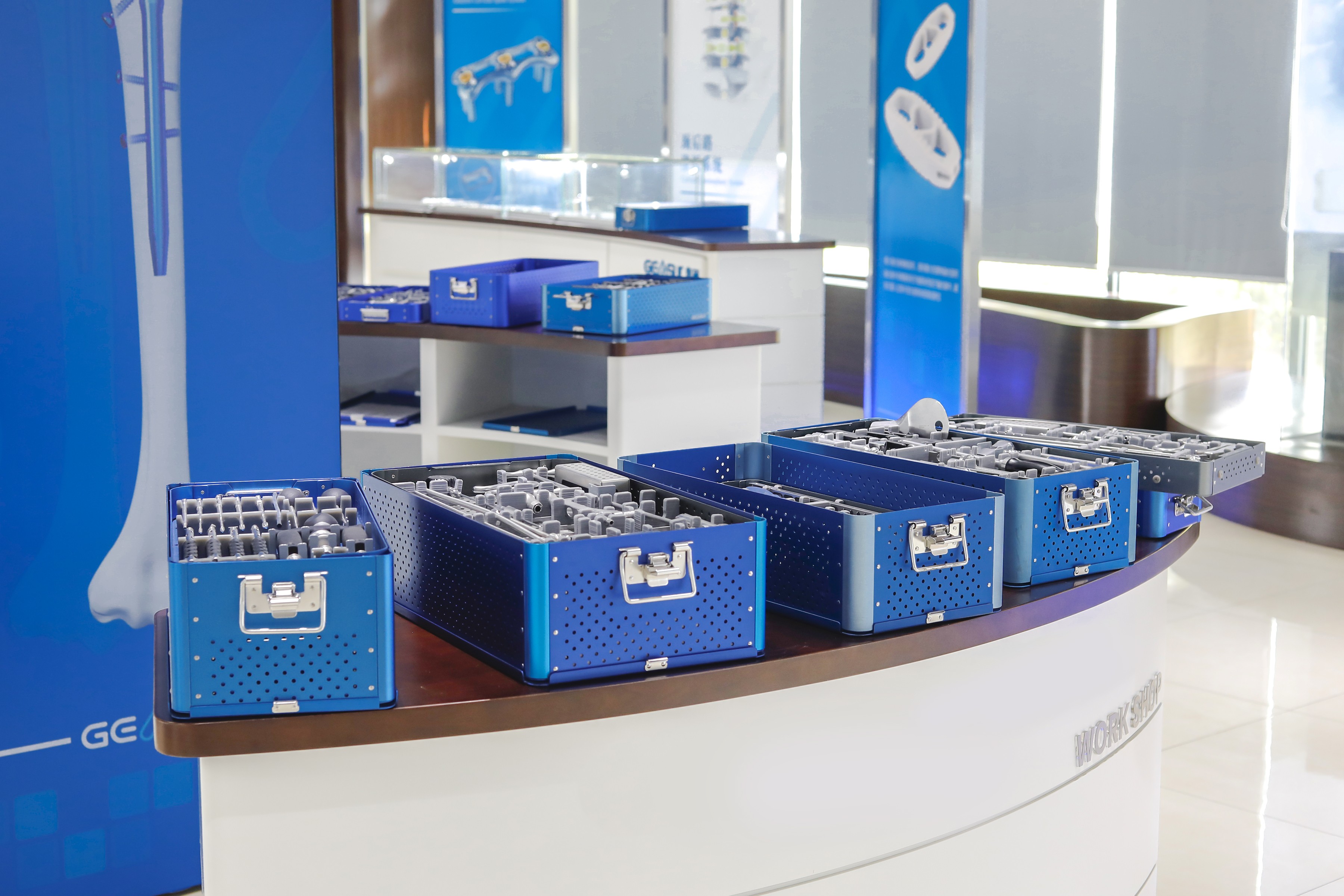
12-Point Checklist for Surgical Instrument Manufacturers
- Confirm the legal manufacturer and site responsibilitiesIdentify who owns the device design, who manufactures each component, who performs finishing and packaging, and who releases the finished product. Record addresses and outsourced critical processes.
- Verify the quality management systemRequest the current ISO 13485 certificate and verify the organization name, manufacturing address, certification scope, issuing certification body, accreditation, certificate status, and expiry date.
- Verify product-specific market authorizationMatch the exact product, model, intended use, classification, and legal manufacturer to the documents required in each destination market. Company registration is not the same as product clearance or approval.
- Review materials and supplier controlsRequire material specifications and certificates, approved supplier controls, incoming inspection, lot segregation, and a process for handling substitutions or material changes.
- Assess manufacturing capabilityConfirm that machining, forging, heat treatment, welding, polishing, passivation, coating, assembly, and inspection capabilities match the product. Determine which steps are outsourced and how they are controlled.
- Examine process validation and calibrationAsk how special processes are validated and how inspection, torque, dimensional, electrical, and other measuring equipment is calibrated and maintained.
- Test traceability and document controlSelect a sample lot and ask the manufacturer to trace it back to raw material, traveler or routing records, inspections, nonconformities, labeling, packaging, and release approval.
- Evaluate technical performance and usabilityApprove samples against drawings and use-case criteria such as fit, alignment, grip, cutting performance, torque transmission, interface compatibility, ergonomics, and repeated processing.
- Review cleaning, packaging, and sterilization responsibilitiesClarify whether devices are supplied non-sterile or sterile, which party validates cleaning and sterilization, and which packaging integrity, shelf-life, bioburden, and labeling evidence applies.
- Assess design and customization controlsFor OEM/ODM work, review design inputs, risk management, drawings, verification, validation, intellectual property, sample approval, design transfer, and change-control responsibilities.
- Measure capacity and delivery reliabilityCheck realistic lead time, capacity constraints, minimum order quantity, safety stock, forecast handling, order confirmation, packing accuracy, export documents, and recovery plans for delays.
- Review complaints, CAPA, warranty, and continuityConfirm complaint escalation, root-cause analysis, corrective and preventive action, field action or recall support, spare parts, repairs, warranty terms, and business continuity.
How to Verify Quality and Regulatory Claims
ISO 13485 is a quality-system standard
ISO 13485 specifies quality management system requirements for organizations involved in the medical-device lifecycle. It is meaningful evidence when the certificate is valid and its scope covers the relevant organization, site, and activities. It does not, by itself, prove that every product in a catalog is registered, clinically suitable, or authorized in your market.
Ask for the complete certificate rather than a cropped logo. Verify it with the certification body or its public database where possible, and compare the company name and address against quotations, invoices, declarations, labels, and product records.
CE marking must be matched to the device and EU MDR route
For the European Union, determine the device classification and applicable conformity-assessment route under the Medical Device Regulation. Review the EU Declaration of Conformity and, when the class requires notified-body involvement, the applicable certificate and notified-body details. Confirm that the product family, legal manufacturer, Basic UDI-DI where applicable, intended purpose, and certificate scope align.
FDA establishment registration is not FDA approval
The FDA explicitly states that establishment registration and device listing do not denote approval, clearance, or authorization. For the United States, check the device classification and whether the exact device requires 510(k) clearance, PMA approval, De Novo authorization, or is exempt. Verify the relevant database record rather than relying on an “FDA registered” badge.
| Document or claim | What to verify | What it does not prove alone |
|---|---|---|
| ISO 13485 certificate | Legal name, site, scope, issuer, accreditation, status, and expiry. | Product-specific market authorization or clinical suitability. |
| CE marking / EU documents | Device identity, classification, declaration, notified body where applicable, and MDR coverage. | Authorization outside the applicable European framework. |
| FDA registration/listing | Current establishment and listing data plus the device's applicable regulatory route. | FDA approval, clearance, authorization, or independent endorsement. |
| Test report | Accredited lab where relevant, sample identity, method, acceptance criteria, date, and result. | That every production lot is identical to the tested sample. |
| Certificate of analysis/conformity | Lot-specific data, specification, results, release authority, and traceable identifiers. | Effectiveness of the entire quality system without supporting records. |
What Should You Check During a Factory or Quality Audit?
Risk determines audit depth. A low-risk standard instrument may be assessed through documents, a live video audit, and sample inspection. A new implant-compatible instrument set, sterile device, critical outsourced process, or long-term private-label program may justify an on-site audit and more extensive validation.
A useful audit follows a real order or lot through the facility. XC Medico's quality control and inspection overview provides an example of the process areas buyers can ask to see.
| Audit area | Evidence to request | Example question |
|---|---|---|
| Incoming materials | Approved supplier list, material certificate, incoming inspection, and quarantine records. | How is the material lot linked to the finished instrument? |
| Production controls | Work instructions, routing records, validated processes, operator qualification, and in-process inspection. | How are deviations detected and contained? |
| Measurement | Calibration status, measurement method, gauge capability, and inspection records. | Can the instrument tolerance be measured reliably? |
| Nonconforming product | Segregation, disposition authority, rework approval, and trend records. | Who can approve a deviation, and is the customer notified? |
| Change control | Revision history, impact assessment, verification, validation, and customer notification. | Which changes require written buyer approval? |
| Traceability | Lot or serial number records, traveler, labeling, packaging, and release evidence. | Can one finished lot be traced in both directions? |
| Complaints and CAPA | Complaint files, root-cause methods, CAPA effectiveness checks, and escalation rules. | How are recurring failures identified and prevented? |
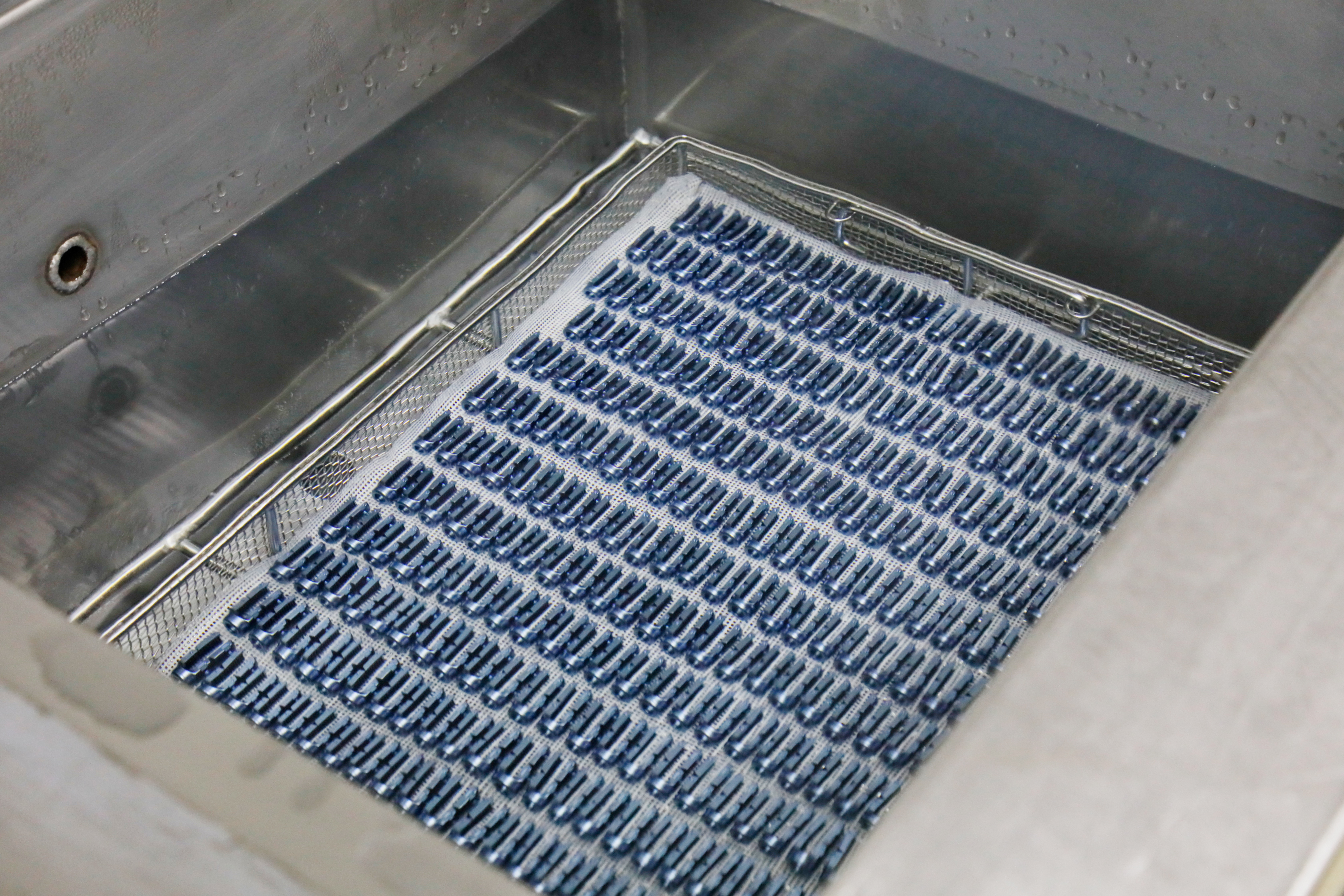
How to Validate Surgical Instrument Samples
A polished sample is not enough. Create a written sample-approval plan that reflects the instrument's intended use and risk. The manufacturer and buyer should agree on drawings, revision level, test methods, acceptance criteria, sample quantity, and how approved samples become production masters.
- Identity: model, drawing revision, side, size, markings, lot, and packaging configuration.
- Dimensions and interfaces: critical dimensions, mating parts, implant or screw compatibility, runout, alignment, and tolerances.
- Material and finish: grade, hardness, surface condition, corrosion resistance where applicable, passivation, coating, and cleanliness.
- Function: grip, ratchet engagement, cutting or drilling behavior, torque transmission, locking, release, and wear.
- Reprocessing: resistance to the intended cleaning and sterilization cycles, including joints, lumens, markings, coatings, and handles.
- Packaging and labeling: count, protection, identification, instructions, language, UDI or lot data where applicable, and transport resilience.
Repeatability check: after the golden sample is approved, inspect samples from the first production lot using the same criteria. This helps determine whether the manufacturer can reproduce the approved design at scale.
Evaluating OEM and Custom Instrument Capability
Customization can mean a logo on an existing tray, a modified handle, a dedicated instrument for an implant, or a completely new device. These projects do not carry the same regulatory or engineering risk. Before sharing drawings or samples, define confidentiality, design ownership, permitted use of background intellectual property, tooling ownership, and access to verification records.
For a private-label or custom program, review the manufacturer's orthopedic OEM/ODM capabilities and ask who owns each design-control activity. A capable supplier should translate user needs into controlled specifications and document changes—not rely on informal messages or an unapproved sample.
| Customization level | Typical scope | Minimum control needed |
|---|---|---|
| Branding | Logo, labels, carton, tray graphics, and instructions. | Artwork approval, labeling review, revision control, and market-language check. |
| Configuration | Set composition, tray layout, sizes, and quantities. | Approved bill of materials, compatibility review, count verification, and packing list. |
| Product modification | Dimensions, handle, interface, material, finish, or function. | Risk assessment, drawing approval, verification, validation where needed, and change control. |
| New product development | New concept or instrument system. | Formal design controls, usability and risk management, regulatory strategy, verification, validation, and design transfer. |
Packaging, Set Completeness, and Sterilization Compatibility
Instrument sets fail operationally when individual tools are missing, mislabeled, damaged in transit, incompatible with the implant, or difficult to identify. Require a controlled packing list and a final count matched to tray location and instrument identifier. For reusable systems, evaluate drainage, drying, disassembly, cleaning access, weight, protection of sharp components, and compatibility with the intended sterilization process.

When a reusable rigid container is part of the system, review the manufacturer's sterilization container options together with the healthcare facility's validated reprocessing method. A container or tray should not be assumed compatible merely because the instruments physically fit inside it.
Evaluate Capacity, Delivery, Service, and Total Cost
After technical and quality requirements are met, compare the commercial plan. Ask for normal and peak capacity, raw-material constraints, minimum order quantity, sample lead time, production lead time, forecast rules, Incoterms, export documentation, packing method, and delay notification process. Review the supplier's supply-chain and warehousing model, then test it with evidence such as recent on-time-delivery data.
Total cost of ownership includes far more than unit price:
- qualification, registration, audit, testing, and validation costs;
- tooling, artwork, packaging, sterilization, freight, duties, and inventory;
- missing or damaged instruments, urgent replacement shipments, and procedure disruption;
- repairability, spare parts, servicing, warranty exclusions, and complaint handling;
- cost and risk of switching suppliers if performance becomes unacceptable.
Before approval, document response times, complaint ownership, return authorization, investigation reports, repair or replacement routes, and escalation contacts. XC Medico publishes its current after-sales and warranty process for buyer review.
Example Surgical Instrument Manufacturer Scorecard
Score each criterion from 0 to 5, multiply by the suggested weight, and record the evidence reviewed. Establish mandatory pass/fail gates for legal and regulatory requirements so that a high commercial score cannot compensate for missing compliance.
| Evaluation area | Suggested weight | Evidence | Pass gate |
|---|---|---|---|
| Legal identity and regulatory status | 15% | Business details, market authorization, device listing or clearance as applicable. | Mandatory |
| Quality management system | 15% | ISO 13485 scope/status, audit results, procedures, records. | Mandatory |
| Technical and manufacturing capability | 20% | Equipment, processes, validation, operators, outsourced-process controls. | Mandatory for scope |
| Sample quality and performance | 20% | Inspection report, functional testing, compatibility, reprocessing evaluation. | Mandatory |
| Traceability and change control | 10% | Lot trace exercise, document revisions, customer notification agreement. | Mandatory |
| Delivery and supply continuity | 10% | Capacity, lead time, delivery history, safety stock, contingency plan. | Threshold |
| Service and lifecycle support | 5% | Complaint/CAPA process, warranty, repair, spare parts, escalation. | Threshold |
| Total cost and commercial terms | 5% | Landed cost, MOQ, payment, tooling ownership, warranty exclusions. | Threshold |
Keep the completed scorecard in the supplier file, identify open actions and owners, and set a re-evaluation interval based on risk and performance. Monitor incoming defects, complaints, corrective actions, delivery, responsiveness, and unauthorized changes after approval.
Common Supplier Red Flags
Explore XC Medico's Manufacturing Scope
These internal resources can support a structured capability review. Buyers should still verify documents and product suitability for their own market and intended use.
Frequently Asked Questions
What is the most important certification for a surgical instrument manufacturer?
There is no single universal certificate that approves every manufacturer and product. ISO 13485 is an important medical-device quality-system standard, but buyers must also verify product-specific regulatory requirements for the destination market and the certificate's scope and validity.
Does FDA registration mean a surgical instrument is FDA approved?
No. FDA establishment registration and device listing do not mean that the facility or device is approved, cleared, or authorized. Verify the exact device classification and applicable FDA regulatory route.
Should a buyer always conduct an on-site factory audit?
Not always. Audit depth should be risk-based. Document review, live video assessment, samples, and third-party evidence may be sufficient for some lower-risk purchases. Higher-risk, sterile, customized, critical, or long-term supply arrangements may justify an on-site audit.
How many samples should be evaluated?
The quantity depends on device risk, variation, test method, and order size. Evaluate enough units to assess critical dimensions and function, then verify repeatability again using the first production lot.
Can surgical instruments be customized for a private label?
Yes, but branding, set configuration, product modification, and new-product development require different levels of documentation and regulatory control. Define design ownership, verification, labeling responsibility, change control, and market authorization before starting.
How often should an approved manufacturer be re-evaluated?
Set the interval according to risk and actual performance. Defects, complaints, delivery failures, major changes, certificate changes, or corrective-action issues may trigger an earlier review or audit.
Conclusion
An effective manufacturer evaluation converts marketing claims into objective evidence. Define requirements, verify legal and regulatory details, trace a real lot, test samples against approved criteria, and evaluate the controls that keep future production consistent. A documented scorecard makes supplier decisions easier to defend and provides a baseline for ongoing performance monitoring.
Authoritative References
- International Organization for Standardization: ISO 13485—Medical devices quality management systems.
- U.S. FDA: FDA registration versus device approval, clearance, or authorization.
- U.S. FDA: How to study and market a medical device.
- European Commission: Medical device regulations and manufacturer obligations.

