
External Fixation System Guide
A practical guide to system types, component compatibility, anatomical applications, and supplier evaluation for professional buyers.
Quick answer: An external fixator system stabilizes bone with pins or wires connected to a frame outside the body. For procurement teams, the key question is not only which frame is available. System completeness, component compatibility, material documentation, instruments, quality controls, and long-term supply support all need to be evaluated together.
What Is an External Fixator System?
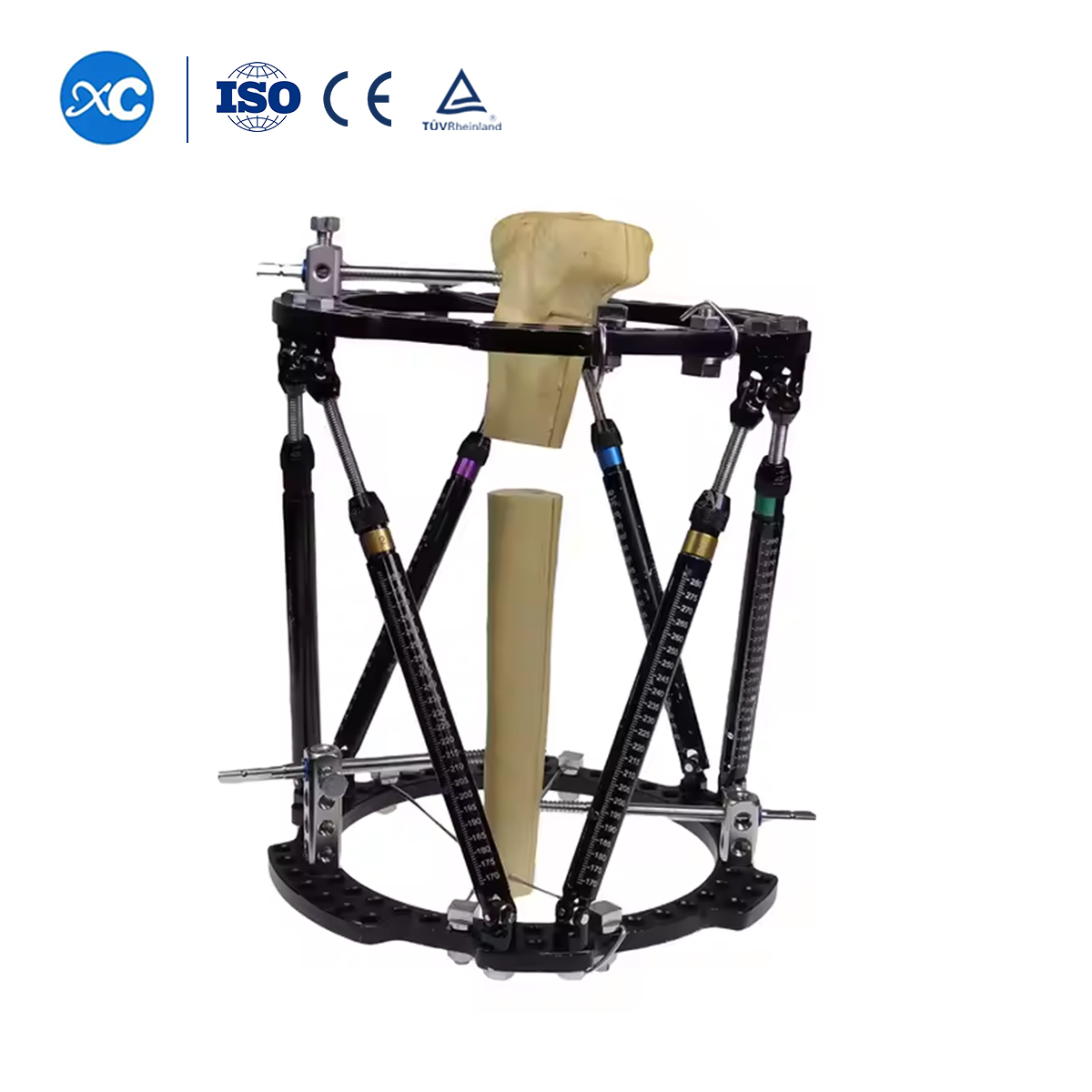
An external fixator is an orthopedic stabilization system in which fixation pins or wires connect bone to an external frame. The frame can be configured to maintain alignment, provide temporary or definitive stability, support staged trauma management, or enable controlled correction in selected reconstruction procedures.
External fixation is a system rather than a single implant. A usable construct may require pins, wires, rods, rings, clamps, connectors, reduction components, application instruments, and compatible sterilization trays. This system-level view is essential for distributors, hospital procurement teams, and product managers comparing an external fixation device portfolio.
Clinical use and frame configuration are determined by trained healthcare professionals. This guide focuses on product architecture and supplier evaluation. It does not provide surgical instructions, postoperative care, weight-bearing recommendations, or patient-specific treatment advice.
External Fixator System Types
A complete external fixation portfolio normally covers several frame families. Each family solves a different combination of anatomical access, stability, modularity, imaging, and adjustment requirements.
Monolateral External Fixators
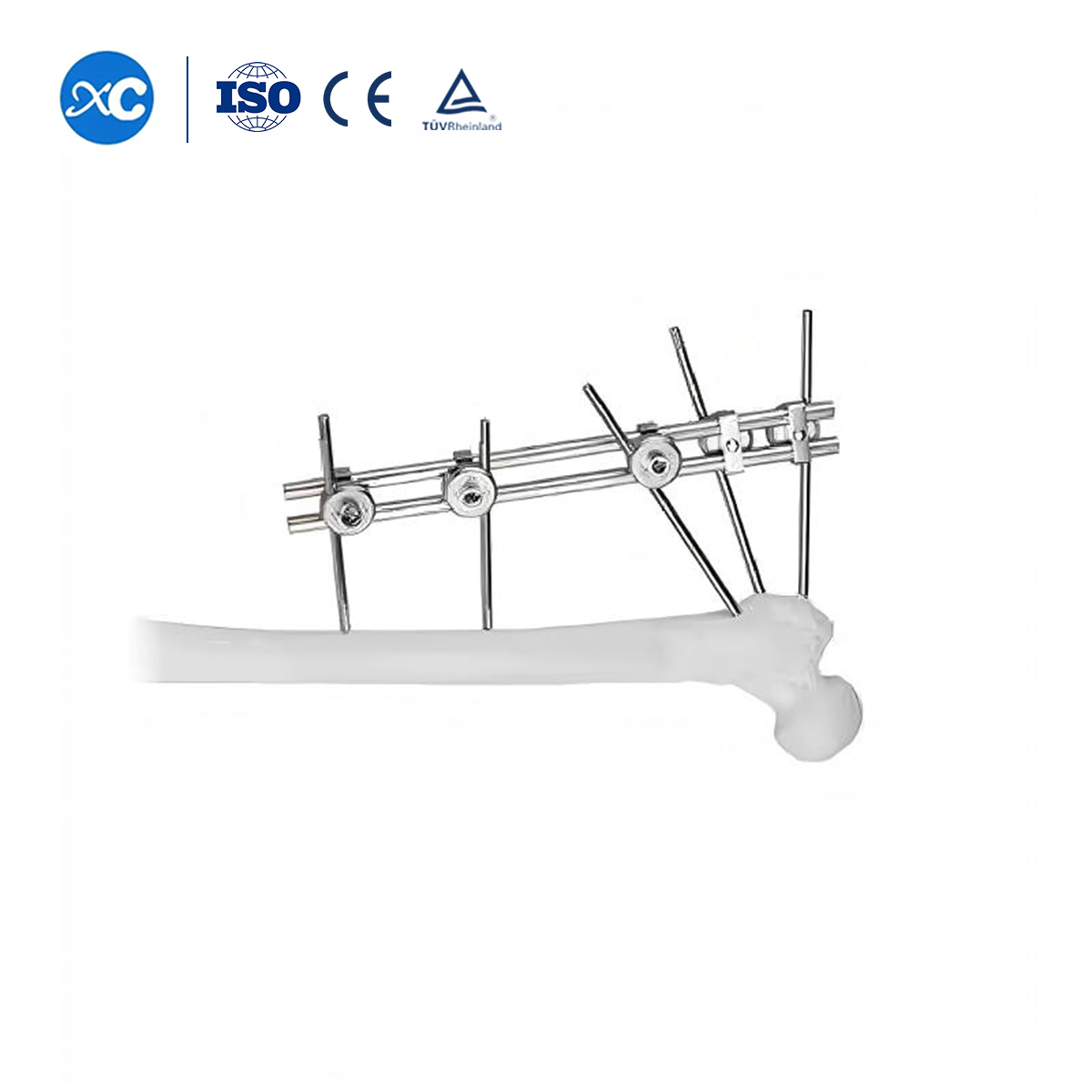
Monolateral systems position the main frame on one side of the limb. They may use a rail, tube, or bar with adjustable pin clamps. Buyers should compare clamp travel, rod or rail dimensions, pin compatibility, compression-distraction capability, and application instruments.
Modular External Fixators
Modular systems use rods, tubes, and clamps that can be assembled into different frame geometries. Their commercial value depends heavily on interface consistency, connector range, spare-part availability, and clear configuration guidance.
Review a representative external fixators system.
Circular and Ilizarov Fixators
Circular systems use rings connected by rods or struts. Tensioned wires, half-pins, or hybrid fixation elements can connect the bone to the frame. Procurement review should include ring sizes, wire and pin options, strut range, adjustment markings, and instrument requirements.
Explore Ilizarov circular external fixators.
Hybrid and Joint-Spanning Frames
Hybrid constructs combine elements from different frame families. Joint-spanning configurations are assembled to bridge an anatomical region when required by the treatment plan. Buyers should confirm that the selected clamps, rods, rings, and pins are validated for the intended system configuration.
Mini External Fixators
Mini systems are designed around smaller anatomy and lower-profile components. Important comparison points include pin diameter options, clamp precision, frame clearance, application tools, and whether all components are available as a coherent system.
Browse mini external fixators.
External Fixator Components and Compatibility
Compatibility is one of the most important commercial and technical checks. Two components may appear similar but still differ in diameter, thread, locking interface, material, instrument connection, or validated use. Buyers should evaluate the complete system matrix rather than purchasing isolated parts by appearance.
Pins and Wires
Confirm available diameters, thread profiles, lengths, tip designs, coatings, material specifications, and corresponding insertion instruments. Requirements vary by anatomy and system design.
Rods, Rails, Rings, and Struts
Review material, dimensions, radiolucency where relevant, adjustment range, connection points, and whether the portfolio supports both standard and more complex frame configurations.
Clamps and Connectors
Check the supported pin-to-rod and rod-to-rod interfaces, locking method, angular adjustment, torque requirements, reuse policy, and availability of replacement components.
Application Instruments and Trays
Verify that drills, guides, drivers, wrenches, tensioning tools, measuring tools, and sterilization trays match the selected fixator family and local reprocessing workflow.
Procurement note: Ask the supplier for a written compatibility matrix. Product names such as large fragment, small fragment, mini, modular, or circular do not by themselves prove that components can be mixed across systems.
External Fixator Systems by Anatomical Application
Anatomical labels help organize a catalog, but they should not replace product-specific intended-use documentation. The treating team selects the clinical configuration. Procurement teams use the application grouping to confirm that the supplier can support the required anatomy with compatible implants and instruments.
| Application group | Typical portfolio requirement | Buyer checks |
|---|---|---|
| Upper limb | Wrist, forearm, elbow, humeral, and small-bone options where applicable | Low-profile components, pin range, joint clearance, application instruments |
| Lower limb | Femur, tibia, ankle, and joint-spanning configurations | Frame range, clamp and rod options, pin compatibility, tray completeness |
| Pelvis | Pelvic frame components and dedicated connection options | System documentation, compatible pins, connector configuration, instruments |
| Limb reconstruction | Circular frames, rings, wires, half-pins, rods, or adjustable struts | Adjustment range, ring sizes, replacement parts, training materials |
| Small bone | Mini fixator frames and corresponding small-diameter fixation elements | Precision, component scale, instrument matching, packaging configuration |
Buyers evaluating lower-limb coverage can compare an external fixator for leg with the broader lower limb external fixators range. Separate category coverage is also available for upper limb external fixators, pelvic external fixator systems, and the knee joint fixator product family.
How to Evaluate an External Fixator Supplier
A dependable external fixation supplier should be evaluated as a system partner. A long product list is not enough if components are inconsistently specified, documentation is incomplete, or replacements are difficult to obtain.
Portfolio Completeness
Define whether your market requires monolateral, modular, circular, hybrid, mini, upper-limb, lower-limb, pelvic, or limb-reconstruction systems. Confirm the available configurations, instruments, trays, and replacement components for each family.
Documented Compatibility
Request a component matrix that identifies compatible pins, wires, rods, rings, clamps, connectors, and tools. Confirm whether compatibility is limited to one family or extends across a modular platform.
Materials and Manufacturing Control
Ask for material specifications, drawing control, critical-dimension inspection, surface-treatment information, torque or locking verification where applicable, and batch traceability. Requirements should be tied to the actual product rather than generic marketing statements.
Regulatory and Quality Documentation
Verify the quality-management certificate, product registration status, technical documentation, labeling, packaging, sterilization status, and market-specific evidence required in the destination country. A certificate should be checked for scope, issuing body, validity, and the legal manufacturer named on the document.
Instruments, Training, and After-Sales Support
Confirm instrument-set contents, tray layout, cleaning or reprocessing information where applicable, spare-part policy, complaint handling, technical response time, and access to product training materials. For modular frames, support after the first order is particularly important.
OEM and Distributor Support
Buyers requiring private labeling or market-specific configurations should clarify branding, packaging, labeling language, documentation responsibility, minimum order quantity, sample evaluation, lead time, change control, and post-market responsibilities before approval.
- Complete product and component catalog
- Written compatibility matrix
- Product-specific material documentation
- Quality and regulatory document package
- Instrument and tray configuration list
- Batch and shipment traceability
- Spare-part and replacement policy
- Distributor and OEM support process
For a wider commercial comparison, review the guide to external fixator manufacturers. That article covers supplier categories and evaluation factors, while this page focuses on system structure and product selection.
Explore the XC Medico External Fixator Range
XC Medico organizes its external fixation products by system type and anatomical application. Use the product pages below to review available configurations, then request current specifications and documentation for your target market.
External Fixator System FAQ
What is included in an external fixator system?
A system may include fixation pins or wires, rods, rails, rings, clamps, connectors, struts, reduction components, application instruments, and sterilization trays. Exact contents vary by system and supplier.
What is the difference between monolateral and circular external fixators?
A monolateral fixator positions its primary frame on one side of the limb. A circular fixator uses rings connected by rods or struts around the limb. The appropriate clinical configuration is selected by the treating surgical team.
Can components from different external fixator systems be mixed?
Not unless compatibility is explicitly documented by the responsible manufacturer. Similar appearance does not confirm matching dimensions, locking performance, material, instruments, or validated use.
What should distributors request from an external fixator manufacturer?
Distributors should request product specifications, a component compatibility matrix, instrument lists, quality certificates, registration documents, material information, labeling, packaging details, traceability records, lead times, and after-sales terms relevant to the target market.
Are external fixator systems supplied sterile?
Sterility depends on the specific product and market configuration. Buyers should verify the labeled sterile status, sterilization method where applicable, packaging validation, shelf life, and reprocessing information for reusable components.
How should buyers compare external fixator suppliers?
Compare system breadth, component compatibility, manufacturing controls, quality documentation, regulatory support, instrument completeness, spare-part availability, delivery capability, complaint handling, and distributor support.
Request External Fixator Specifications
Tell XC Medico which system types, anatomical applications, market registrations, instrument sets, and expected order quantities you are evaluating. The team can provide current product information for professional and B2B review.
Contact XC MedicoProfessional-use notice: This page provides general product-category and procurement information. It does not provide surgical technique, diagnosis, postoperative care, weight-bearing instructions, or patient-specific medical advice. Product availability, intended use, sterilization status, and regulatory registration vary by market and must be verified from current product documentation.

